Blog Details
23Sep
Upper vs Lower Mustang: Where to Go for Horseback Riding in Nepal
Mustang is often described as a single destination, but travelling through Nepal’s Mustang region reveals two distinctly different sides of the landscape. Lower Mustang follows the Kali Gandaki Valley through places such as Jomsom, Marpha, Tukuche, Kagbeni, and Muktinath, while Upper Mustang continues north from Kagbeni into the former Kingdom of Lo and towards Lo Manthang. For travellers interested in experiencing Mustang on horseback, this distinction becomes especially important, as the landscapes, trails, terrain, and character of the journey change significantly between the two areas.
The difference between Upper and Lower Mustang goes beyond geography. The two areas have distinct landscapes, village environments, cultural influences, accessibility, travel costs, permit requirements, and opportunities for horseback travel. Understanding these differences helps travellers decide where to ride, how long to travel, and what kind of horseback journey suits their interests.
Lower Mustang: The Kali Gandaki Valley and Its Mountain Trails
Lower Mustang is the more accessible southern part of the region and forms an important section of the wider Annapurna landscape. The journey through the Kali Gandaki Valley passes through a changing combination of river landscapes, mountain villages, cultivated fields, forests, and high Himalayan scenery.
Jomsom serves as one of the main gateways to Mustang, while Marpha, Tukuche, Kagbeni, and Muktinath are among the best-known places along the route. Each has a different character. Marpha is closely associated with Thakali culture, traditional stone architecture, and apple orchards, while Tukuche reflects the historic trading character of the Kali Gandaki corridor. Kagbeni marks an important transition towards Upper Mustang, with its narrow lanes, old houses, monasteries, and position at the meeting point of the Kali Gandaki and Jhong rivers.
For horseback travellers, Lower Mustang offers a combination of valley trails, village roads, open landscapes, and mountain views. Riding through this part of Mustang allows travellers to experience the Kali Gandaki corridor at a slower pace, passing through villages and landscapes that have long been connected by trade and local movement.
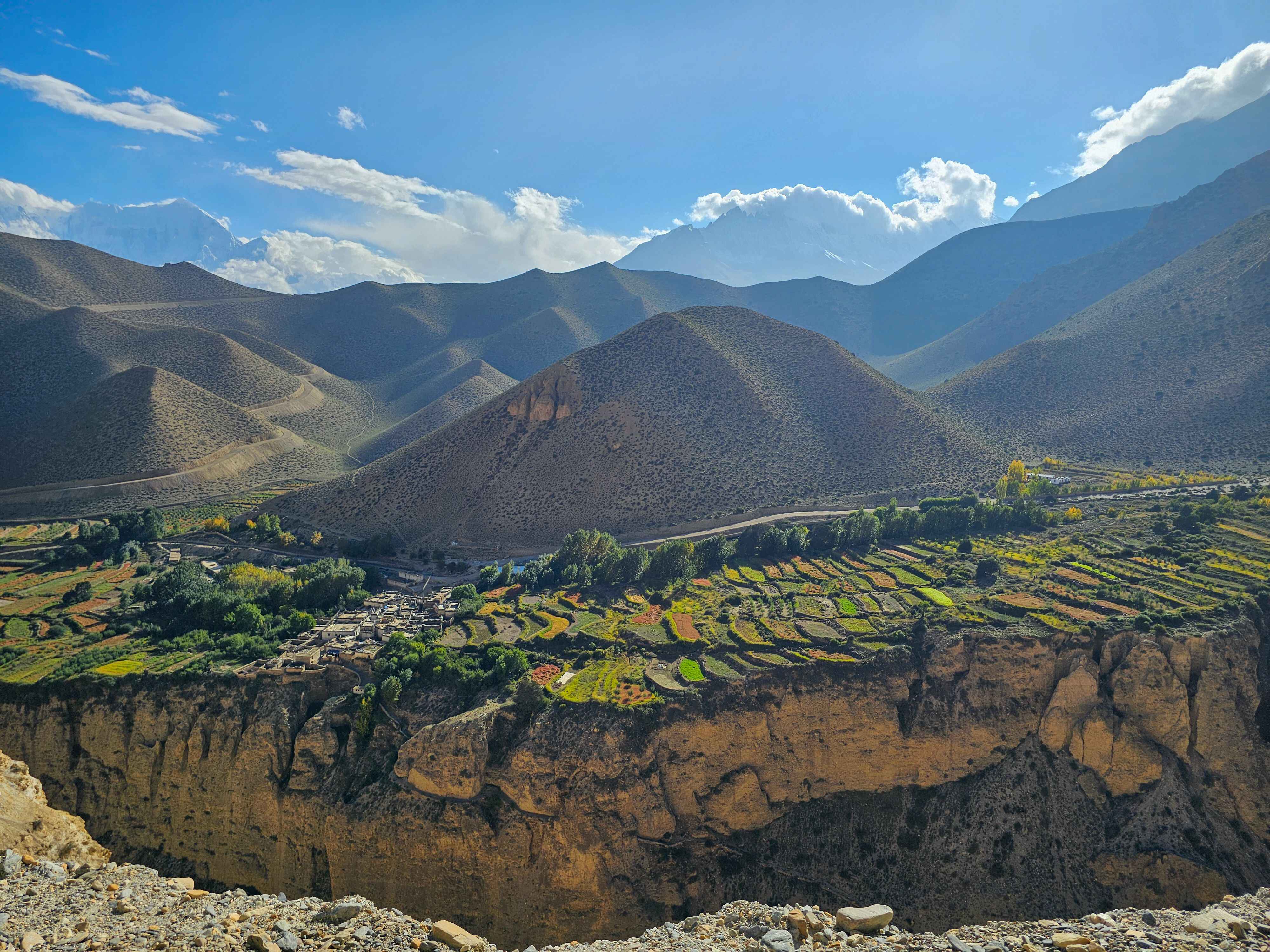
Muktinath adds another dimension to Lower Mustang. The area is an important pilgrimage destination for both Hindus and Buddhists, attracting visitors from across Nepal and India as well as international travellers. Together, these places make Lower Mustang a region where mountain scenery, pilgrimage, local culture, agriculture, historic trade routes, and horseback exploration come together.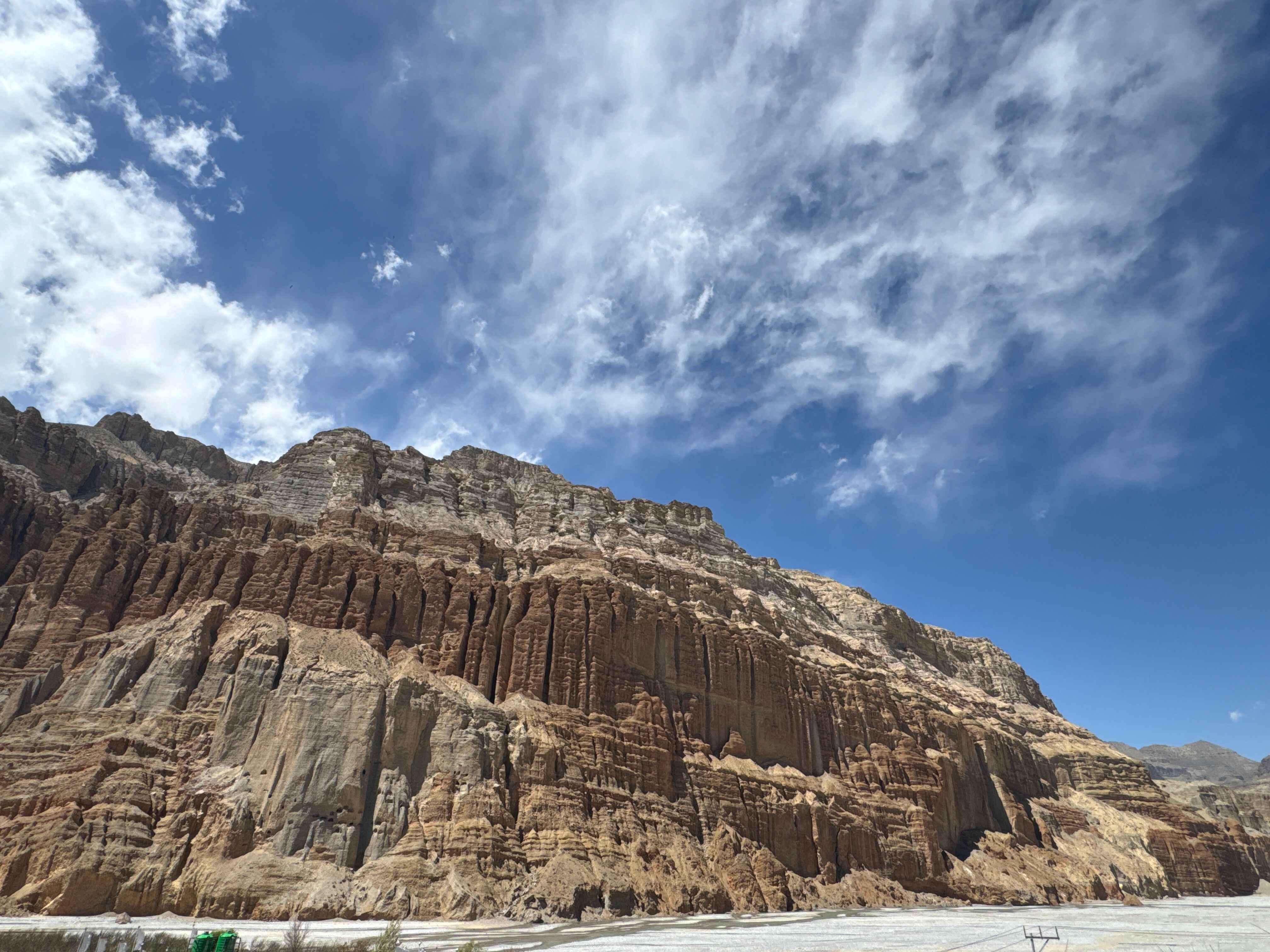
Upper Mustang: The Landscape Changes Beyond Kagbeni
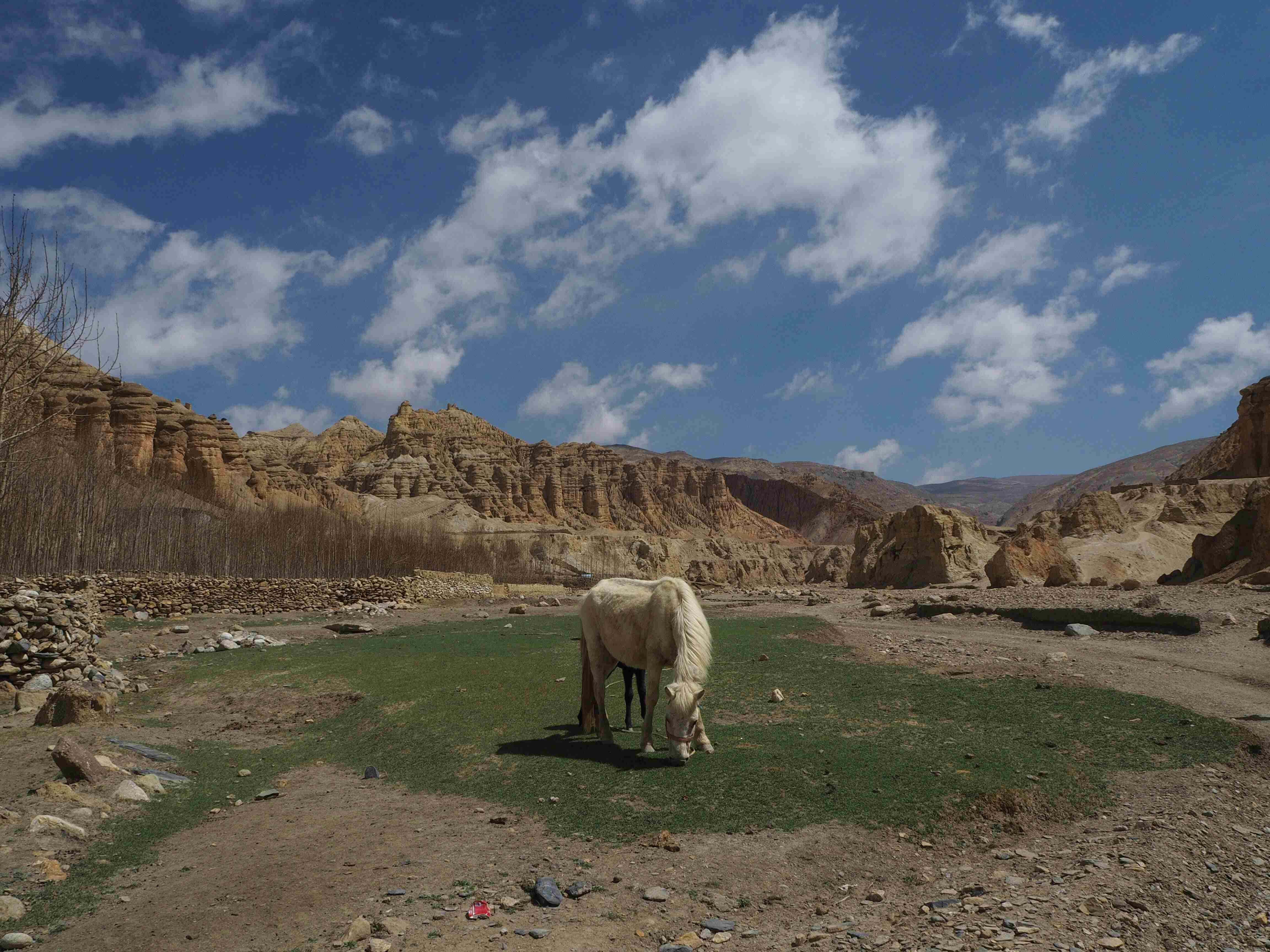
North of Kagbeni, the character of Mustang begins to change dramatically. The landscape becomes increasingly dry and open, with broad plateaus, eroded cliffs, deep valleys, rocky trails, and formations shaped by centuries of wind and erosion.
Upper Mustang lies in the rain shadow of the Annapurna and Dhaulagiri ranges, creating the distinctive arid environment for which the region is known. Instead of the greener valleys and orchards found in parts of Lower Mustang, travellers encounter a landscape dominated by earth-coloured cliffs, exposed hillsides, barren plateaus, and dramatic rock formations.
This change in terrain also creates a very different setting for horseback travel. The open valleys, high trails, rocky paths, and expansive views of Upper Mustang provide a landscape where travelling on horseback becomes closely connected to the surrounding environment. Rather than simply using a horse as transport, riders experience the changing terrain and settlements at the pace of the trail.
The cultural environment changes alongside the landscape. Upper Mustang was historically the Kingdom of Lo, and its Tibetan Buddhist heritage remains visible in its villages, monasteries, mani walls, prayer flags, traditional houses, and religious traditions. Chele, Ghami, Tsarang, and Lo Manthang are among the settlements that reveal this distinctive character.
At the heart of Upper Mustang is Lo Manthang, the historic walled settlement that has become one of the defining destinations of Mustang Nepal. The journey towards it passes through a series of mountain villages and high trails, making the route itself an important part of a horseback journey.
Upper Mustang vs Lower Mustang: Horseback Riding and the Landscape
The most noticeable difference between horseback riding in Upper and Lower Mustang is the landscape through which the journey takes place.
In Lower Mustang, riding follows the Kali Gandaki Valley and its surrounding settlements. The river, agricultural land, orchards, forests, villages, and dramatic mountain walls create a landscape that changes considerably with elevation. The riding experience is closely connected to the populated valley and the historic routes linking its communities.
Upper Mustang feels more remote and exposed. The valleys open into dry plateaus and high desert landscapes, while cliffs and canyons dominate many sections of the route. Settlements appear more isolated, and the surrounding terrain can feel vast compared with the narrower river corridor farther south.
For riders, this difference is particularly noticeable. Upper Mustang offers long stretches of open Trans-Himalayan scenery, high mountain trails, rocky terrain, and traditional villages separated by expansive landscapes. The horse becomes part of the way the traveller experiences the terrain rather than simply a means of getting from one settlement to another.
This transition is one of the reasons travelling from Lower Mustang into Upper Mustang is so distinctive. Rather than arriving in an entirely different destination, riders gradually watch the landscape transform as the route moves north.
The Villages of Upper and Lower Mustang
The villages provide another important difference between the two areas. In Lower Mustang, places such as Marpha and Tukuche reflect the historic importance of the Kali Gandaki trade route and the heritage of Thakali communities. Traditional houses, stone streets, cultivated land, and orchards remain important features of the settlements.
Kagbeni occupies a particularly interesting position. Its old settlement, narrow passages, Buddhist traditions, and location at the entrance to Upper Mustang give it a character that sits between the two regions. For a horseback journey heading north, Kagbeni also marks the point where the character of the trail and surrounding landscape begins to change.
Further north, the villages become increasingly associated with the cultural landscape of the former Kingdom of Lo. Ghami, Tsarang, and Lo Manthang feature traditional mud-brick and stone architecture, monasteries, prayer walls, and compact settlements adapted to the dry Himalayan environment.
Travelling between these villages on horseback adds another dimension to the experience. Instead of experiencing the settlements as isolated sightseeing stops, riders move through the landscape that connects them, following trails between valleys, passes, and traditional communities.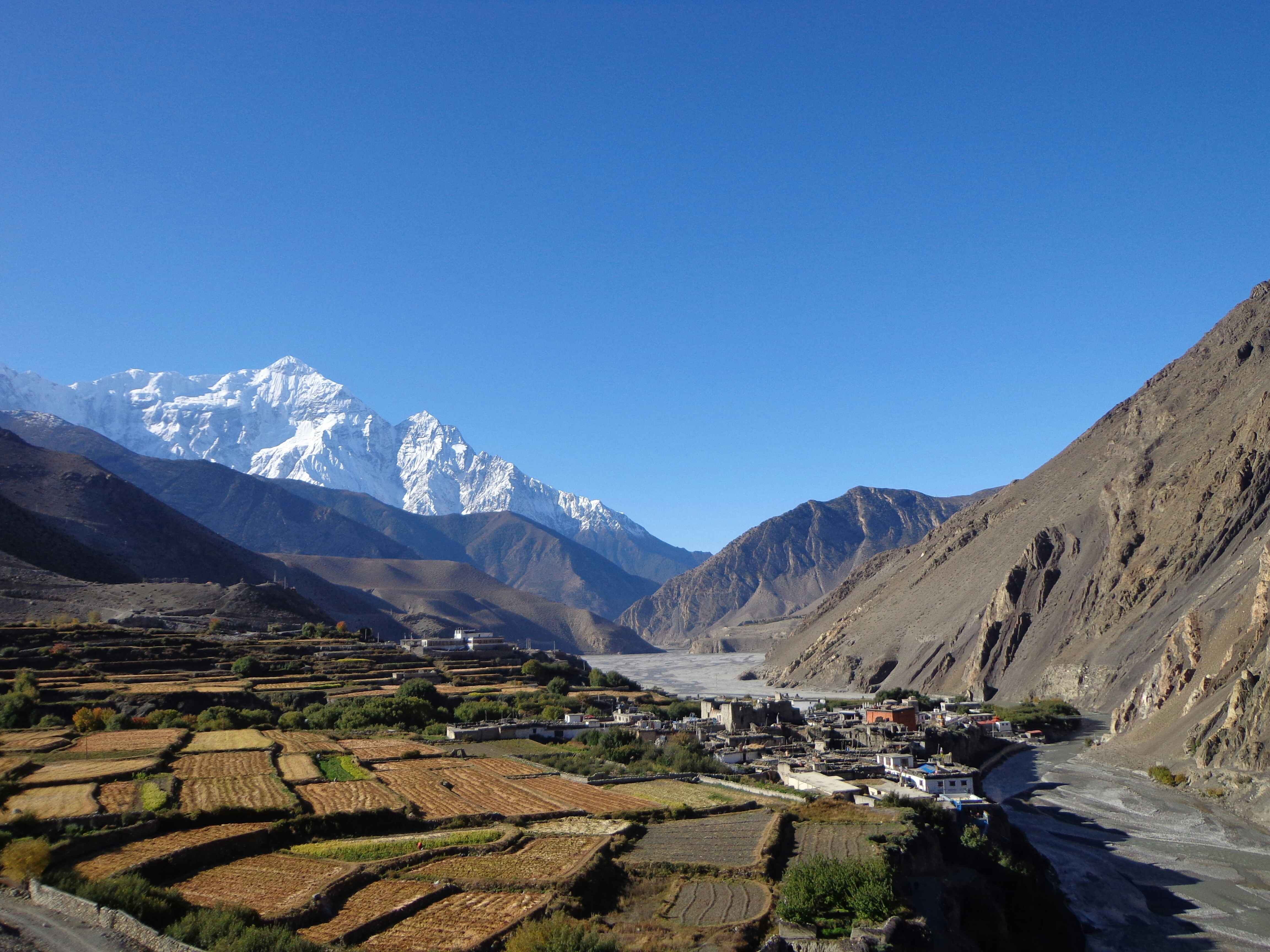
Upper Mustang vs Lower Mustang: Permits
One of the most significant practical differences between Upper and Lower Mustang is the permit system.
Lower Mustang falls within the Annapurna Conservation Area, and foreign visitors require the relevant conservation-area entry permit. The current listed fee for foreign visitors is NPR 3,000.
Upper Mustang has an additional requirement because the northern part of the region is designated as a restricted area. Travellers entering the Upper Mustang Restricted Area require a separate Restricted Area Permit. The current fee is USD 50 per person per day.
This permit is one of the main reasons that travelling in Upper Mustang costs more than travelling only through Lower Mustang. The restricted-area fee is calculated according to the number of days spent within the designated area, so the length of an Upper Mustang horseback itinerary directly affects this part of the travel budget.
Permit regulations can change, so travellers planning a horseback journey should check the current requirements when making arrangements.
Upper Mustang vs Lower Mustang: Travel Costs
The cost difference between Upper and Lower Mustang is not limited to permits. The overall budget depends on transportation, accommodation, meals, guides, horses, horse handlers, duration, and the style of travel.
Lower Mustang can be incorporated into a relatively shorter journey from Pokhara, with options to reach Jomsom by air when flights operate or travel by road. The established road network also makes several destinations within Lower Mustang accessible by vehicle, allowing travellers to combine riding with other forms of transportation where appropriate.
Upper Mustang requires more time and planning. Travelling beyond Kagbeni into the restricted area means continuing farther into the region, and horseback journeys require additional planning around the horses, riding routes, guides, support arrangements, accommodation, and daily distances.
The USD 50 per person per day Restricted Area Permit is therefore an important part of any Upper Mustang horseback journey budget. For travellers comparing Upper Mustang vs Lower Mustang cost, the final difference will depend on the length, riding arrangements, transportation, and overall style of the journey rather than the permit alone.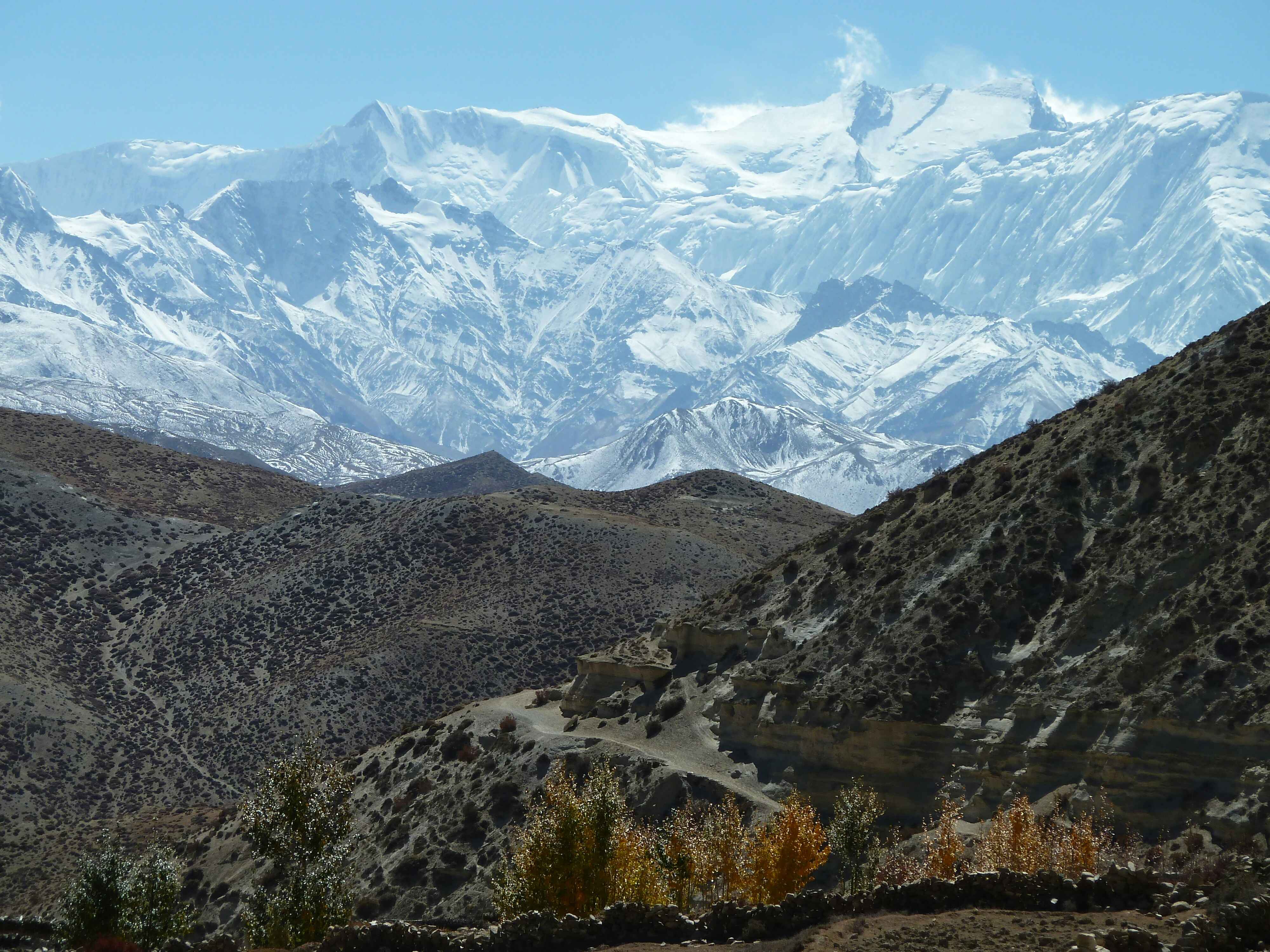
Accessibility and Horseback Travel
Lower Mustang is generally easier to incorporate into a shorter Nepal itinerary. A traveller can fly or drive towards Jomsom and explore places such as Marpha, Tukuche, Kagbeni, and Muktinath within a relatively compact journey.
This accessibility also means that Lower Mustang can work well for travellers who want to experience horseback riding without committing to a longer expedition deep into the region. Riding can be combined with cultural visits, village exploration, pilgrimage sites, and other experiences along the Kali Gandaki Valley.
Upper Mustang requires a greater time commitment. The journey continues north from Kagbeni, and the distances between settlements, altitude, terrain, and restricted-area requirements all contribute to a more structured horseback experience.
The longer journey also allows the riding experience to become a central part of the trip. Days are shaped by trails, mountain passes, villages, changing landscapes, and the rhythm of travelling with horses through the former Kingdom of Lo.
The Cultural Difference
Both Upper and Lower Mustang have strong cultural identities, but their historical influences are not identical.
Lower Mustang has long been shaped by the Kali Gandaki trade route and the communities that developed around it. Thakali culture is particularly prominent in places such as Marpha and Tukuche, while Buddhist and Hindu traditions overlap across the region.
Upper Mustang has a stronger Tibetan cultural influence, reflecting its history as the Kingdom of Lo and its longstanding connections with the Tibetan plateau. Buddhist monasteries, traditional village structures, religious art, and local traditions form an important part of the experience.
Horseback travel provides a natural way to connect these cultural landscapes. The historic trails between settlements were part of the movement of people, animals, goods, and trade across Mustang for generations. Riding through the region allows travellers to experience these routes as part of the wider landscape rather than simply visiting individual destinations.
Can You Visit Upper and Lower Mustang on Horseback on the Same Trip?
Yes, and combining the two can create a gradual horseback journey through the changing landscapes of Mustang.
A journey can begin in the lower Kali Gandaki Valley, passing through Jomsom, Marpha, Tukuche, Kagbeni, and Muktinath before continuing north into Upper Mustang. From there, the route can progress through villages such as Chele, Ghami, and Tsarang towards Lo Manthang.
The value of combining both areas lies in the transition between them. Riders see the landscape become progressively drier and more open, while the architecture, cultural influences, and character of the settlements also change.
The experience also changes beneath the horse. Lower Mustang introduces the rider to the valley environment and established settlements, while Upper Mustang brings longer stretches of open terrain, high trails, rocky landscapes, and remote villages.
Rather than treating Upper and Lower Mustang as competing destinations, it is more useful to see them as connected parts of a much larger Himalayan landscape that can be explored progressively on horseback.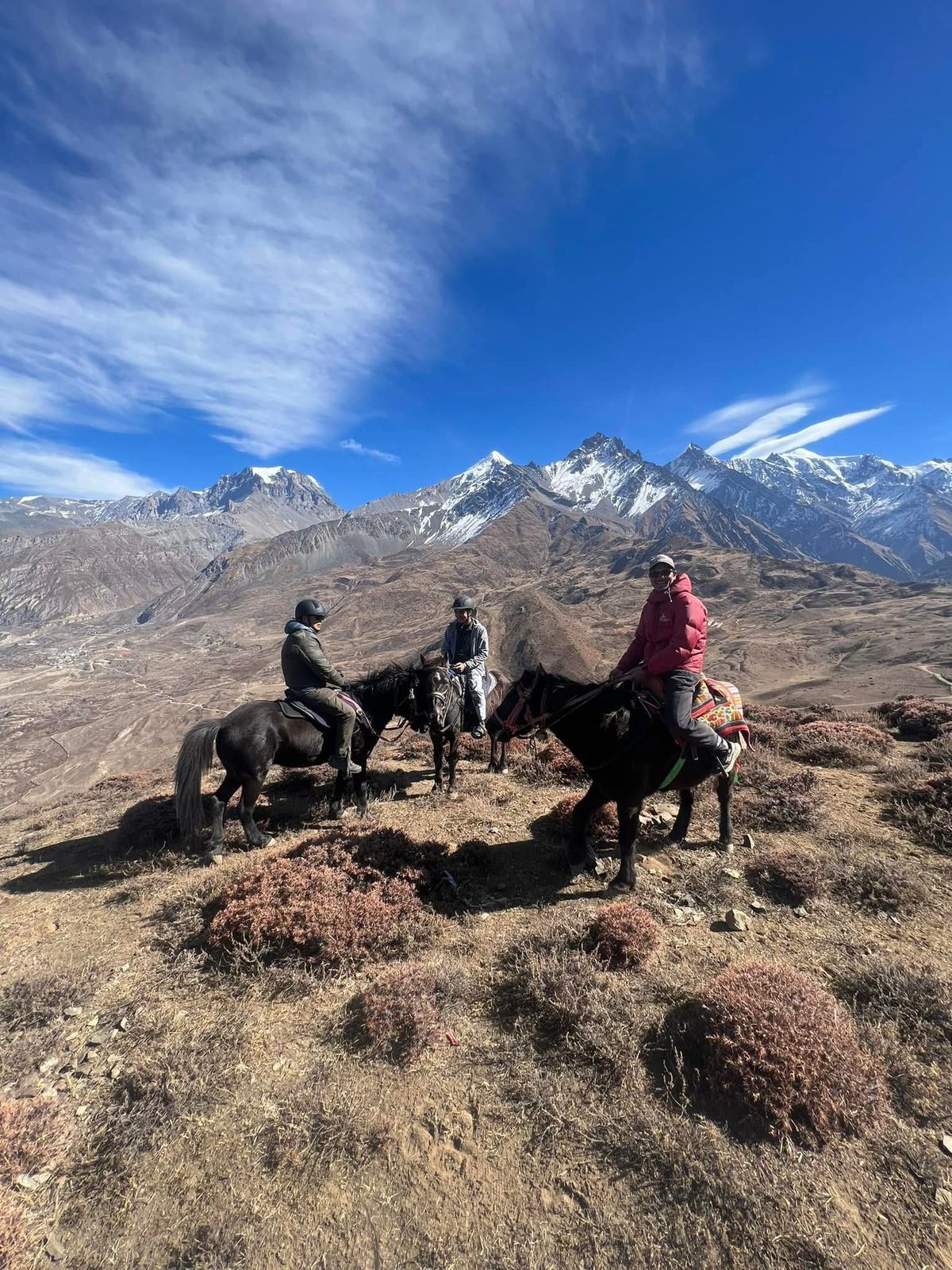
Upper Mustang or Lower Mustang: Which Horseback Journey Suits You?
The choice between Upper and Lower Mustang ultimately depends on the type of horseback journey you want to experience.
Lower Mustang provides a more accessible introduction to the region through the Kali Gandaki Valley, with mountain scenery, historic villages, pilgrimage sites, orchards, and Thakali culture. It can also be incorporated into a shorter itinerary, making it suitable for travellers who want to combine horseback riding with a broader Mustang experience without spending as much time in the restricted area.
Upper Mustang takes the journey farther into the Trans-Himalayan landscape. The dry valleys, high plateaus, dramatic cliffs, historic villages, monasteries, and Lo Manthang create a distinctly different setting for horseback travel. The additional permit, longer travel time, remote terrain, and riding arrangements make it a more involved journey.
For travellers looking for a longer horseback expedition, the northward route through Upper Mustang offers an opportunity to spend more time riding through the region's high desert landscapes and historic villages. For those with less time, Lower Mustang provides access to the wider Mustang landscape while remaining closer to the main gateway around Jomsom.
Upper and Lower Mustang: Two Sides of a Horseback Journey
Mustang is not defined by a single landscape or one type of travel experience. Its character changes significantly from the Kali Gandaki Valley towards the former Kingdom of Lo.
Lower Mustang brings together river valleys, orchards, mountain villages, pilgrimage sites, and historic trading communities. Upper Mustang reveals a drier and more remote landscape shaped by the rain shadow of the Himalayas, with Tibetan Buddhist traditions and the heritage of the former Kingdom of Lo deeply embedded in its villages.
For horseback travellers, this contrast becomes part of the journey itself. The landscape changes gradually from the river valleys and settlements of Lower Mustang to the dry highlands, rocky trails, and historic villages of Upper Mustang.
The difference in permits and costs is an important practical consideration, but the greater distinction lies in the type of horseback experience each area offers. Lower Mustang provides a more accessible introduction to riding through the region, while Upper Mustang takes the journey deeper into its Trans-Himalayan landscapes and the historic world of the former Kingdom of Lo.
Together, they show why Mustang remains one of Nepal's distinctive mountain regions, where geography, culture, history, horses, and the journey itself are closely connected.
Ready to Ride Through Mustang?
Frequently Asked Questions
1. What is horseback riding in Mustang like?
Horseback riding in Mustang combines mountain trails, traditional villages, river valleys, high passes, and dramatic Trans-Himalayan landscapes. The experience changes as you travel from Lower Mustang towards the drier terrain of Upper Mustang.