Blog Details
20Sep
The Horses of Mustang and Their Role in Tourism
Horseback riding in Mustang offers a different way to experience one of Nepal's most distinctive mountain regions. Beyond the dramatic landscapes, ancient villages, monasteries, and historic trails, the horses themselves are an important part of the experience.
For generations, horses have been used across Mustang for transportation and the movement of people and goods through difficult mountain terrain. Today, their role has evolved as roads and motorized transport have reached more parts of the region, but horses remain part of local life and have found a new place in tourism. Nepal Tourism Board recognizes horses as an important means of transportation in Nepal's trans-Himalayan regions, while horse treks remain available in Mustang and other northern mountain districts.
For travelers, horseback riding in Mustang therefore represents more than an alternative to walking. It connects a contemporary travel experience with an older way of moving through the mountains and with the people who have traditionally handled and cared for these animals.
Horses and the People of Mustang
The relationship between horses and Mustang's communities has been shaped by the region's geography. Mustang lies in the rain shadow of the Annapurna and Dhaulagiri ranges, with high valleys, rocky trails, strong winds, and terrain historically difficult to cross by road.
Before modern roads connected many settlements, horses played an important role in moving people and goods between villages and across mountain routes. Horses continue to be seen in the northern districts of Nepal, including Mustang, where local residents have traditionally ridden them and used them as pack animals.
Their cultural importance can also be seen in local celebrations. The Yartung festival, held in Mustang and other trans-Himalayan communities, features horse racing and displays of horsemanship. The festival demonstrates that horses are not simply animals used for tourism; they remain connected with local traditions, community gatherings, and regional identity.
As Mustang's economy and transportation systems have changed, the practical role of horses has naturally changed as well. Tourism now provides another context in which local horses and horsemen can continue to be involved in the region's economy.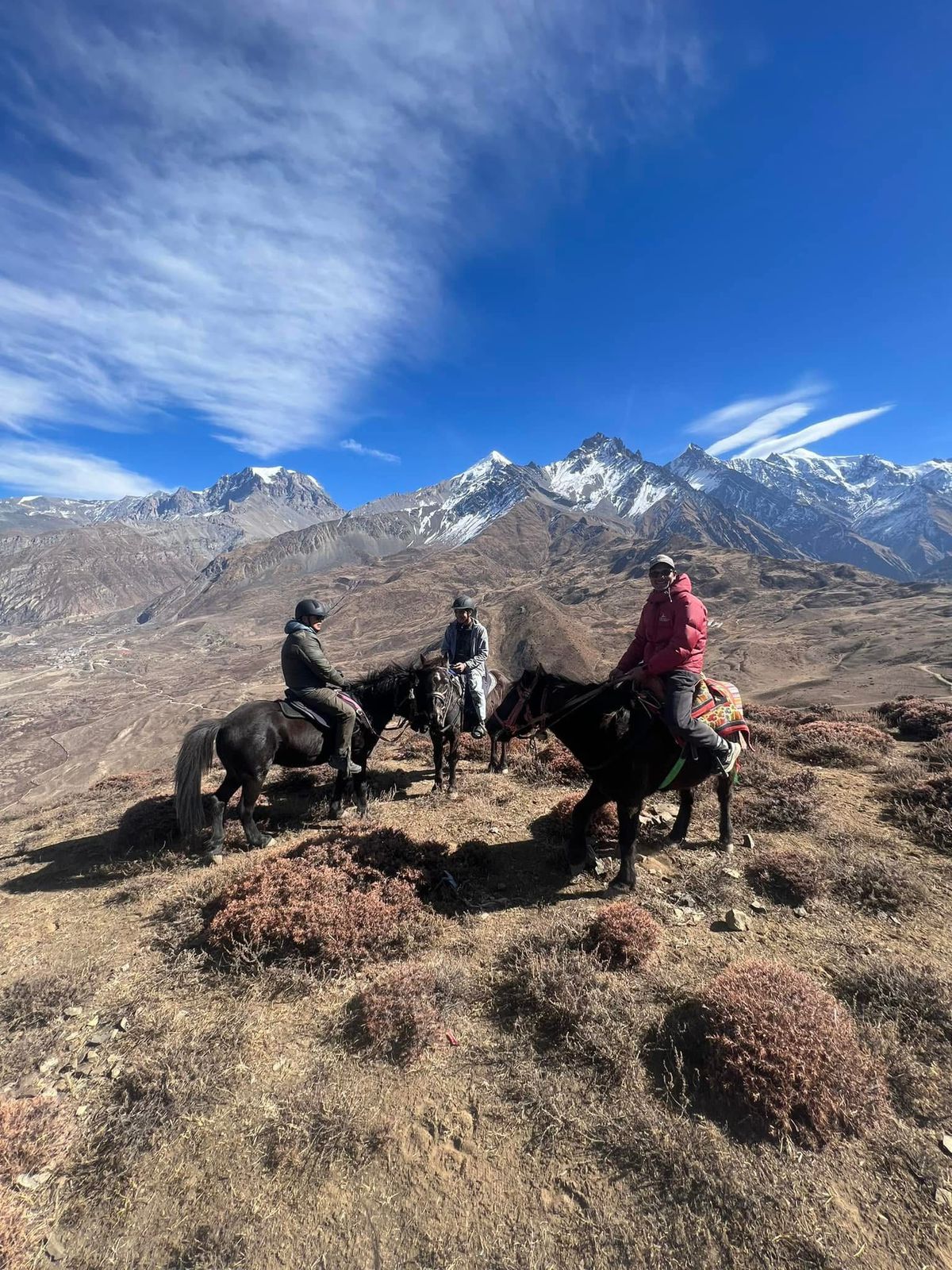
The Horses of Mustang
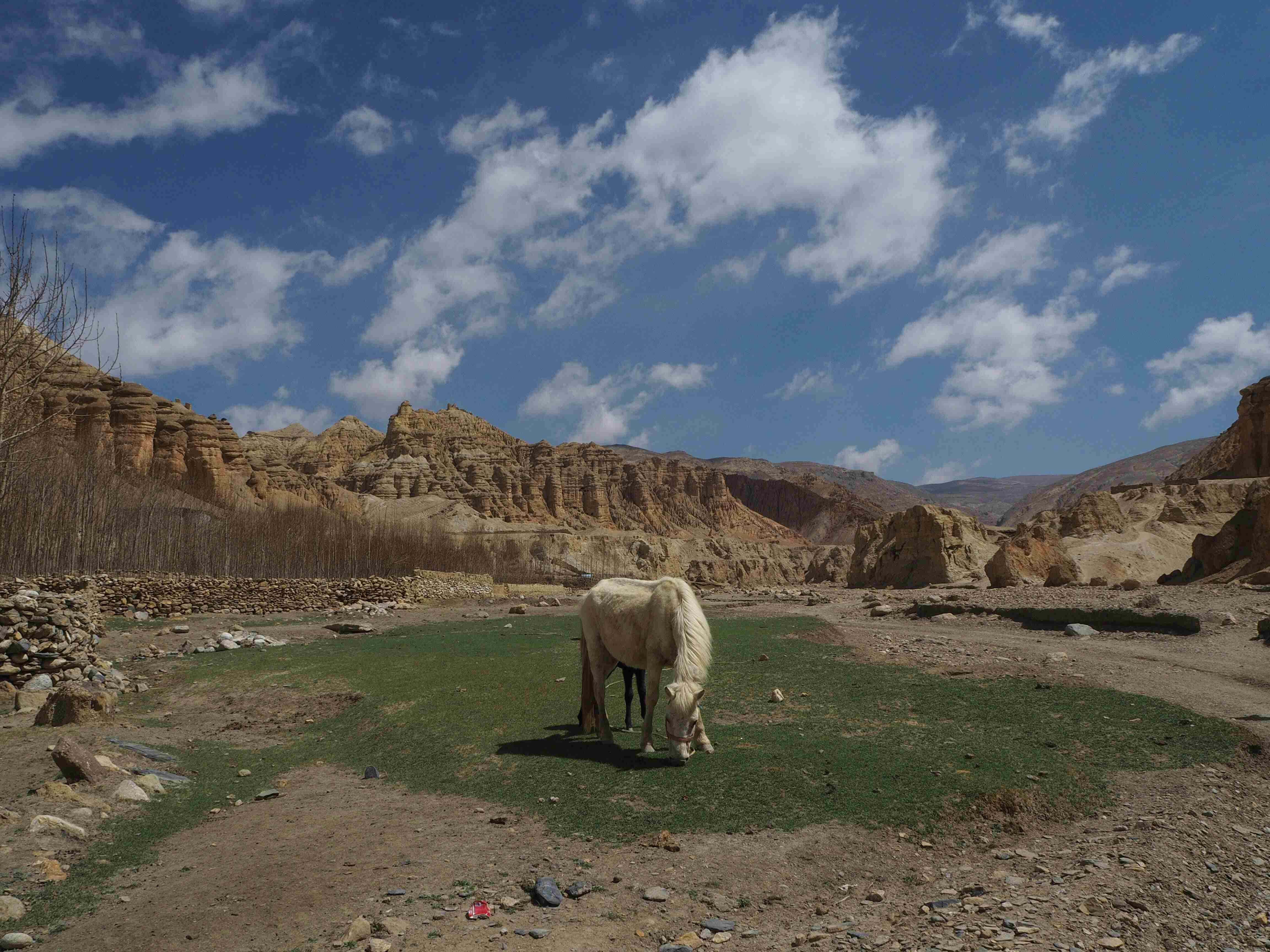
The horses used in Mustang are generally smaller mountain horses and ponies, suited to the demanding terrain of the Himalayas. In Upper Mustang, Bhotia ponies and Jumli horses are among the types commonly used for riding. They are valued for their strength, agility, and sure-footed movement across rocky and uneven trails.
These horses are traditionally working animals rather than horses raised exclusively for recreational riding. They have long been used to carry people and goods between mountain settlements, particularly along trails where vehicles were once unable to travel. Their role has gradually changed with the expansion of roads, but horses remain part of everyday life and local traditions in Mustang.
For horseback riding in Mustang, the individual horse matters as much as its type. Fitness, temperament, experience, condition, and familiarity with mountain terrain all influence whether a horse is suitable for a particular journey.
How Big Are the Horses in Mustang?
The horses commonly seen on Mustang riding journeys are relatively small compared with many Western riding horses. Horses used for horseback riding in Upper Mustang generally fall within the smaller mountain-horse and pony range.
A typical riding horse used on Mustang journeys may stand around 130–140 cm at the shoulder. Their smaller stature is practical on mountain trails, where horses need to maintain balance and place their feet carefully over rocky and uneven ground.
Size alone, however, does not determine a horse's suitability. A well-conditioned horse with experience on mountain trails can be better suited to a journey than a larger animal unfamiliar with the terrain.
What Makes Mustang Horses Suitable for Mountain Riding?
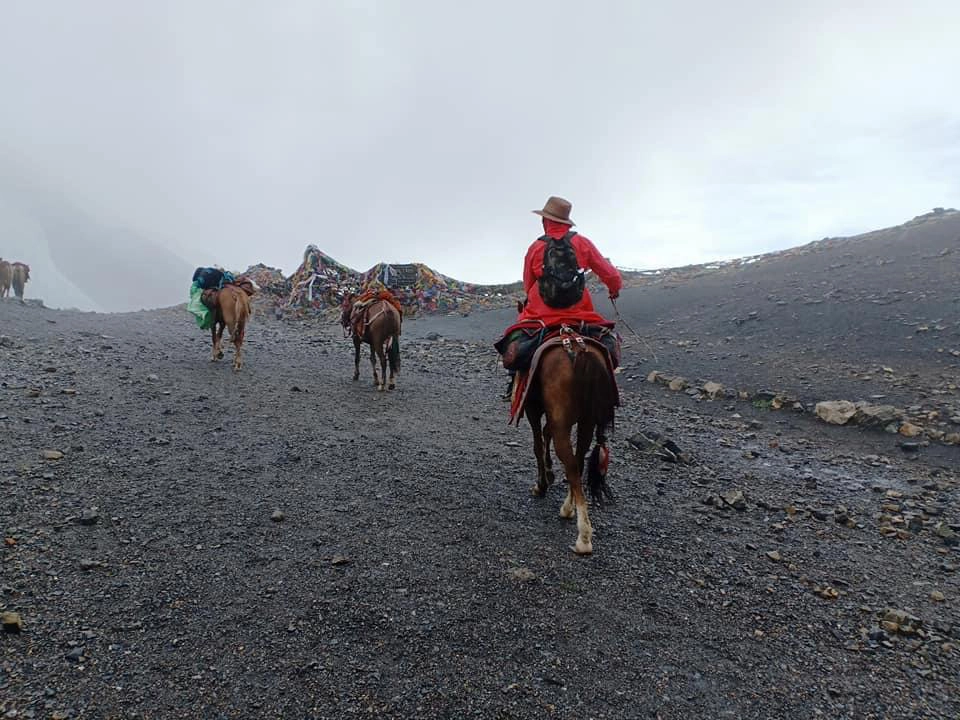
Mustang's trails are very different from prepared riding paths. Riders may encounter loose rock, narrow trails, steep sections, riverbeds, exposed slopes, and long stretches of uneven ground.
The horses used in the region are accustomed to this type of environment. Their compact build, strength, and sure-footed movement allow them to travel steadily across difficult terrain. They are not selected for speed. Mountain riding depends much more on balance, endurance, careful foot placement, and familiarity with the trail.
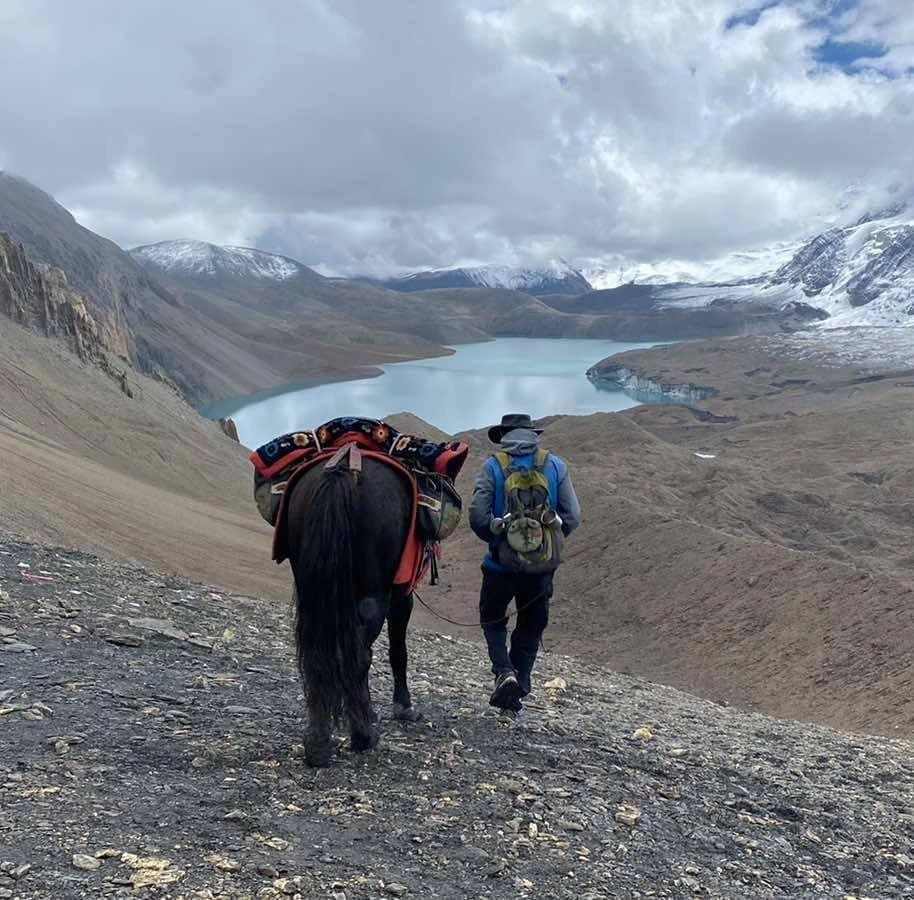
The horsemen are an important part of this process. Local horsemen understand the behaviour of the animals and the conditions of the trails, and they know when a horse needs to slow down, rest, or be changed.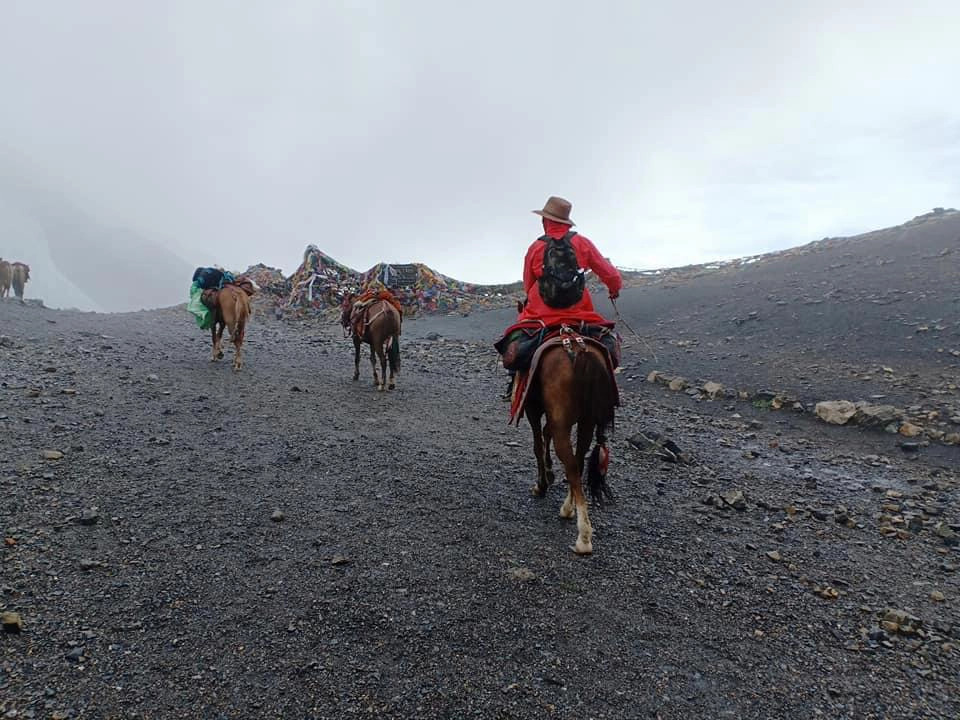
Traditional Tack Used in Mustang
Horse tack in Upper Mustang reflects the region's Tibetan cultural influence.
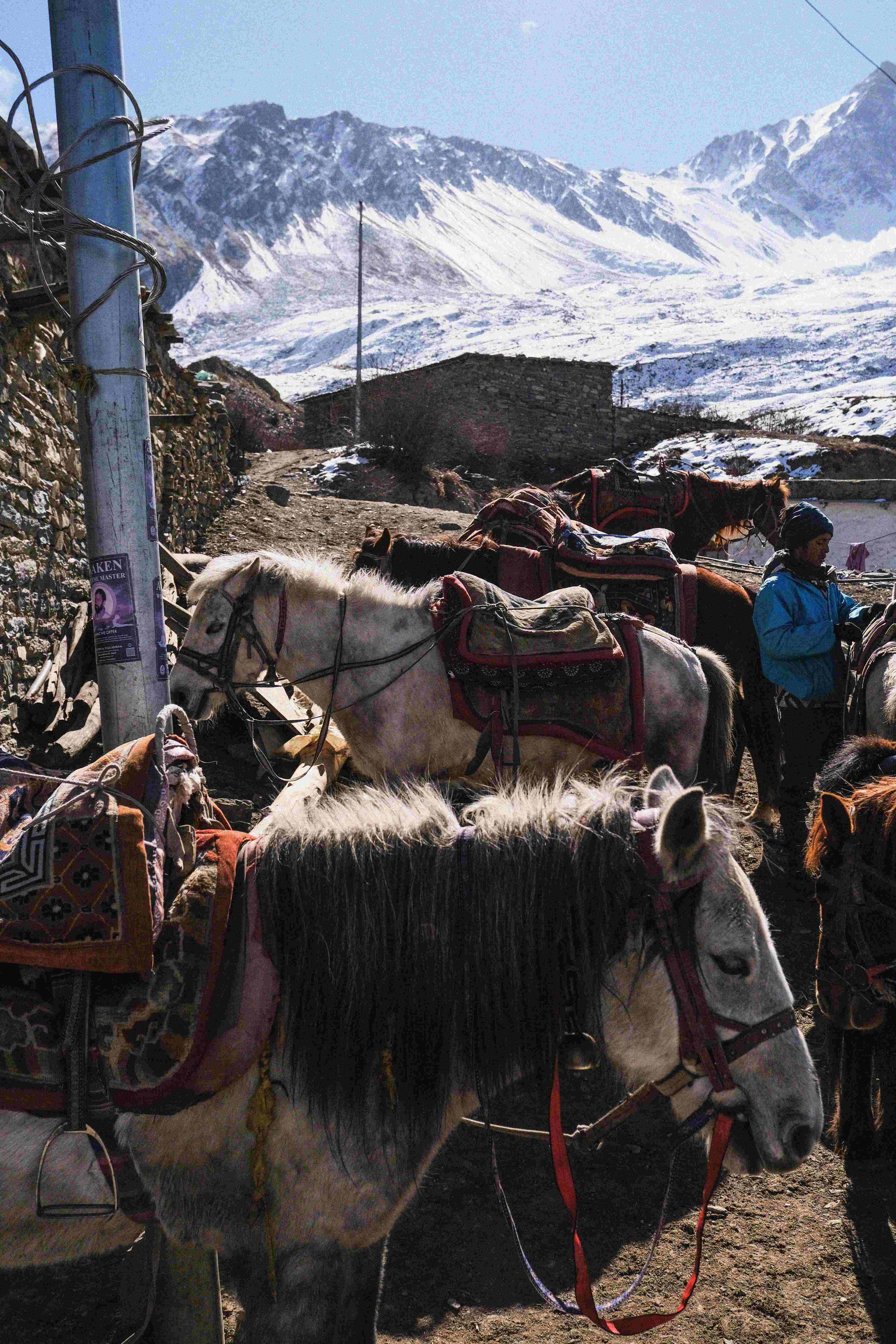
Horses traditionally wear cushioned tack made from cloth, often decorated with Tibetan designs. Traditional saddles are commonly padded with cushions and layers of carpet, making them more suitable for long hours of riding across mountain trails.
The tack is practical as well as cultural. Padding provides a layer of comfort between the saddle and the horse, while the traditional designs reflect the artistic and cultural traditions of the Mustang region.
The exact saddle and tack can differ from one horseman to another, but the use of padded, Tibetan-influenced equipment remains characteristic of horseback riding in Upper Mustang.
What Is the Rider Weight Limit for Horseback Riding in Mustang?
A rider's weight is an important consideration when selecting a horse for a mountain journey.
For the leisure horseback riding trips covered in this program, the recommended rider weight is 70–75 kg (154–165 lbs). This limit helps ensure that riders are matched with horses capable of carrying them comfortably across demanding mountain terrain.
The rider's weight is not the only consideration. The horse's size, condition, fitness, experience, the length of the riding day, terrain, altitude, saddle, and any additional load must also be considered.
For this reason, a weight limit should be treated as a practical riding guideline rather than a universal figure for every horse in Mustang.
How Horses Are Connected to Mustang Communities
Horses have long been part of life in Mustang. Before roads reached many settlements, they were important for moving people, agricultural products, supplies, and other goods through the mountains.
That relationship continues today, although its practical importance has changed. Roads and motor vehicles now handle much of the transportation that was once dependent on pack animals. Horses, however, remain visible in local communities and cultural traditions.
Horse racing is also an important part of festivals such as Yartung, where riders and horses come together for traditional celebrations and displays of horsemanship.
This connection between horses and local communities gives horseback riding in Mustang a character that differs from a conventional recreational riding holiday. The horses are part of the region's existing culture and working traditions rather than being introduced solely for visitors.
Horses and Tourism in Mustang
Tourism has given horses another role in Mustang.
As vehicle access has expanded, horses are no longer required for every journey between settlements. Horseback tourism provides an additional use for them, particularly on trails where traveling on horseback offers a different way of experiencing the landscape.
Local horsemen bring practical knowledge of the animals and the mountain trails. Their experience is important for managing horses, choosing suitable routes, maintaining a steady pace, and responding to changing mountain conditions.
For horse-owning families, tourism can also provide an additional source of income. This creates a connection between horseback riding and the wider local economy, while keeping traditional knowledge of horses and mountain travel relevant.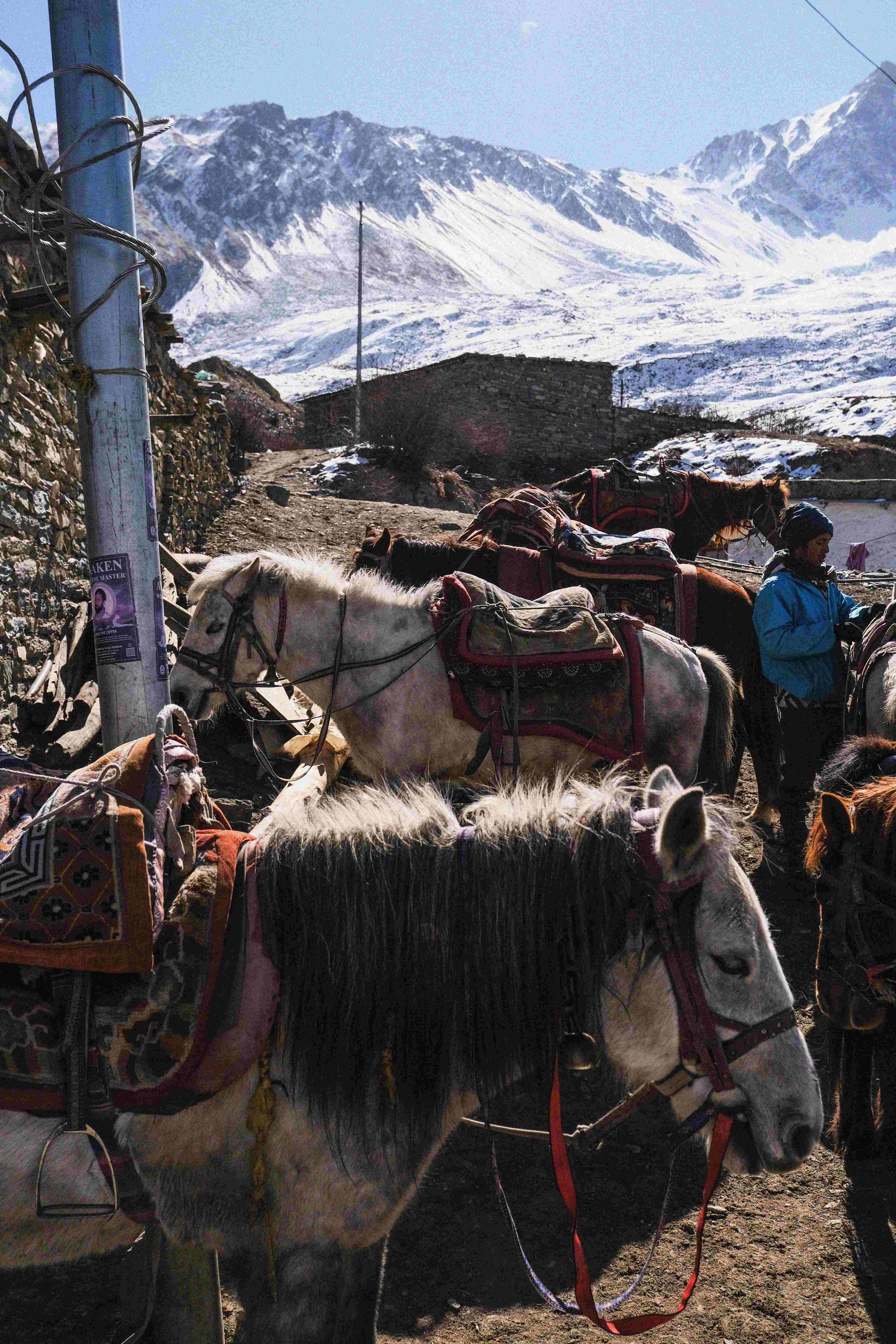
How Long Do You Ride Each Day?
The amount of time spent on horseback varies according to the itinerary, terrain, altitude, weather, and distance covered.
On longer horseback journeys through Upper Mustang, a riding day can involve several hours (Four to Five) in the saddle, with breaks along the route. The pace is generally steady rather than fast, allowing both horse and rider to manage the changing terrain.
A typical day may involve riding through river valleys, crossing rocky trails, climbing gradually toward higher settlements, or descending through mountain passes. The riding schedule changes according to the conditions rather than following a fixed number of hours every day.
Responsible Horseback Riding in Mustang
Horses have long been part of everyday life in Mustang, with a role that extends well beyond tourism. They have traditionally been used to carry people and goods across mountain trails and between settlements, particularly in areas where modern transportation was limited.
The horses used in the region are working mountain animals rather than horses raised exclusively for recreational riding. Their environment includes rocky trails, steep ascents and descents, riverbeds, high-altitude terrain, strong winds, and changing weather. Their appearance and physical condition can therefore be different from horses commonly seen in riding schools, ranches, or professional equestrian centres.
Their continued presence also has an economic dimension. Horse-owning families and local horsemen can earn additional income through tourism, particularly as roads and motorized transportation have changed the traditional role of horses in Mustang. Horseback tourism has created another use for animals that have historically been part of local transportation and livelihoods.
Local horsemen bring extensive familiarity with both the animals and the landscape. They know individual horses, their temperaments and capabilities, as well as the trails, weather conditions, altitude, and terrain encountered along different routes. On longer expeditions, horses may be rotated or additional animals used, giving individual horses periods of rest between riding days.
Rider weight is also considered when assigning horses. For leisure horseback journeys, a rider weight of 70–75 kg (154–165 lbs) is used as a general guideline, alongside factors such as the horse's size, condition, fitness, the riding terrain, daily distance, tack, and additional load.
For travelers accustomed to recreational or competitive equestrian settings, the experience can look quite different. These are working mountain horses living within a traditional rural environment, and their care, equipment, working patterns, and physical appearance reflect that environment.
For travelers interested in Mustang's rural life and traditional ways of moving through the mountains, horseback riding offers a direct experience of the relationship between horses, horsemen, communities, and the landscape. The animals remain part of Mustang's living culture while also taking on a continuing role in the region's tourism economy.
Plan Your Mustang Horseback Journey
Frequently Asked Questions
1. What horses are used for horseback riding in Mustang?
Horses used for horseback riding in Mustang come from the mountain horse and pony populations found in Nepal's Himalayan regions. Bhotia horses and Jumli horses are among the types associated with mountain riding, while the exact horses used can vary by location and operator. Nepal's indigenous livestock reference describes Bhotia horses as hardy, mountain-adapted, and sure-footed.