Blog Details
26Oct
A Day in Kathmandu Through Its Folk Music, Musical Instruments and Heritage
Kathmandu is often recognised for its temples, stupas, historic squares, and traditional architecture, but the city's cultural identity can also be understood through its music. Temple bells ring during daily worship, devotional songs fill courtyards, and traditional musicians perform during festivals and processions. In the older settlements of the Kathmandu Valley, music is not simply entertainment. It marks religious occasions, accompanies community gatherings, and connects people with traditions passed down through generations.
The sounds of Kathmandu reflect the diversity of the communities that have shaped its history. Gandharva musicians are closely associated with the sarangi and Nepali folk storytelling, while Newar communities maintain musical traditions connected to Buddhist and Hindu rituals, seasonal festivals, and local jatras. Panche Baja, meanwhile, is heard at weddings and other auspicious ceremonies in many parts of Nepal. Each tradition has its own instruments, musical styles, performers, and social setting.
Exploring Kathmandu through its folk music offers another way to understand the city beyond its major landmarks. A cultural day tour that combines heritage walks with a live Nepali folk music experience can reveal the stories behind familiar sounds, the people who preserve them, and the occasions on which they are performed. Rather than encountering traditional music as background entertainment, visitors can learn how it fits into the everyday and ceremonial life of the Kathmandu Valley.
The Sarangi: The Sound of Nepal's Folk Tradition
The Nepali sarangi is a small, bowed string instrument traditionally associated with the Gandharva community, also known as Gaine. Its traditional form has four strings and a short neck, with the instrument commonly carved from a single piece of wood. The musician draws a bow across the strings to produce its distinctive, expressive sound. Unlike a plucked string instrument, the sarangi can sustain notes and follow the contours of a singer's voice, making it particularly suited to accompanying narrative folk songs.
The sarangi's place in Nepali folk music is closely connected to the musical traditions of Gandharva performers. Historically, musicians travelled between settlements, singing songs that recounted events, shared news, and reflected on social life. The sarangi accompanied these performances, helping the stories reach audiences who might otherwise have had little access to information from distant places. Its sound consequently became associated with storytelling, memory, and the travelling musical traditions of Nepal.
What does the sarangi sound like when played live, and how is it different from hearing a recording? A live demonstration allows listeners to observe the musician's bowing technique, the relationship between the instrument and the voice, and the way melodies change between verses. A Gandharva folk music experience in Kathmandu can also introduce the instrument's history and the community behind it. Learning about the sarangi in this context reveals that its significance extends beyond its sound to the people, skills, and stories connected with it.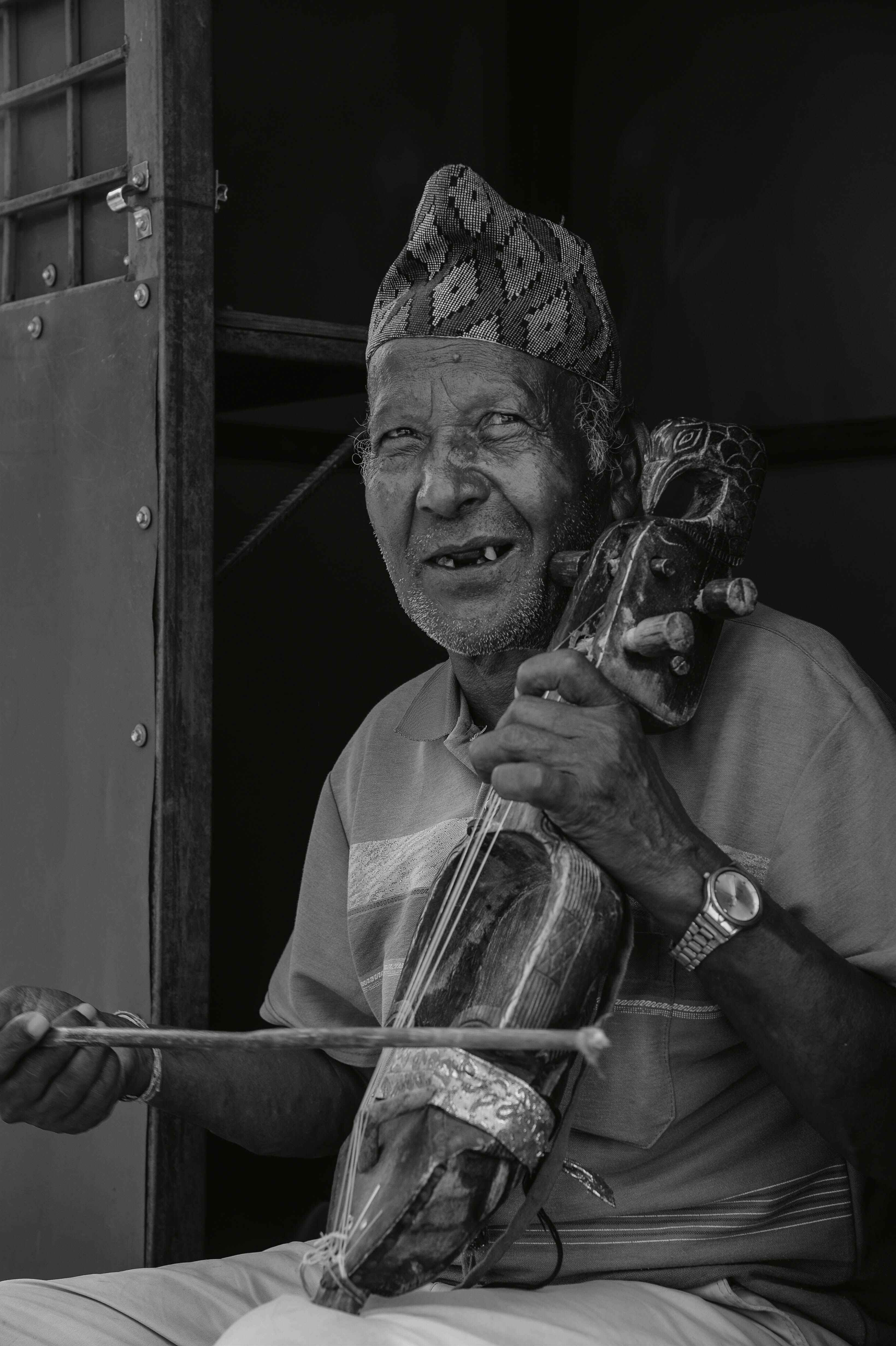
The Gandharvas: Travelling Musicians and Storytellers
The Gandharvas have a long association with travelling musical performance in Nepal. Traditionally, musicians moved between villages and settlements, performing songs in exchange for payment or other forms of support. Their repertoire included narratives about rulers and historical events, as well as songs about love, separation, hardship, social relationships, and ordinary life. Through these performances, they helped circulate stories and information between communities at a time when modern communication systems were unavailable.
The tradition also reflects the social position of the Gandharva community. Gandharvas have historically faced caste-based discrimination, despite their contribution to Nepal's musical heritage. Their work involved not only performing songs but also developing musical knowledge, maintaining instruments, and passing repertoires between generations. Today, changes in employment, migration, mass media, and entertainment have altered the opportunities available to traditional musicians. Some continue to perform and teach, while others have had to seek livelihoods beyond music.
Meeting a Gandharva musician during a folk music experience in Kathmandu provides an opportunity to hear these traditions directly from a practitioner. A performance can introduce familiar folk melodies alongside the stories, experiences, and musical knowledge that give them meaning. Visitors may also have the opportunity to learn how the sarangi is played or try producing a few notes themselves. Such an encounter offers a more personal understanding of Nepali folk music than simply recognising the instrument in a photograph or hearing it in a recording.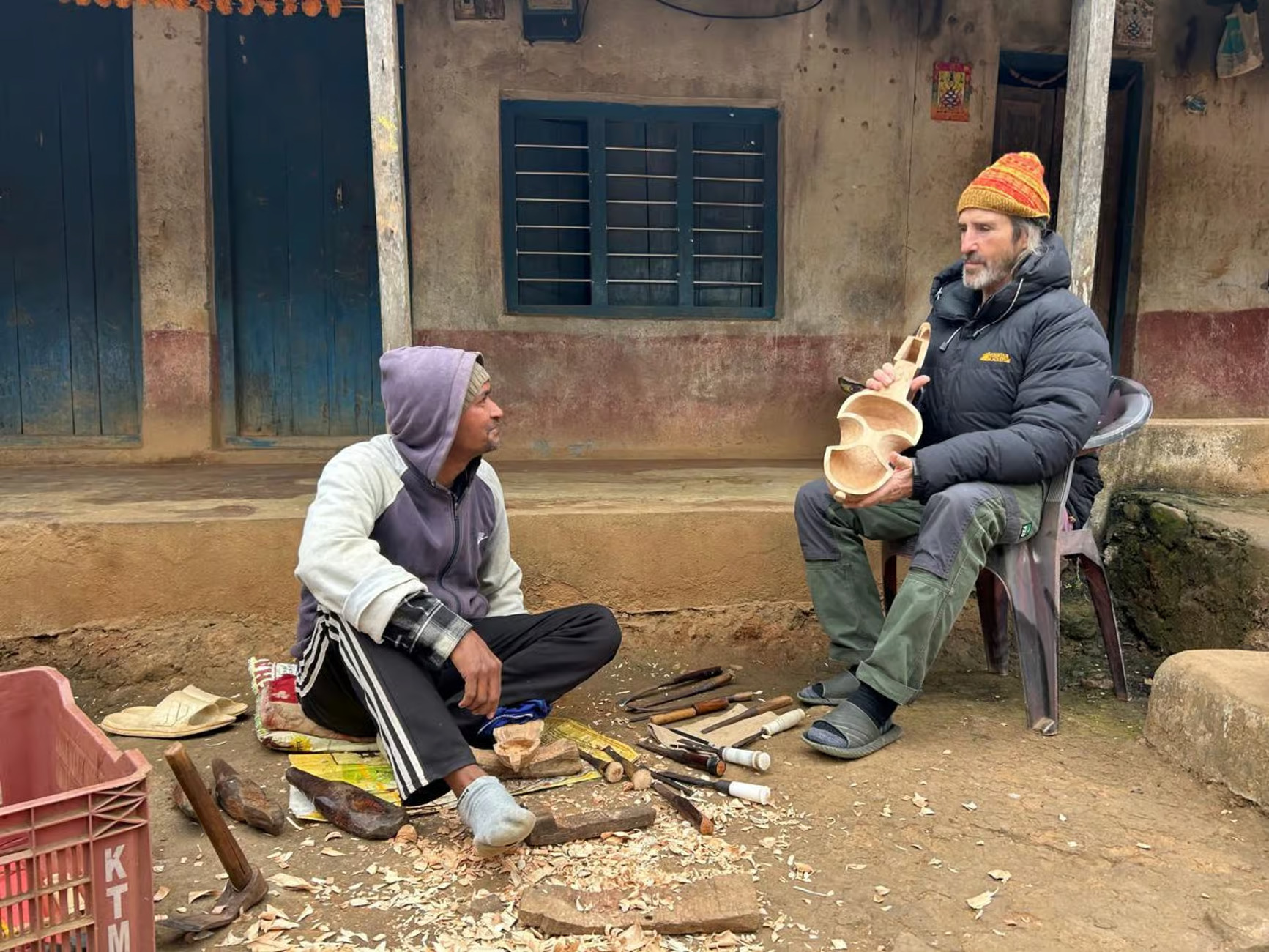
Panche Baja: The Traditional Sounds of Celebration
Panche Baja is a traditional Nepali musical ensemble associated particularly with weddings, processions, and auspicious ceremonies. The name combines panche, meaning five, with baja, meaning musical instrument. The ensemble brings together wind instruments, drums, and cymbals to create music that accompanies important social and religious occasions. It is traditionally associated with Damai musicians, many of whom belong to the Pariyar community, whose musical skills have played an important role in Nepal's ceremonial life.
The exact composition of Panche Baja varies by region and tradition. Common descriptions include the sahanai, a reed instrument that carries the melody; the damaha, a large kettledrum that provides a strong rhythmic foundation; the tyamko, a smaller kettledrum; the jhyali, a pair of metal cymbals; and the dholaki, a double-headed drum. Other commonly encountered descriptions include the narsingha, a long curved trumpet, or the karnal, a long straight trumpet, among the core instruments. These differences are worth recognising when exploring the names and roles of traditional Nepali musical instruments. The larger Naumati Baja ensemble expands on the same musical tradition, with a fuller combination of instruments and performers.
Panche Baja is especially associated with wedding processions, where its music accompanies the movement of the wedding party and announces the occasion to the surrounding community. It is also performed at other auspicious ceremonies and festivals, with musical practices varying according to local custom. Hearing the ensemble live helps listeners distinguish the melody of the sahanai from the deeper beats of the damaha, the sharper rhythm of the tyamko, and the ringing accents of the cymbals. Although Panche Baja is not exclusively a Kathmandu Valley tradition, learning about it alongside the city's other musical forms helps explain the wider diversity of Nepal's folk music heritage.
Newari Music: Rhythm, Ritual and Community Life
Newar musical traditions are deeply connected to the religious, social, and seasonal life of the Kathmandu Valley. Music accompanies jatras, temple rituals, processions, devotional gatherings, and community celebrations. Rather than belonging to a single musical style, Newar music encompasses different ensembles, instruments, and forms of singing maintained by particular communities and traditional groups. Some performances are associated with Hindu and Buddhist observances, while others accompany dances, public festivals, and important events in the community calendar.
Several instruments are particularly recognisable within Newar musical traditions. The dhimay is a prominent double-headed drum played with sticks and known for its powerful, resonant sound. The dhah is another traditional drum associated with Newar devotional and processional music, while the naykhin is used in particular ritual and festival settings. Bhusya and chhusya are types of cymbals that provide rhythmic accents, and the muhali is a reed wind instrument heard in certain ensembles. Other instruments, including the pachhima drum and the long wind instruments known as pwanga, appear in particular musical and ceremonial contexts. The combination depends on the tradition, occasion, and group performing.
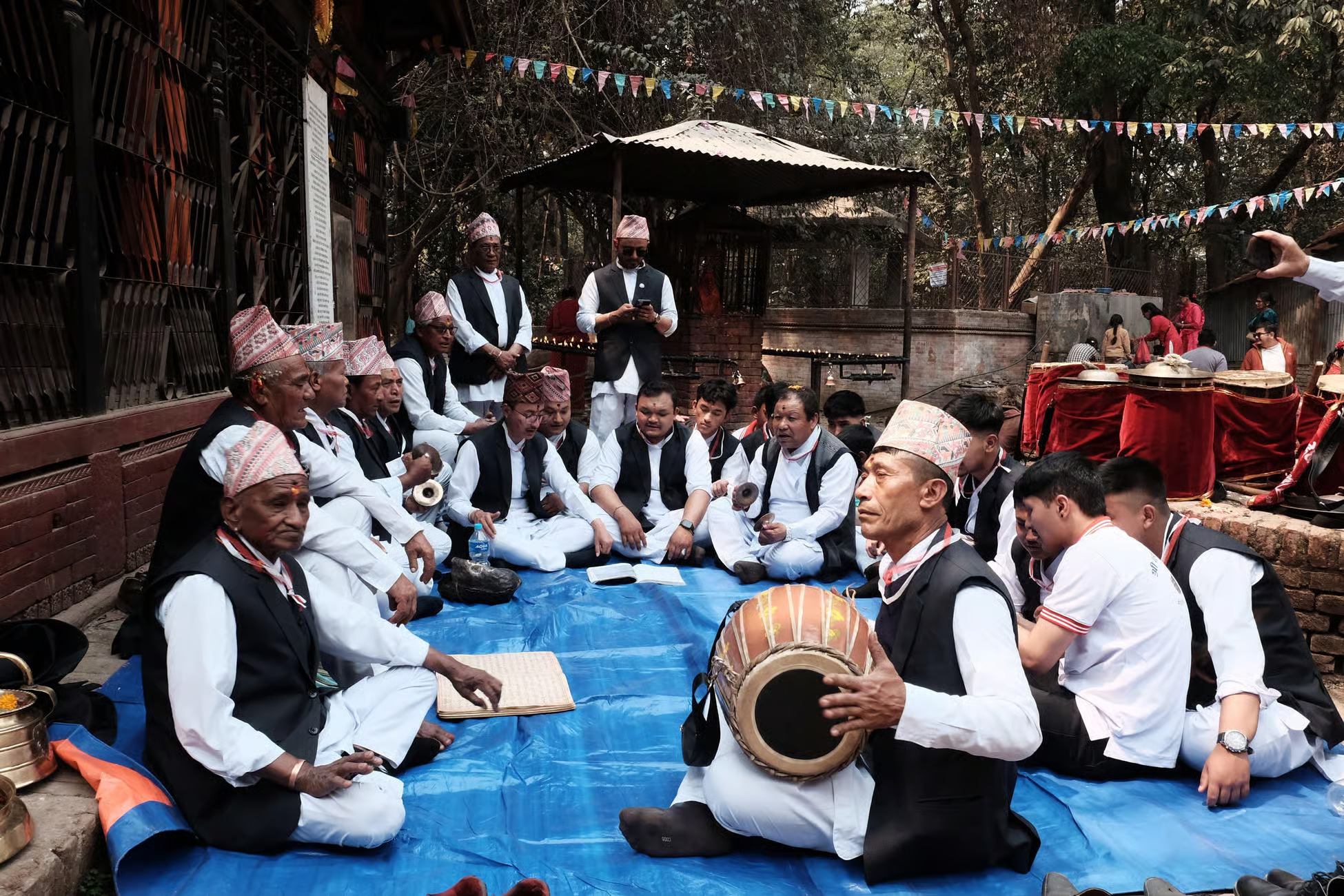
Newar music also includes Dapha, a devotional singing tradition in which groups perform religious songs using melodies and rhythmic structures connected with South Asian raga and tala traditions. These songs have a distinctive place in the religious and cultural life of Kathmandu Valley communities. In Bhaktapur and other Newar towns, music is connected to the timing of festivals and the organisation of local rituals. Exploring the old squares, courtyards, and neighbourhoods of Bhaktapur can therefore reveal more than architectural heritage. When rehearsals, ceremonies, or festival performances are taking place, the sounds of dhimay drums, cymbals, devotional singing, and other traditional instruments offer a glimpse into the living musical culture of the town.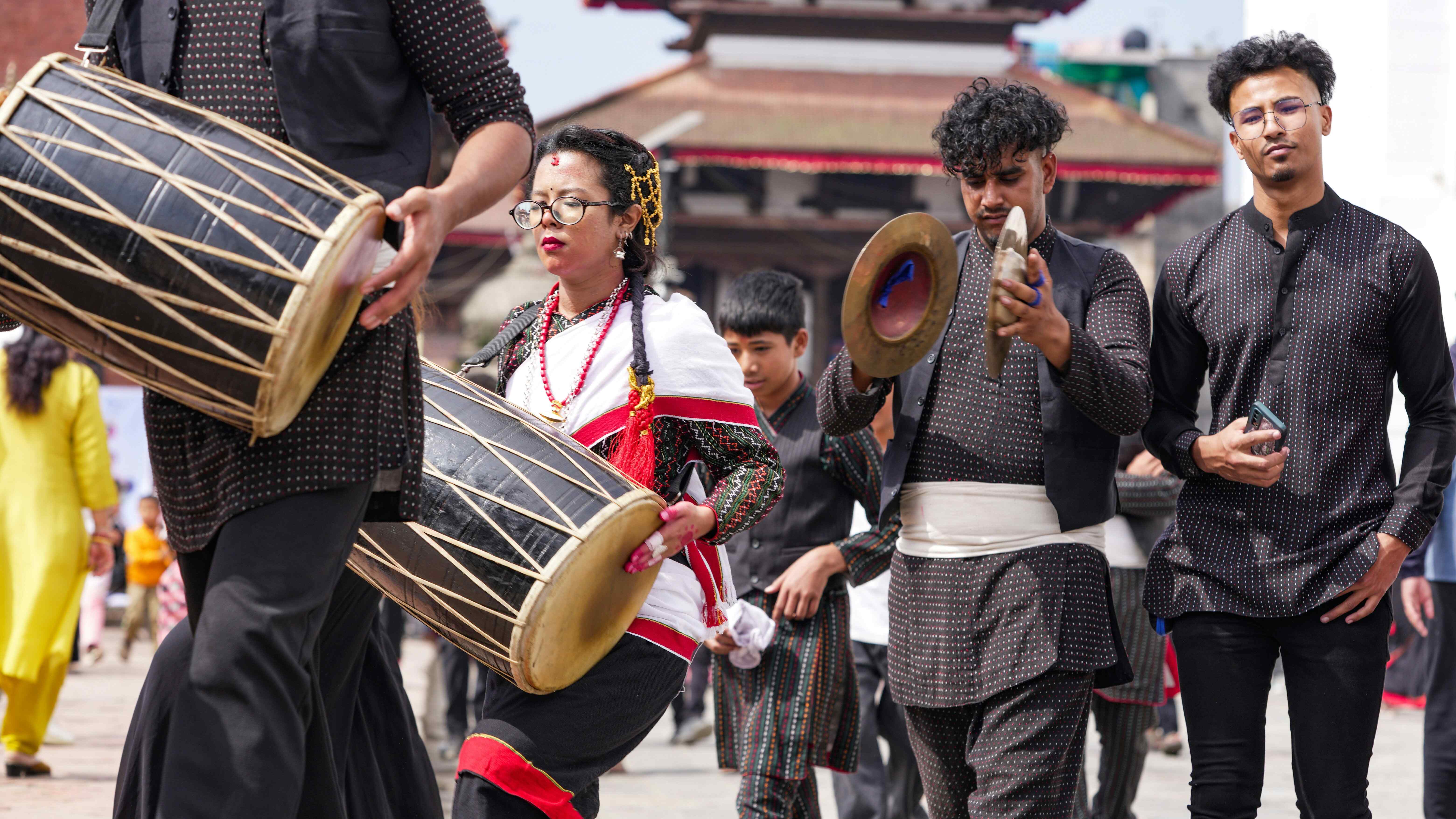
The Guthi System: How Musical Heritage Continues Across Generations
The Guthi system is an important part of understanding how some Newar cultural traditions have endured for centuries. A guthi is a traditional community-based institution that may organise religious observances, maintain temples and rest houses, manage festival responsibilities, or support particular social and cultural duties. Some guthis are closely connected with musical groups and the performance of music during specific rituals and festivals. Their responsibilities help link musical practice with the wider organisation of community life.
Musical knowledge within Newar communities has often been transmitted through families, community groups, instruction, and participation in repeated ritual performances. In some settings, a guthi or related traditional organisation provides a structure through which members learn when particular music is performed, which instruments are required, and what responsibilities accompany an event. These systems differ from one community and tradition to another, so not every Newar musical group is organised in the same way. Nevertheless, the relationship between community institutions, ritual calendars, and musical performance has been important to the continuity of many traditions.
The role of guthis becomes easier to understand when traditional music is encountered in its original setting. Hearing a dhimay ensemble during a procession, or a devotional group performing as part of a religious observance, reveals that the music depends on more than individual musicians. It also relies on community participation, shared responsibilities, and knowledge of the occasions on which it belongs. Exploring Kathmandu Valley heritage with an understanding of the Guthi system helps explain how Newar music remains part of contemporary life rather than existing only as a historical art form.
Songs, Instruments and Stories Passed Through Generations
Traditional Nepali music carries different kinds of stories, depending on the community, instrument, and performance setting. Gandharva folk songs have been associated with narratives, news, social commentary, and personal experiences. Newar devotional music, including Dapha, expresses religious themes through organised group singing, while traditional instrumental ensembles accompany processions, festivals, and important life events. These musical forms differ in their purpose, but each preserves knowledge and cultural expression through performance.
Instruments also carry their own histories. The sarangi is closely connected with Gandharva musicians and the tradition of singing narrative songs. The dhimay and other Newar instruments are associated with particular community and ritual practices, while Panche Baja instruments are linked to ceremonial occasions such as weddings. Learning their names and sounds provides a starting point, but understanding when they are played, who performs them, and how they fit into social life offers a much fuller picture of Nepal's musical heritage.
How can a musical experience help visitors understand Kathmandu's cultural history? Listening to a musician explain a song, observing the relationship between a drum and cymbals, or learning why a particular ensemble appears during a festival can connect sound with historical and social context. These details are often difficult to understand through sightseeing alone. A cultural day tour that combines heritage sites with opportunities to encounter traditional music can bring together architecture, community history, and living artistic practice in a way that makes the city's traditions easier to appreciate.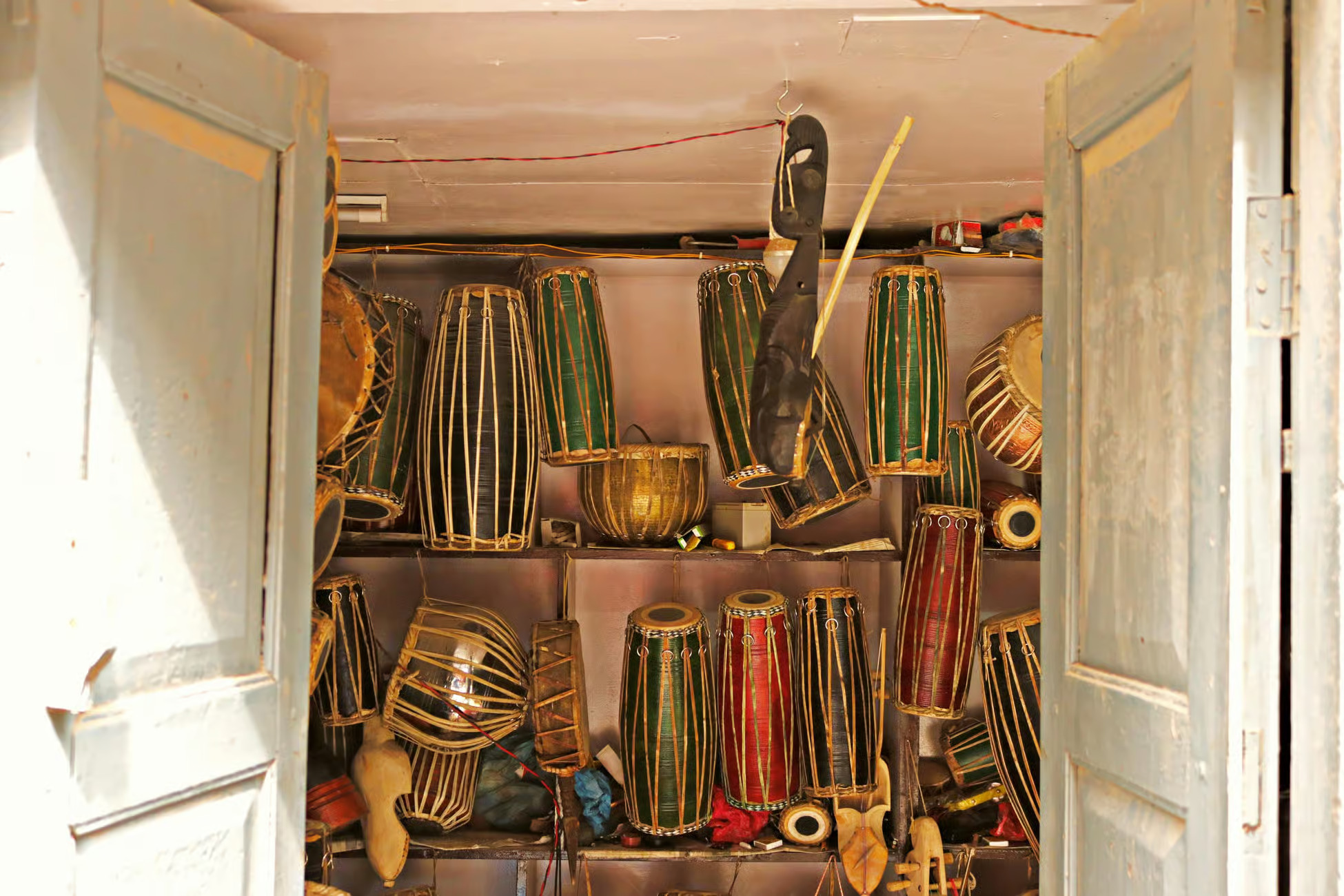
From Traditional Gatherings to a Changing Kathmandu
Kathmandu's musical traditions have continued to change alongside the city itself. Urbanisation, migration, modern communications, new forms of employment, and changing entertainment habits have influenced how traditional musicians work and how younger generations encounter their heritage. Songs that once travelled between villages through live performances can now be heard through recordings, radio, television, and digital platforms. These changes have created new opportunities for sharing music, but they have also altered the social settings in which some traditional forms were maintained.
The changes are particularly significant for musicians whose livelihoods have historically depended on ceremonial performance or community patronage. Gandharva musicians have had to adapt to changing demand for traditional folk songs, while performers of Panche Baja and Newar music continue to navigate the relationship between established practices and contemporary life. In some places, younger people are learning instruments that were previously played predominantly by older generations or men. Cultural programmes, community initiatives, teaching, and public performances also provide opportunities for traditional music to reach new audiences.
Bhaktapur offers a useful place to observe the relationship between heritage and contemporary life. Its historic streets, courtyards, temples, and public spaces remain connected with community activities and religious observances. Visiting in the late afternoon or evening can provide a different perspective from a daytime heritage walk, especially when local musical groups are rehearsing or a festival is taking place. However, traditional music is not guaranteed at a particular hour on an ordinary day, so the experience depends on the local calendar and activities taking place. Approaching these performances with curiosity and respect helps visitors appreciate them as part of community life rather than as entertainment arranged solely for an audience.
Keeping Nepal's Musical Traditions Alive
The continuation of Nepal's musical heritage depends on the people who perform, teach, make, and maintain its instruments. Gandharva musicians preserve repertoires connected with the sarangi, while Newar musical groups sustain traditions associated with instruments such as the dhimay, dhah, and bhusya. Musicians who perform Panche Baja carry forward the skills and ceremonial repertoire required for weddings and other auspicious occasions. Instrument makers also play an essential role, since traditional musical knowledge includes understanding how instruments are constructed, maintained, tuned, and played.
Community institutions, including guthis in Newar society, help sustain particular musical and ritual responsibilities where these traditions remain active. At the same time, the transmission of musical knowledge increasingly involves formal teaching, cultural organisations, performances, recordings, and online archives. These approaches can help introduce traditional music to younger audiences and document repertoires that might otherwise become less familiar. Long-term continuity, however, also depends on recognising musicians as skilled practitioners and ensuring that they have meaningful opportunities to perform and earn a livelihood.
Experiencing traditional music in Kathmandu can be a way to learn about these living traditions. A Gandharva folk music session can introduce the sarangi and the stories associated with its performers, while an encounter with Newar music can reveal the connections between instruments, rituals, festivals, and community institutions. Discovering Panche Baja adds another perspective on the role of music in Nepalese ceremonies. Each experience offers a different entry point into the country's musical heritage, helping listeners understand not only what they hear but also the people and cultural practices that keep it alive.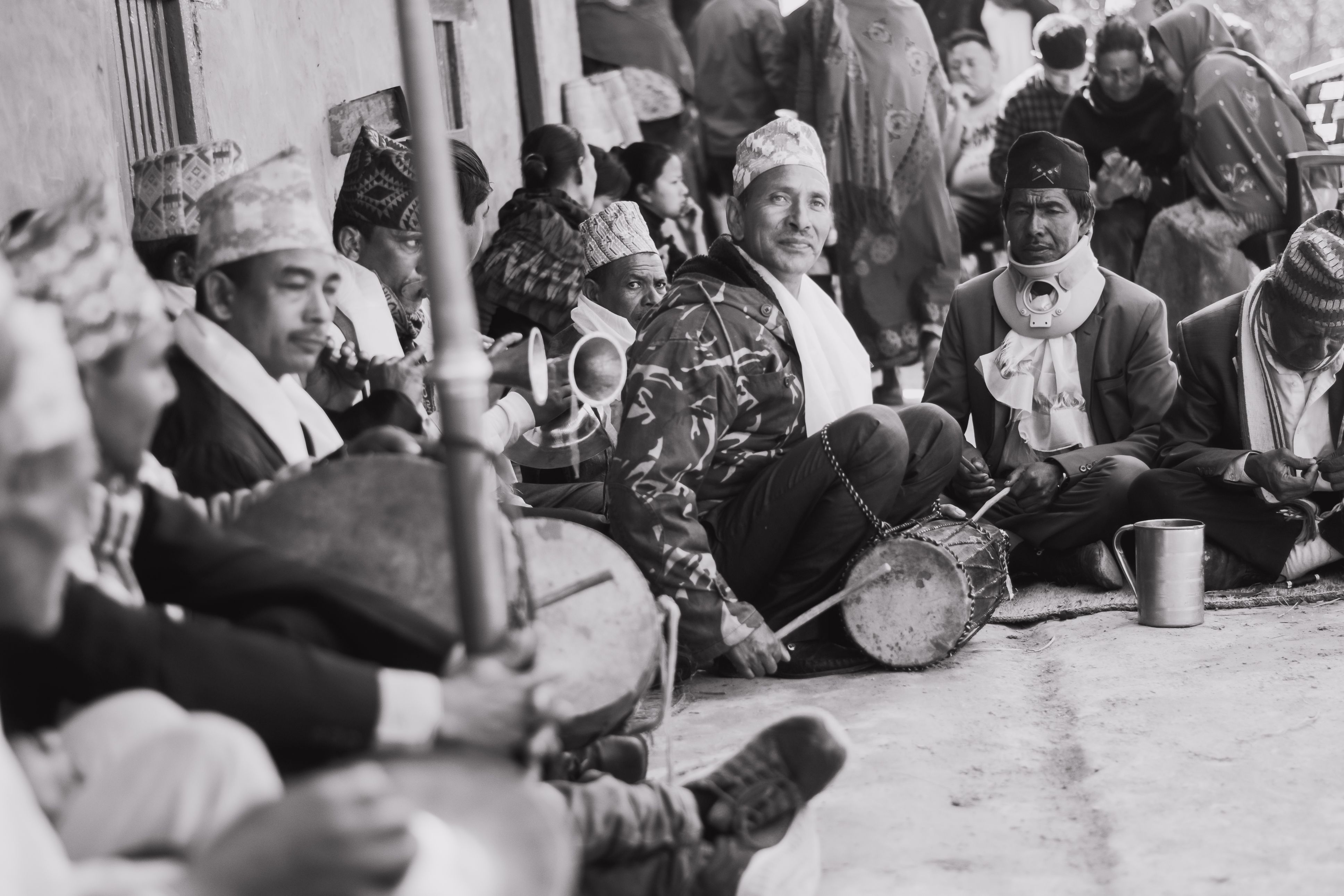
Hearing Kathmandu Differently
Kathmandu's musical heritage cannot be represented by one instrument or one community alone. The sarangi and Gandharva storytelling traditions, the ceremonial sounds of Panche Baja, and the ritual, devotional, and festival music of Newar communities each reveal a different dimension of life in Nepal. Their instruments, melodies, and performance settings reflect histories shaped by community relationships, religious practices, social change, and the transmission of knowledge between generations.
A day spent exploring Kathmandu through its music can bring these connections into focus. Walking through historic neighbourhoods, learning about the instruments behind traditional performances, meeting musicians, or visiting Bhaktapur when local musical activities are taking place offers a perspective that complements the city's better-known architectural landmarks. The experience also raises useful questions: Who performs this music? When is it heard? What stories does it carry, and how has it remained part of community life?
Listening closely reveals that Kathmandu's music is more than a collection of traditional sounds. It is a living expression of the people, places, and practices that shape the Kathmandu Valley. Understanding its musical heritage offers another way to discover the city, one that follows the rhythm of its communities as well as the paths between its historic sites.
Experience Kathmandu Beyond Its Monuments
Frequently Asked Questions
1. Where can you experience traditional Nepali folk music in Kathmandu?
Kathmandu offers opportunities to experience Nepali folk music through live performances, cultural programmes, and musical sessions with traditional performers. A Gandharva folk music experience is a particularly relevant way to learn about the sarangi, storytelling songs, and the community's musical heritage.