Blog Details
16Sep
The 13-Day Mustang Horseback Expedition: Riding Through Nepal's Himalayas
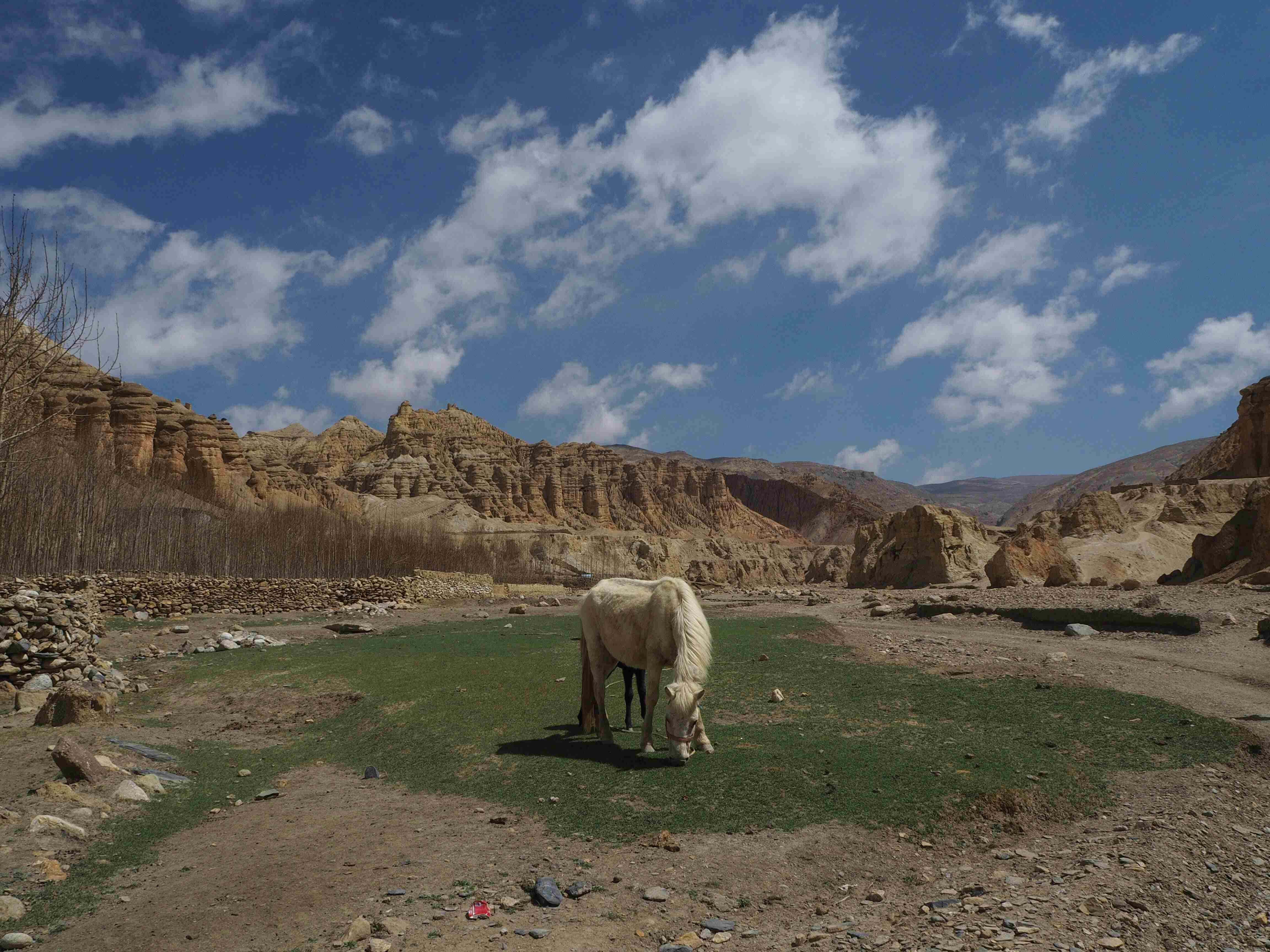
Mustang is one of Nepal's most extraordinary mountain regions, where the landscape changes dramatically from green valleys and forests to dry, windswept highlands. Beyond the Annapurna and Dhaulagiri massifs, the region opens into a Trans-Himalayan world of deep gorges, barren valleys, dramatic cliffs, ancient settlements, and trails that have connected communities across the mountains for generations.
One of the most distinctive ways to experience this landscape is on horseback. The 13-day Mustang Horseback Expedition combines mountain adventure with the traditional way of travelling through this rugged region, following old trails with local horsemen and Mustang horses. For travellers searching for the world's best horse riding experience in the Himalayas, Mustang offers a compelling combination of dramatic scenery, traditional horse culture, challenging mountain trails, and authentic local encounters.
Rather than simply moving between destinations, the journey offers time to experience the landscapes, villages, culture, and changing altitude of the Himalayas from the saddle.
What Makes Mustang a World-Class Horse Riding Destination?
A great horse riding experience is not only about the quality of the horse or the beauty of the landscape. It is also about the trail, the culture surrounding the journey, the relationship between rider and horse, and the feeling of travelling through a place where horses have a genuine historical role.
Mustang brings these elements together in an unusual way.
Here, horses have been part of mountain life for generations. They have carried people and goods along routes connecting villages and crossing difficult terrain, while local horsemen have developed an intimate understanding of the trails, weather, altitude, and animals.
Add to this the stark beauty of the Trans-Himalayan landscape and the challenge of riding towards one of the world's highest mountain passes, and it becomes easy to understand why Mustang can be considered for the world's best horse riding experience in the Himalayas.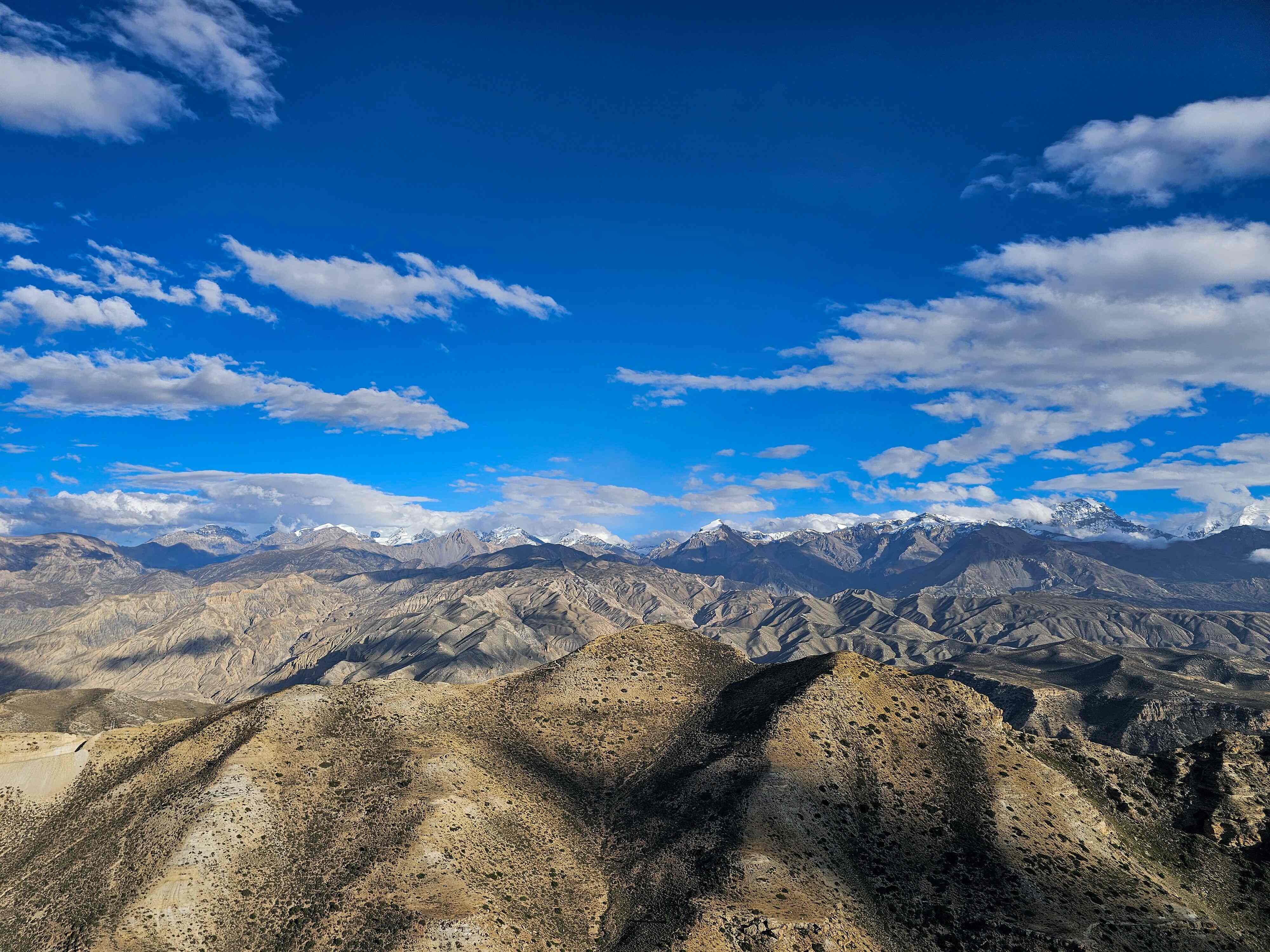
A Horseback Journey Through the Heart of Mustang
The expedition begins in Kathmandu before travelling overland to Pokhara and then north towards Jomsom. As the journey follows the Kali Gandaki River, the scenery gradually transforms. Green hills give way to increasingly dry landscapes, dramatic cliffs, rocky valleys, and the distinctive terrain of the Trans-Himalayas.
Jomsom marks the beginning of the horseback adventure. Here, riders meet their horses and local riding team before setting out along trails that have served the communities of Mustang for centuries. The route passes through villages including Jhong, Muktinath, Lubra, and Marpha, while reaching one of the highest points of the journey at Thorong La, 5,416 metres above sea level.
The experience is not designed around luxury or polished equestrian facilities. It is a mountain journey rooted in the realities of Mustang, with local accommodation, locally prepared meals, traditional equipment, and the knowledge of people who have spent their lives travelling through this terrain.
The Horses of Mustang
The horses are at the centre of the experience.
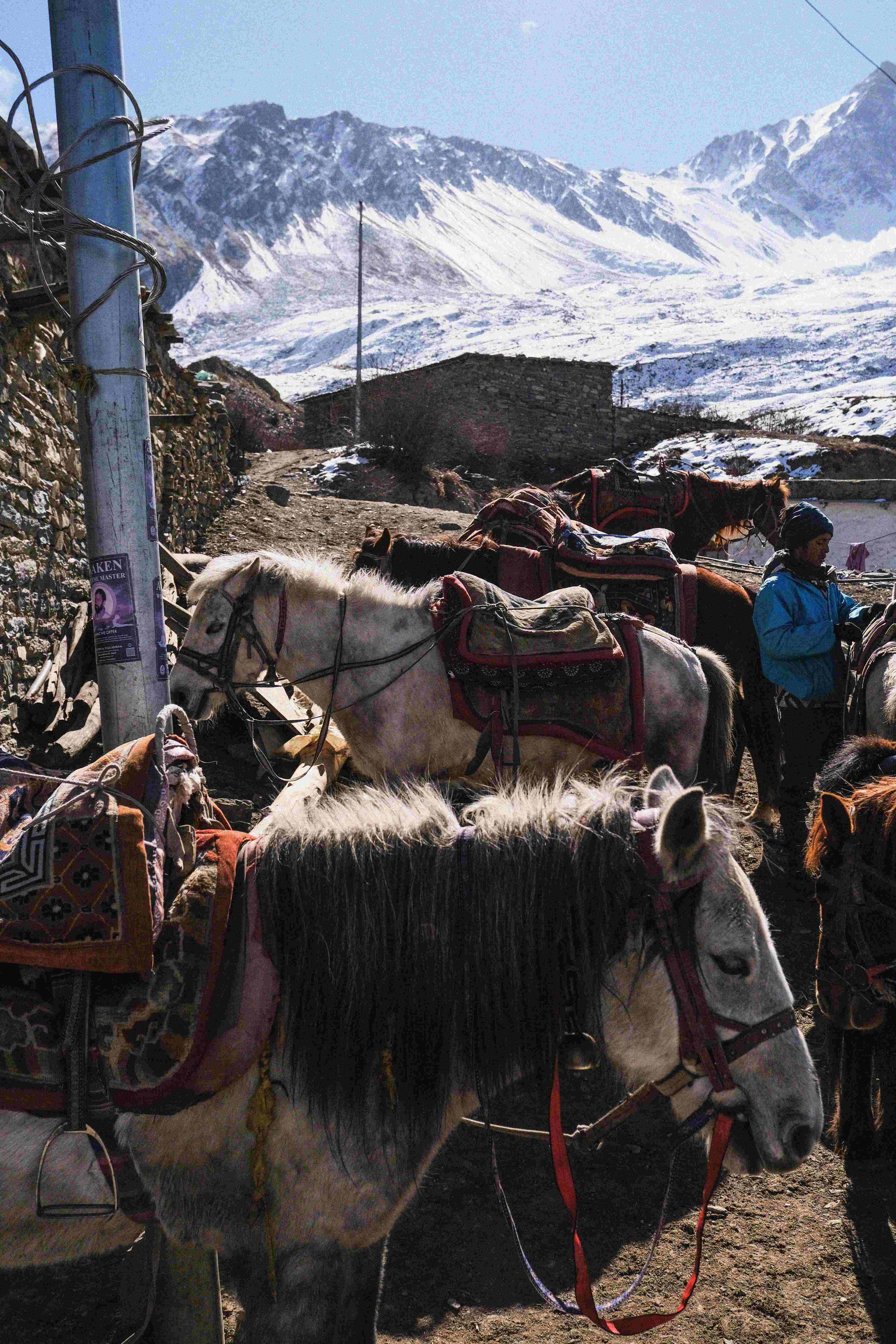
Mustang horses are small compared with many Western riding breeds, generally standing around 130–140 centimetres. Their size, however, does not reflect their ability. These mountain horses are strong, hardy, sure-footed, and adapted to the demanding conditions of high-altitude terrain. Their dense bones, low centre of gravity, stamina, and experience on mountain trails make them particularly suited to the landscape.
These are not horses raised solely for recreational riding. Horses have traditionally been working animals in Mustang, carrying people and goods through places where roads and vehicles have historically had limited access.
Even today, horses can be used to transport food, firewood, agricultural products, construction materials, and people between communities. Their continued role reflects the practical relationship between local families and their animals.
For travellers, this creates a very different horseback experience. You are riding an animal that belongs to the landscape and to a living tradition of mountain travel.
This is an important part of what separates Mustang from a conventional horse riding holiday. The horses are not simply provided for tourists; they remain connected to the communities and environment through which you are travelling.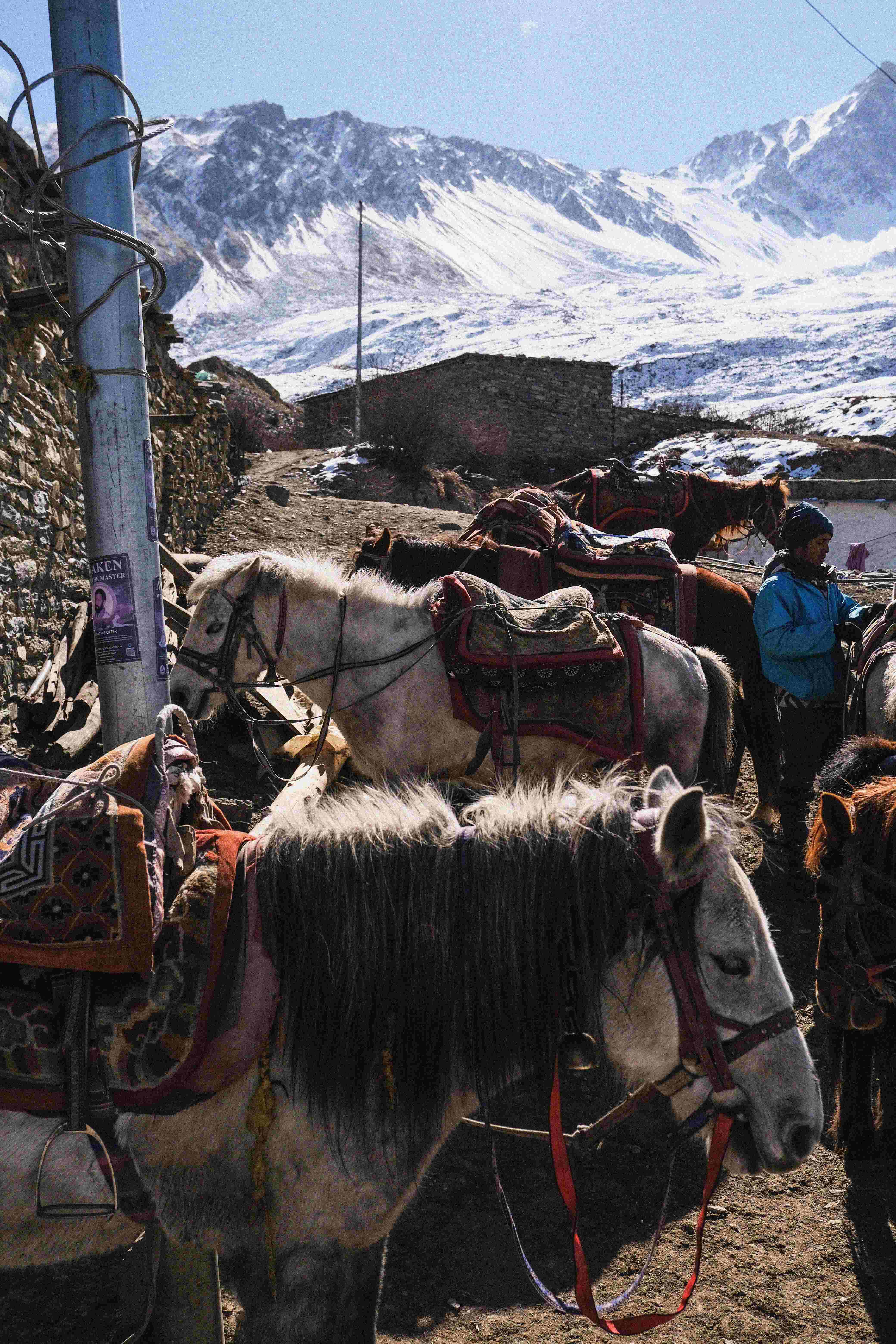
Riding With Mustang's Local Horsemen
A major part of the expedition is the opportunity to travel with local horsemen.
The people accompanying the journey bring knowledge that cannot simply be learned from a map. They understand the trails, weather, altitude, terrain, and behaviour of the horses, drawing on experience passed down through generations.
This local knowledge becomes especially valuable as the journey moves into more demanding terrain. Riding in Mustang is not the same as riding in a riding school or open countryside. Trails may pass along riverbeds, narrow mountain paths, rocky slopes, and exposed high-altitude landscapes.
The pace therefore remains practical and steady, with attention given to both horse and rider. The expedition typically involves around four to five hours of riding per day, although the duration varies according to the route and terrain.
For anyone looking for the world's best horse riding experience in the Himalayas, travelling with local horsemen is part of what makes the experience so distinctive. Their knowledge allows riders to experience the mountains through a local perspective rather than simply following a marked tourist trail.
From Kali Gandaki Valleys to the High Himalayas
Few aspects of the journey are as striking as the changing landscape.
The route begins around the Kali Gandaki Valley, one of the great natural corridors of the Himalayas. As the expedition gains altitude, vegetation becomes increasingly sparse and the surrounding landscape takes on the stark character of the Trans-Himalayan region.
Rock formations appear in shades of red, brown and grey. Deep valleys open between towering mountains, while traditional settlements emerge wherever farming and settlement remain possible.
Travelling on horseback allows these changes to unfold at a slower pace. Instead of watching the landscape pass from a vehicle window, riders move through it directly, following the contours of the terrain and stopping along the way to rest, observe, and interact with local communities.
This combination of horseback travel and dramatic Himalayan scenery is one of Mustang's greatest strengths. Few riding destinations offer the opportunity to move from river valleys and traditional villages into such stark, high-altitude landscapes within the same journey.
Jhong and the Traditional Villages of Mustang
The first days on horseback introduce riders to Mustang's distinctive villages and cultural landscape.
Jhong is one of the traditional settlements encountered on the journey, with stone houses, terraced fields, Buddhist heritage, and mountain views. From here, the route continues towards Muktinath, bringing together the natural and spiritual dimensions of Mustang.
Throughout the journey, prayer flags, mani walls, chortens, monasteries, and traditional stone houses reflect the region's strong Tibetan Buddhist heritage. These are not isolated cultural attractions placed along a tourist route. They remain part of communities where religious traditions continue to influence everyday life.
For riders, this adds another dimension to the journey. The trail is not only a route through spectacular scenery but also a way of moving through a living Himalayan cultural landscape.
Muktinath: A Sacred Himalayan Destination
Muktinath is one of the most important stops of the expedition.
Situated at around 3,800 metres, the sacred pilgrimage site is revered by both Hindus and Buddhists. Pilgrims travel from across South Asia to visit the temple complex, where the 108 sacred water spouts and naturally occurring flame are among the site's best-known features.
For a horseback journey, Muktinath also has an important practical role. An acclimatization day here provides time for riders to adjust to the altitude before continuing towards Thorong Phedi and the highest section of the expedition.
The pause is an essential part of the journey. At high altitude, the experience is not simply about covering distance. The body, the horses, and the mountain conditions all determine the pace.
Preparing for Thorong La
From Muktinath, the expedition continues towards Thorong Phedi at approximately 4,540 metres.
The landscape becomes increasingly rugged as vegetation thins and the route enters a more exposed alpine environment. This section of the journey requires a steady pace and careful attention to altitude, with regular breaks for both riders and horses.
The following day brings the defining challenge of the expedition: the ascent to Thorong La.
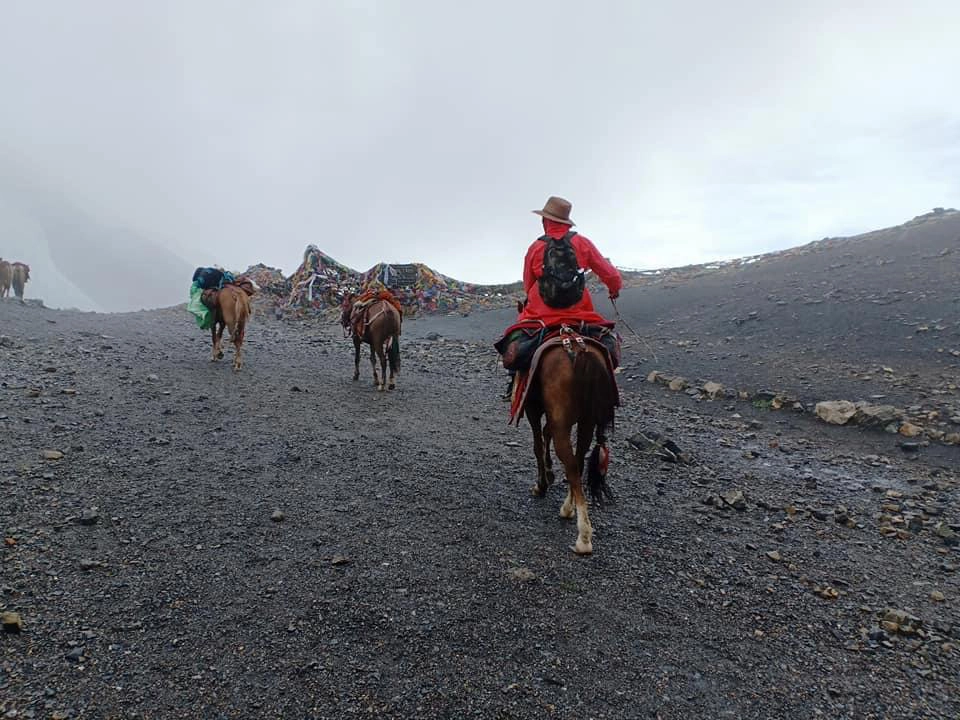
At 5,416 metres, Thorong La is one of the highest mountain passes in the world. The ride begins early, when mountain conditions are generally calmer, and gradually climbs towards the prayer flags marking the summit.
For experienced riders seeking an exceptional Himalayan adventure, this high-altitude crossing is one of the defining reasons Mustang stands out. It combines endurance, mountain scenery, horse handling, and altitude in a single section of the journey.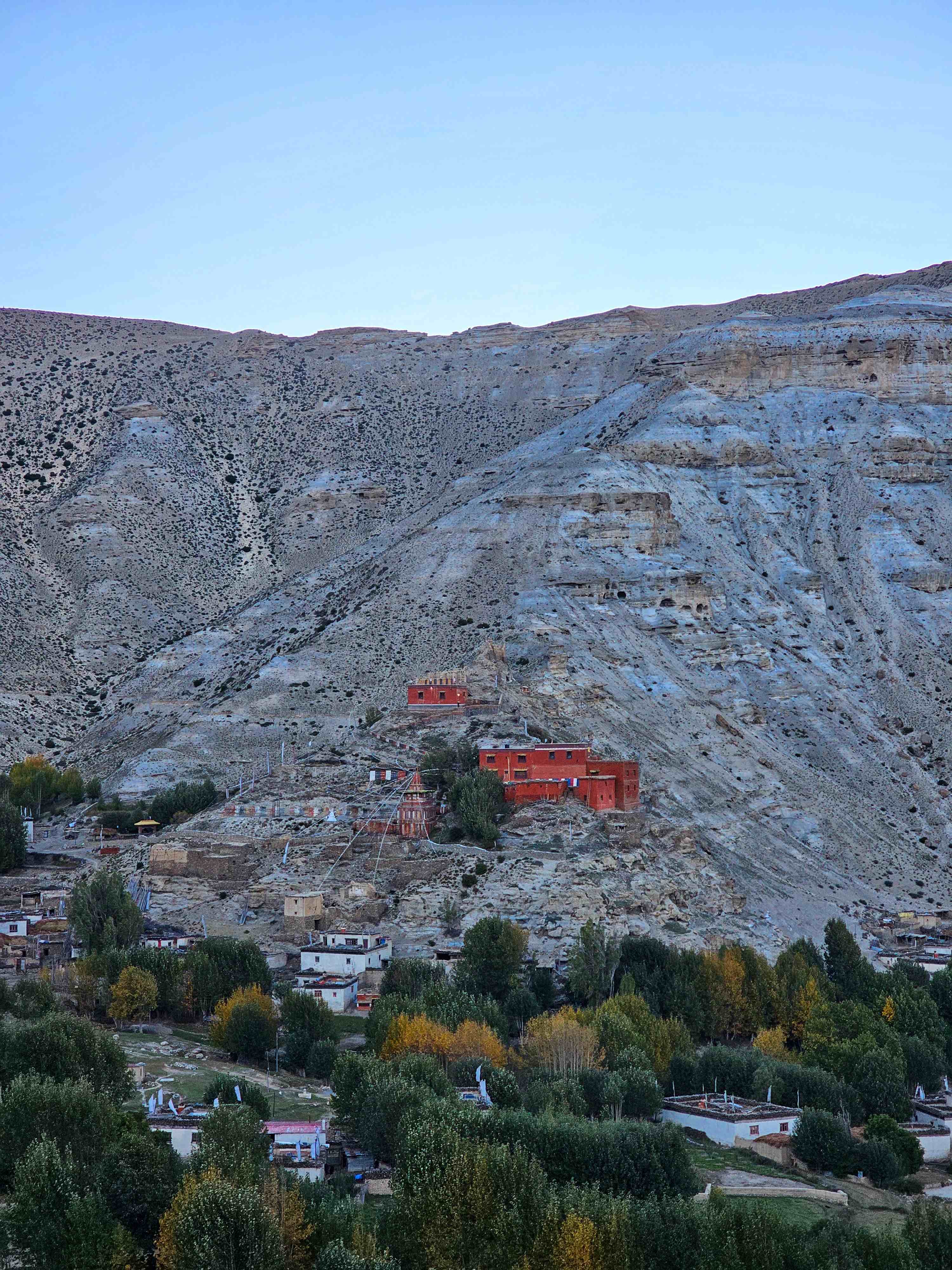
Crossing Thorong La on Horseback
Reaching Thorong La on horseback is the defining moment of the journey.
At this altitude, the landscape becomes vast and austere. Snow-covered peaks, steep slopes, glaciers, and open alpine terrain surround the trail. The final approach to the pass demands patience and stamina rather than speed.
Standing at 5,416 metres with the horses and local riding team is a powerful reminder of how people have historically travelled through the Himalayas. The experience connects modern adventure travel with an older tradition of crossing these mountains on animals rather than relying entirely on modern transport.
For this reason, Thorong La is more than another mountain viewpoint. It is a genuine riding challenge and one of the moments that can make Mustang feel like the world's best horse riding experience in the Himalayas for travellers drawn to high-altitude adventure.
After reaching the pass, the route descends towards Muktinath, offering a different perspective of the same mountains and giving riders time to appreciate the achievement before continuing into Lower Mustang.
Discovering Mustang's Bon Heritage in Lubra
After the high-altitude section, the journey turns towards Lubra.
This remote village is particularly significant for its connection with the Bon tradition, an ancient religious tradition that predates the widespread establishment of Tibetan Buddhism in the region. The village is home to a centuries-old Bon monastery and offers another perspective on the cultural diversity of Mustang.
The ride towards Lubra is also gentler, creating space to slow down after the demanding Thorong La crossing. Exploring the village on foot and observing its traditions adds another cultural dimension to the horseback journey.
Marpha and the Return to Jomsom
The final riding day follows the Kali Gandaki Valley towards Jomsom, passing through traditional settlements and the well-known village of Marpha.
Marpha is recognised for its whitewashed houses, cobbled streets, monasteries, apple orchards, and local apple products. It provides a fitting final stop before the expedition returns to Jomsom.
Here, riders say goodbye to their horses and local horsemen after several days of travelling together through the mountains.
The farewell is an important part of the experience. By this point, the horses are no longer simply transport for the journey. They have been companions through river valleys, mountain trails, villages, and the high pass.
More Than a Horse Riding Holiday
The 13-day Mustang Horseback Expedition is not a conventional horse riding holiday.
There are no manicured riding arenas or resort-style stables. The horses are working mountain animals, the trails are natural, and accommodation becomes simpler as the altitude increases. The experience is deliberately connected to the realities of travel in the Himalayas.
That is precisely what makes the journey distinctive.
Riders experience Mustang in a way that brings together adventure, landscape, history, culture, and local livelihoods. The journey also creates an opportunity for horse-owning families and local horsemen to earn income from skills and traditions that have long been part of life in the region.
A Journey That Supports Local Horse Culture
Horse tourism has a practical connection to Mustang's communities.
Agriculture is seasonal in much of the region, while livestock remains an important part of local livelihoods. Horses, along with yaks, sheep, and goats, have traditionally played an important role in life at high altitude. During the riding season, some families supplement their income by providing horses, guiding services, accommodation, and other logistical support to travellers.
Choosing a horseback journey therefore does more than provide a different way to see the mountains. It helps maintain a place for local horse owners and horsemen within Mustang's developing tourism economy.
For travellers interested in more meaningful forms of adventure travel, this connection between the journey and local communities is an important part of the experience.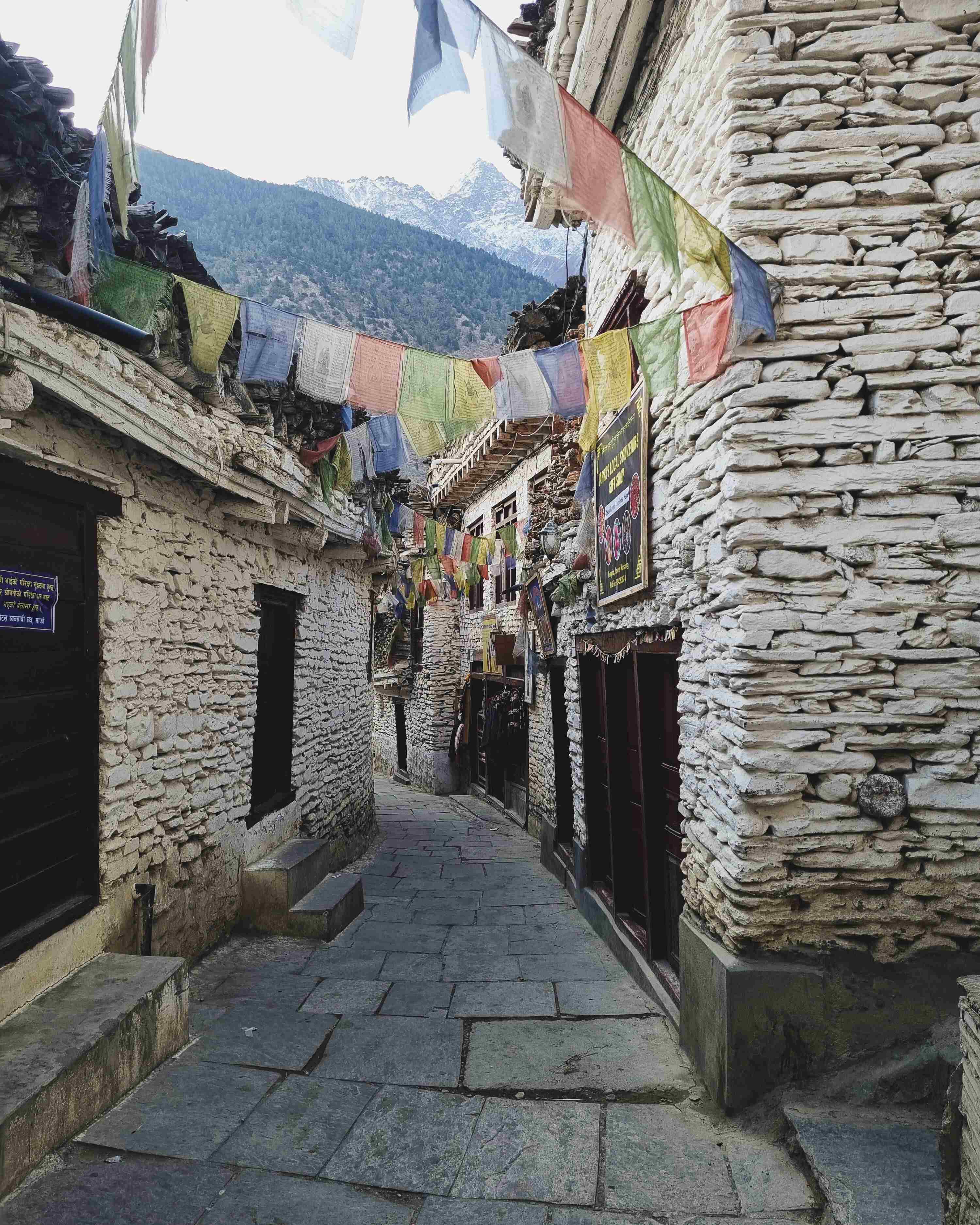
Who Is This Mustang Horseback Expedition For?
The expedition is best suited to travellers with an intermediate level of riding ability who are comfortable spending several hours in the saddle and travelling through rugged mountain terrain.
It is particularly appealing to travellers who want more than a conventional sightseeing tour: riders who are interested in mountain landscapes, traditional cultures, working horses, remote villages, and the experience of travelling through the Himalayas at a slower pace.
At the same time, this journey requires realistic expectations. Mustang's horses are working animals, and the accommodation and riding conditions reflect the remote Himalayan environment. It is an authentic mountain horseback expedition rather than a luxury equestrian resort experience.
Why Mustang Stands Out Among Himalayan Horse Riding Experiences
The Himalayas offer many opportunities for trekking and adventure, but horseback travel in Mustang has a character of its own.
You have horses adapted to high-altitude mountain terrain, local horsemen with generations of practical knowledge, traditional villages and Buddhist heritage, dramatic Trans-Himalayan scenery, and a route that reaches the extraordinary height of Thorong La.
Most importantly, horseback travel is not something artificially added to Mustang for visitors. Horses have a genuine place in the region's history and everyday life.
That combination gives Mustang a strong claim for travellers searching for the world's best horse riding experience in the Himalayas. Whether that is ultimately the "best" is a matter of personal preference, but for riders who value dramatic landscapes, cultural depth, challenging trails, and authentic mountain travel, Mustang is difficult to overlook.
Riding Through Nepal's Himalayas
Over 13 days, the journey moves from Kathmandu to Pokhara, through the Kali Gandaki corridor and into Mustang, before reaching Muktinath, Thorong Phedi and the 5,416-metre Thorong La. It then descends through Lubra and Marpha before returning to Jomsom and Kathmandu.
But the real journey is not measured only by kilometres or altitude.
It is found in the relationship between horse and rider, the knowledge of local horsemen, the communities along the trail, the ancient routes beneath the horses' feet, and the extraordinary landscapes of Mustang.
For travellers dreaming of the world's best horse riding experience in the Himalayas, the Mustang Horseback Expedition offers a rare opportunity to experience Nepal from the saddle, following mountain trails through one of the Himalayas' most remarkable regions.
Could your next adventure be on horseback?
Frequently Asked Questions
1. What is the best place in the world for mountain horse riding?
Mustang, Nepal, offers one of the world's most distinctive mountain horse riding experiences, combining traditional horses, ancient trails, dramatic Himalayan landscapes, and high-altitude riding.