Blog Details
15Jul
Monastery Stay in Nepal: Everything You Need to Know Before You Go
A monastery stay offers visitors the opportunity to experience daily life within an active Buddhist monastic community. Unlike hotels, lodges, or wellness resorts, monasteries are places where monks and nuns live according to long-established traditions centred on meditation, study, prayer, and service.
Several monasteries in Nepal welcome visitors through residential stays, meditation retreats, or structured programmes. These experiences provide insight into Buddhist philosophy and monastic life while allowing time for quiet reflection in peaceful surroundings.
Before planning a monastery stay, it is important to understand that a monastery is not a tourist attraction or a hospitality venue. It is a living religious institution. Visitors are welcomed as guests, but they are expected to respect the monastery's rules, routines, and way of life throughout their stay.
Monasteries That Welcome Visitors
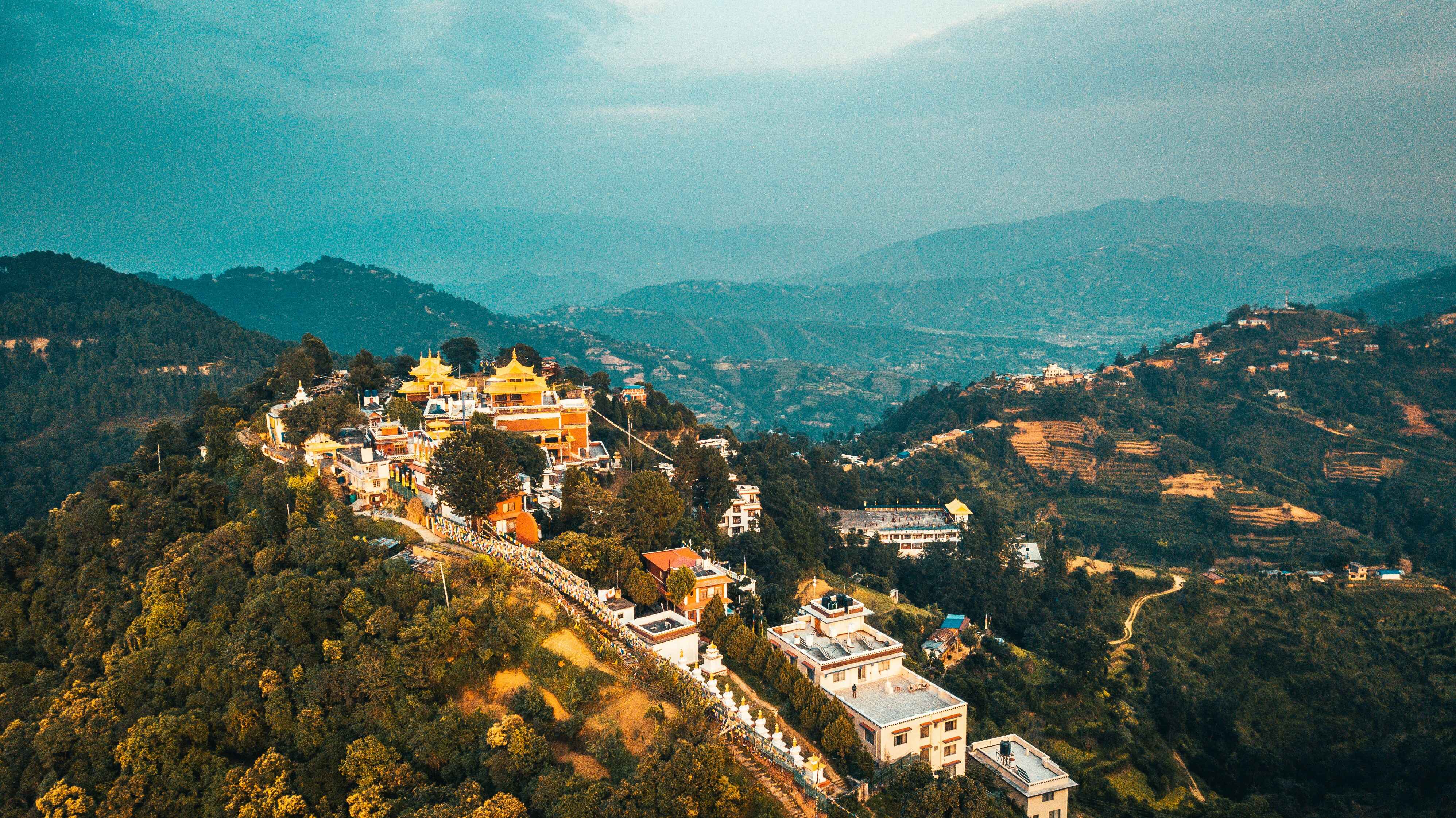
Namo Buddha Monastery
Located approximately 40 km southeast of Kathmandu (around 1.5–2 hours by road), Namo Buddha is one of Nepal's most important Buddhist pilgrimage sites. According to Buddhist tradition, this is where Prince Mahasattva, believed to be a previous incarnation of the Buddha, offered his body to save a starving tigress and her cubs.
The monastery is set among forested hills and agricultural landscapes overlooking the Himalayan foothills. Compared with monasteries within Kathmandu Valley, Namo Buddha offers a quieter rural setting, making it a popular destination for meditation retreats and residential stays.
Many visitors choose Namo Buddha for its combination of spiritual significance, natural surroundings, and established retreat programmes.
Location: 40 km from Kathmandu
Travel Time: Approximately 1.5–2 hours by road
Landscape: Forested hills, farmland, Himalayan foothills
Best suited for: Meditation retreats, mindfulness programmes, multi-day monastery stays
Pharping Monasteries
Approximately 20 km south of Kathmandu (45–60 minutes by road), Pharping is one of Nepal's most important centres for Buddhist retreat and meditation.
Rather than being centred around one monastery, Pharping is home to numerous monasteries, retreat centres, sacred caves, and meditation hermitages representing different Buddhist traditions. Notable monasteries include Azom Monastery, Neydo Tashi Chöling Monastery, Palyul Samten Ösel Ling Monastery, and several smaller retreat centres and hermitages spread across the valley.
According to Buddhist tradition, Guru Padmasambhava meditated in the sacred caves of Pharping before travelling to Tibet, making the area an important pilgrimage destination for Vajrayana Buddhists.
The area is characterised by wooded hills, small villages, cultivated farmland, and monastery complexes connected by quiet roads and walking trails. Despite its proximity to Kathmandu, Pharping retains a calm atmosphere centred on religious practice.
Location: 20 km from Kathmandu
Travel Time: Approximately 45–60 minutes by road
Landscape: Forested hills, villages, sacred caves, monastery complexes
Best suited for: Meditation retreats, Buddhist study, longer residential programmes
Hemja Monastery
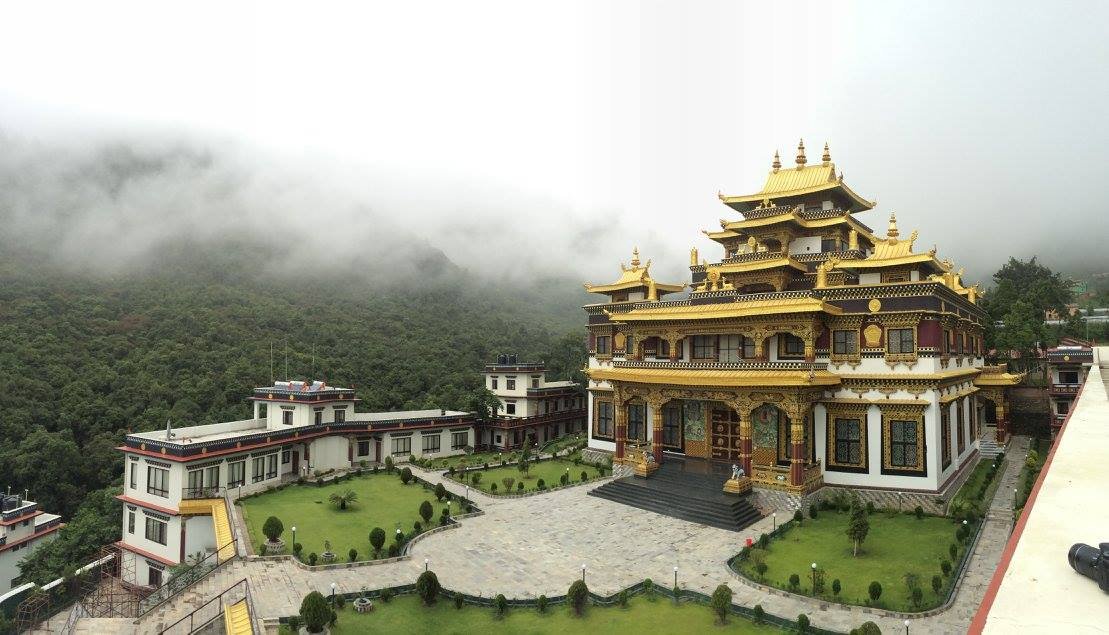
Pema Tsal Sakya Monastic Institute
Located in Hemja, approximately 10 km north of Pokhara (20–30 minutes from Lakeside), the monastery provides a peaceful rural setting overlooking the Pokhara Valley and the Annapurna range.
Surrounded by farmland and traditional villages, Hemja offers a different atmosphere from monasteries in Kathmandu Valley. The setting combines mountain views with a quieter countryside environment while remaining within easy reach of Pokhara.
Many travellers include a monastery stay here as part of a wider itinerary that also explores Pokhara and the surrounding region.
Location: 10 km from Pokhara
Travel Time: Approximately 20–30 minutes from Lakeside
Landscape: Countryside, farmland, Pokhara Valley, Annapurna views
Best suited for: Short meditation retreats and monastery stays combined with a Pokhara visit
Kopan Nunnery
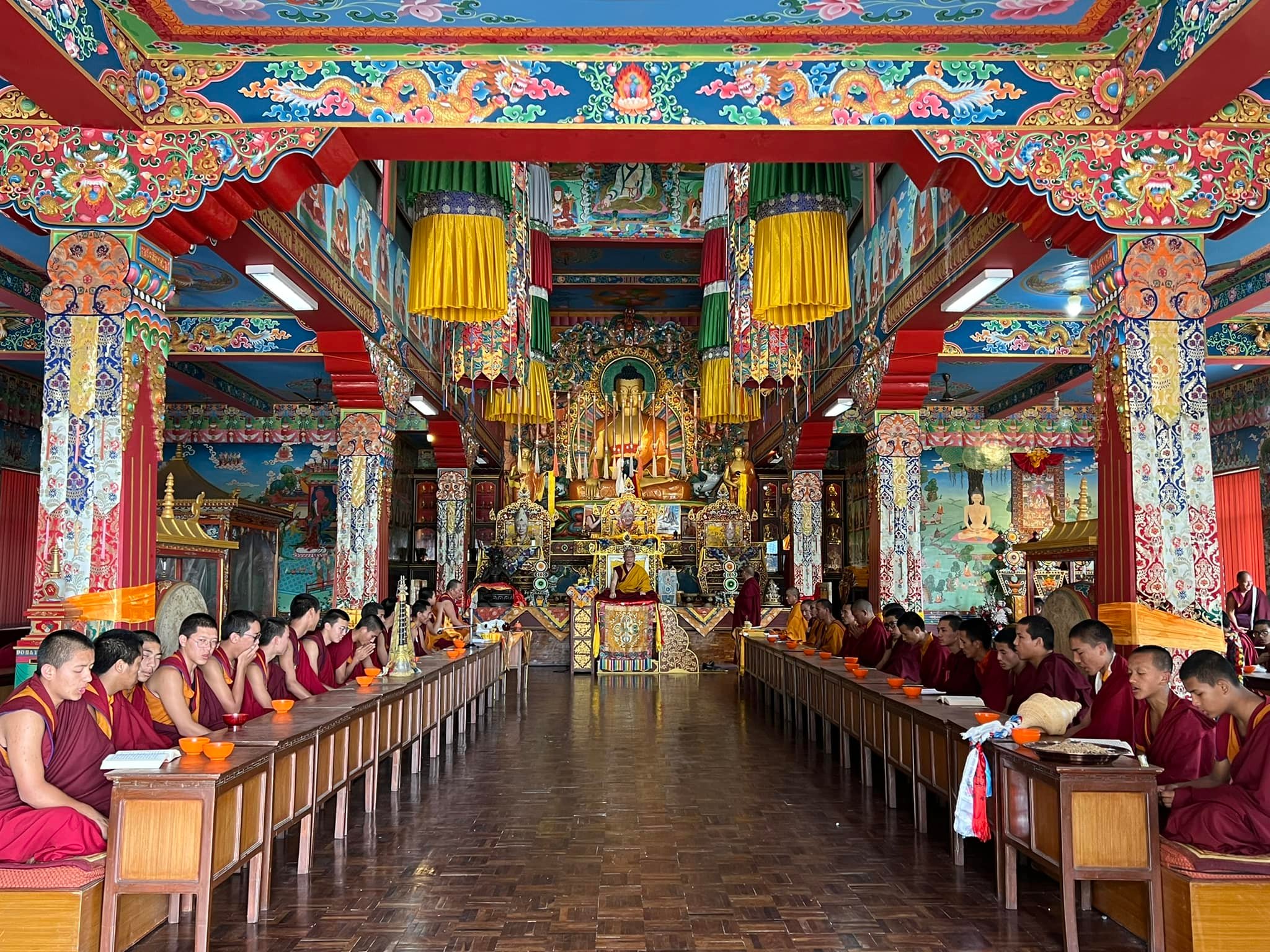
Located in the northeastern part of Kathmandu, Kopan Nunnery is a Buddhist nunnery dedicated to meditation, Buddhist study, and residential retreat programmes.
The nunnery welcomes visitors who wish to participate in its structured programmes. Overnight stays are not permitted. The minimum stay is three nights, allowing guests to settle into the daily routine of the nunnery and participate fully in the retreat programme.
Accommodation is separate for men and women, and couples are not permitted to share rooms. Guests are expected to observe the nunnery's dress code, check-in procedures, daily timetable, and visitor guidelines throughout their stay.
During their visit, guests may attend morning prayers, participate in Dharma talks when available, use the library, visit the incense workshop, or spend time within the monastery grounds. Nearby Kopan Monastery can also be visited, where English Dharma talks are regularly offered.
Location: Northeastern Kathmandu
Travel Time: Approximately 30–40 minutes from central Kathmandu
Landscape: Monastic grounds within the Kathmandu Valley
Minimum Stay: Three nights (overnight stays are not available)
Best suited for: Residential meditation retreats and Buddhist study programmes
Understanding Monastic Life
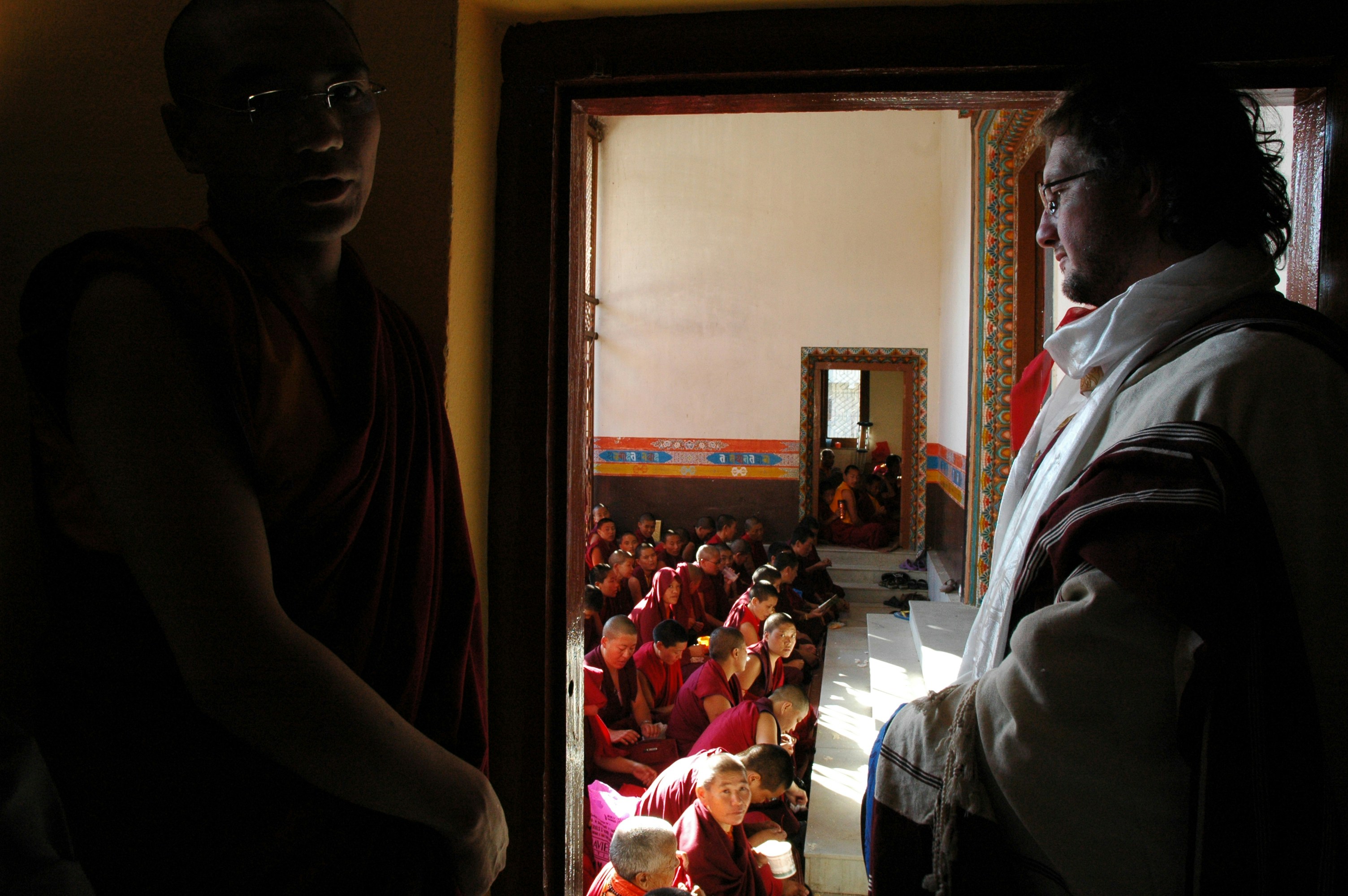
Every monastery follows its own traditions, but the daily rhythm is generally organised around prayer, meditation, study, meals, work, and rest.
These routines are followed every day by the resident monks or nuns as part of their religious practice. Visitors join this existing rhythm rather than following a programme designed around tourism.
For many guests, this structured environment is one of the defining aspects of a monastery stay.
Daily Schedule and Discipline
A monastery functions according to a fixed daily schedule, and guests are expected to follow it throughout their stay.
Prayer sessions, meditation periods, teachings, meals, and quiet hours all take place at designated times. These schedules are established for the resident monastic community and are not adjusted for individual visitors.
If you choose to stay at a monastery, punctuality and respect for the timetable are expected. Guests should arrive on time for scheduled activities and meals, observe periods of silence where required, and follow any instructions provided by the monastery.
The discipline of the monastery is an integral part of monastic life. Respecting this routine helps maintain the environment in which the monks and nuns live, study, and practise.
Meals
Meals are generally simple, nutritious, and often vegetarian, although menus vary between monasteries.
Food is served only at scheduled meal times. Outside these hours, meals are generally not available. Guests should therefore plan their day around the monastery's timetable.
Meals may be taken in silence or in a quiet dining environment, depending on the monastery's practice.
Accommodation
Accommodation is intentionally simple.
Rooms usually include essential furnishings such as a bed, mattress, blankets, and basic facilities. Some monasteries provide private rooms, while others offer shared accommodation.
The emphasis is on providing a clean and functional place to stay rather than hotel-style comfort.
Dress Code
Visitors are expected to dress modestly throughout their stay in recognition of the religious environment.
Appropriate clothing generally includes:
Long trousers or skirts below the knee
Shirts with sleeves covering the shoulders
Comfortable footwear
Plain, respectful clothing
Visitors should avoid:
Sleeveless tops
Shorts above the knee
Tight or transparent clothing
Clothing displaying offensive words or images
Individual monasteries may have additional dress requirements, particularly during ceremonies or teachings.
Photography
Photography policies differ between monasteries.
While outdoor photography is often permitted, photographs inside prayer halls, during ceremonies, or of monks and nuns may require prior permission.
Visitors should always follow the monastery's guidance regarding photography.
Visitor Etiquette
Visitors are encouraged to approach their stay with respect for the monastery and its community.
During your stay:
Follow the monastery's daily schedule.
Arrive punctually for prayers, meditation sessions, teachings, and meals.
Observe silence where requested.
Dress modestly at all times.
Remove footwear before entering prayer halls when required.
Ask permission before taking photographs.
Respect areas reserved for monks, nuns, or residents.
Keep mobile phones on silent mode and minimise unnecessary use.
Participate only in activities that visitors have been invited to join.
Follow all guidance provided by the monastery staff.
These guidelines help preserve the daily life of the monastery and ensure that visitors can experience it respectfully.
Is a Monastery Stay Suitable for You?
Monastery stays are open to people of different nationalities, cultures, and religious backgrounds. Previous experience with Buddhism or meditation is not always necessary, particularly for introductory retreats.
However, visitors should be comfortable with structured schedules, simple accommodation, communal spaces, and the discipline that forms part of daily monastic life.
Planning Your Stay
Every monastery has its own admission process, retreat calendar, accommodation arrangements, and visitor guidelines. Some accept independent visitors, while others only welcome guests through organised retreat programmes.
Planning in advance is recommended, particularly during busy seasons or for monasteries offering limited residential places.
Ready for Your Own Monastery Retreat?
Frequently Asked Questions
Can anyone stay at a monastery in Nepal?
Many monasteries welcome visitors regardless of their religious background, provided they are willing to respect the monastery's rules, routines, and dress code.