Blog Details
10Nov
Horseback Trekking vs Trekking on Foot: Which Is the Better Way to Explore Upper Mustang?
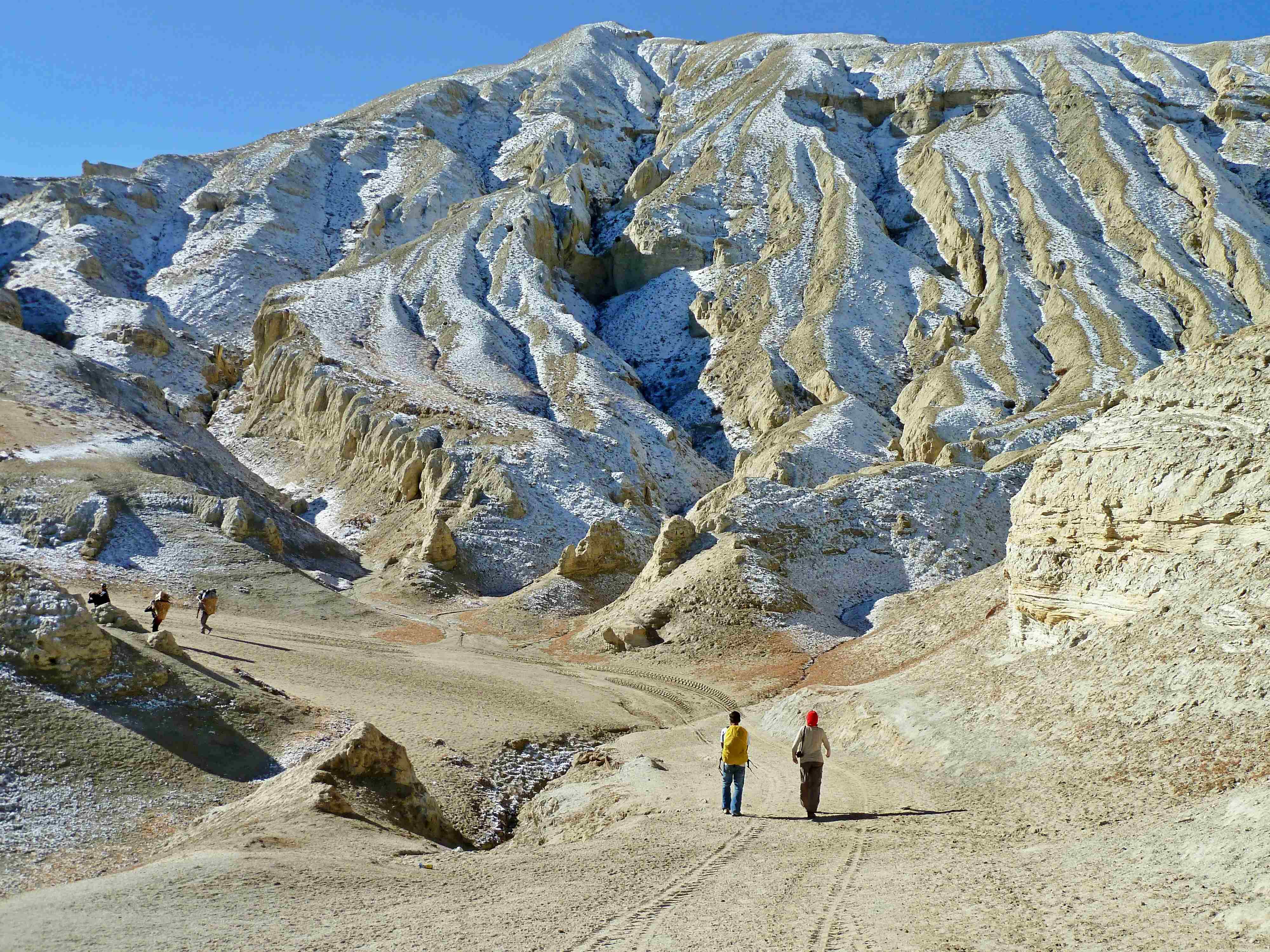
Upper Mustang occupies the northern part of Nepal's Mustang District, beyond the main Himalayan range and within the rain-shadow region of the Annapurna and Dhaulagiri mountains. Its geography is markedly different from Nepal's greener trekking destinations. The landscape consists of dry river valleys, wind-eroded cliffs, colourful sedimentary rock formations, barren hills and wide plateaus. The Kali Gandaki Valley forms a major geographical corridor through the region, connecting settlements that have historically maintained strong cultural and trading links with Tibet. The limited rainfall, strong winds and high elevation have shaped both the natural environment and the traditional way of life.
The landscape gradually changes as the trail moves north from Kagbeni towards the Tibetan border. Villages such as Tangbe, Chhusang, Chele, Ghami and Tsarang appear between stretches of exposed terrain, while traditional mud-brick houses, whitewashed monasteries, prayer walls and ancient chortens reflect the region's Tibetan Buddhist heritage. Further north, Lo Manthang, the historic walled settlement of Upper Mustang, stands at approximately 3,800 metres. Nearby, the caves of Chhoser reveal another dimension of the region's history, with numerous human-made cave chambers carved into high cliff faces. These geographical and cultural features make Upper Mustang particularly interesting to explore at a slower pace.
Both horseback trekking and trekking on foot provide access to this distinctive Himalayan environment, but the experience differs considerably. Walking allows a closer connection with the ground, making it easier to notice small details along the trail, explore narrow village lanes and adjust the pace whenever needed. Horseback riding offers a different perspective, particularly across the broad valleys and traditional mountain trails where horses have historically been used for transportation. The choice is therefore not simply between two ways of covering distance; it is also about how someone wants to experience the landscape, interact with their surroundings and engage with the region's traditional mountain culture.
Horseback Trekking vs Trekking on Foot: Understanding the Difference
Trekking on foot involves travelling through Upper Mustang using established walking trails, following the natural contours of the mountains and valleys. The journey requires continuous physical movement, with trekkers managing their own walking pace, footing and energy throughout the day. Ascents, descents, rocky paths and changes in elevation form part of the experience. Walking also allows greater flexibility to explore smaller paths, stop at viewpoints, photograph details along the route and spend additional time in villages. The experience is particularly suited to people who enjoy walking through remote landscapes and want to engage with the surroundings through direct physical exploration.
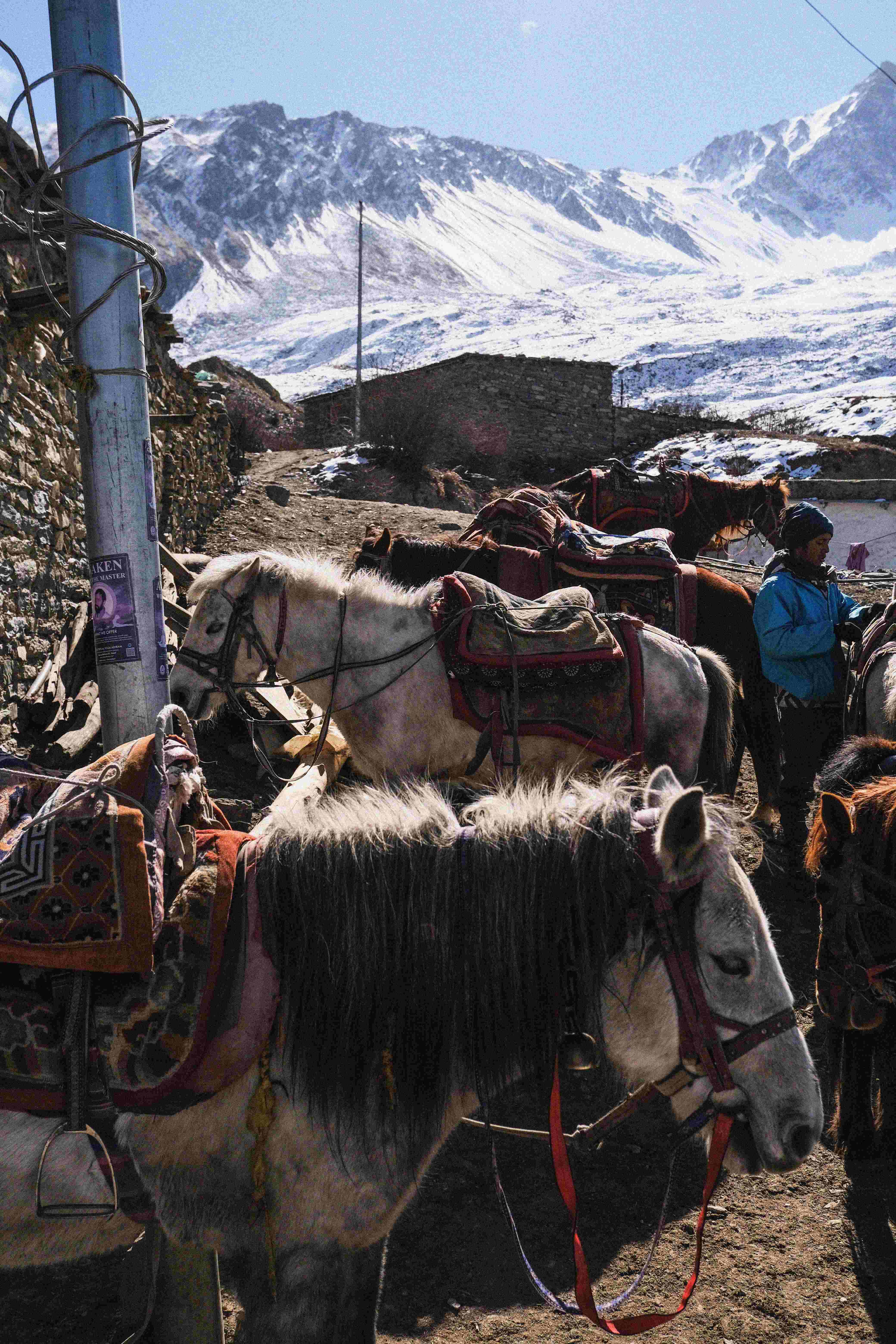
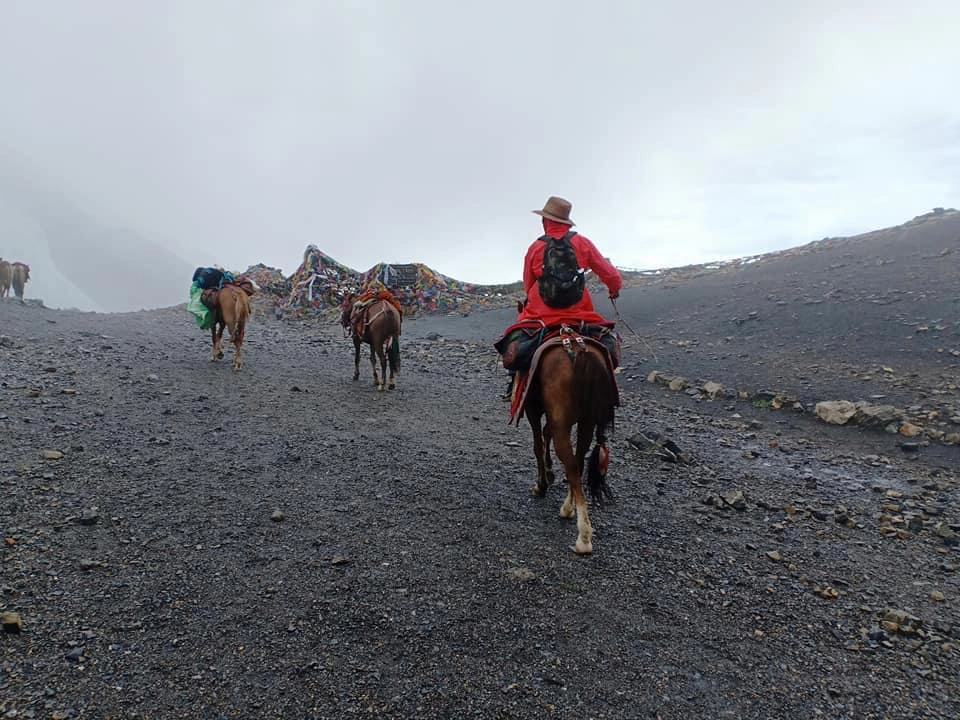
Horseback trekking follows many of the same traditional mountain corridors but involves travelling on a horse accompanied by an experienced horseman. Horses have long played an important role in transportation across Mustang, particularly in communities where mountain geography makes road access difficult. During a horse trek, riders generally travel at a steady pace while the horseman manages the animal and navigates the trail. The experience can feel quite different from walking, especially when crossing open valleys, following winding mountain paths or approaching settlements from higher viewpoints. However, riding requires balance, coordination and the ability to remain comfortable in the saddle for extended periods.
One important distinction is that horseback trekking does not mean remaining on the horse throughout the entire journey. Certain sections may be too steep, narrow, rocky or unsuitable for riding, requiring the rider to dismount and walk alongside the horse. Similarly, walking does not necessarily mean covering every section without stopping, as altitude, weather and terrain influence the pace. Both approaches require adaptation to mountain conditions, and neither removes the challenges associated with exploring a remote Himalayan region. The main difference lies in how the journey is experienced: one through continuous walking and the other through a combination of riding, occasional walking and guidance from local horsemen.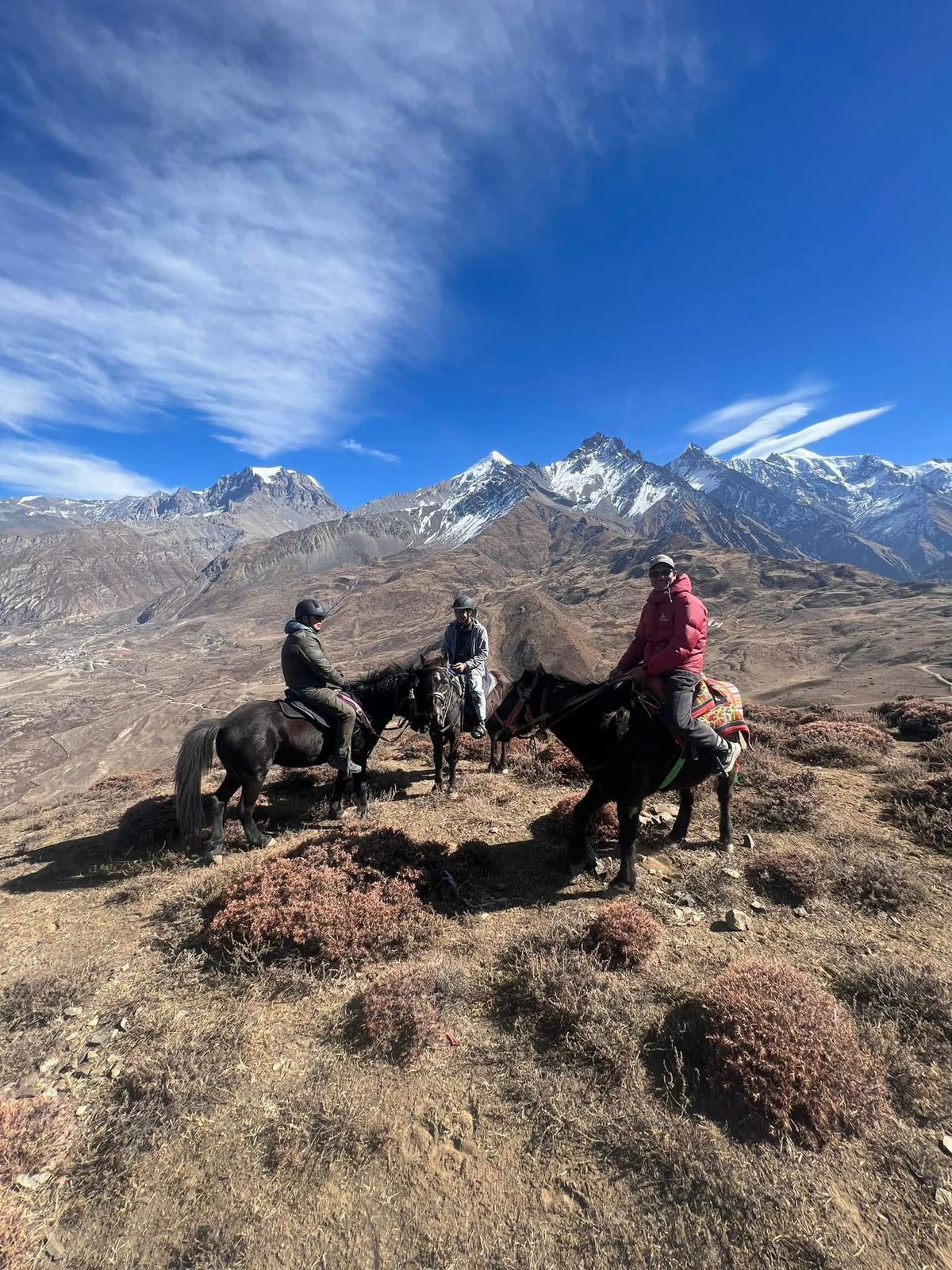
Physical Fitness and Endurance: Which Requires More Effort?
Trekking on foot in Upper Mustang requires a reasonable level of cardiovascular endurance and leg strength because walking continues for several hours across uneven mountain terrain. A typical trekking day may involve approximately 4–7 hours of walking, although the duration depends on the distance, elevation gain, trail conditions and individual pace. Sections around Chele, Samar, Ghami and the passes towards Lo Manthang involve gradual climbs, descents and stretches of exposed rocky ground. At elevations above 3,000 metres, the body receives less oxygen than at lower altitudes, which can make ordinary physical activities feel more demanding. Even trekkers with regular walking experience may notice increased fatigue, breathlessness and the need for more frequent breaks.
Horseback trekking involves a different combination of physical demands. Riders may spend approximately 4–6 hours in the saddle on a typical riding day, although this varies according to the route and terrain. Remaining seated for several hours requires maintaining balance, adjusting posture and responding naturally to the horse's movements. The inner thighs, hips, lower back and abdominal muscles are involved in stabilising the body, which can lead to soreness, particularly for people who are new to horse riding. Riders also need sufficient coordination and confidence to follow instructions, mount and dismount safely and manage their position on uneven sections. Previous riding experience can be helpful, but it does not remove the physical demands of a multi-day journey.
Neither activity should be considered physically effortless, and the type of preparation required is different. For walking, regular hiking, stair climbing, cardiovascular exercise and leg-strengthening activities can help prepare the body for prolonged movement at altitude. For horseback riding, developing balance, core strength, flexibility and familiarity with horses can make the experience more comfortable. It is also important to remember that physical fitness does not prevent altitude sickness. Someone who is comfortable riding or walking at lower elevations may still experience difficulty above 3,000–4,000 metres. Gradual acclimatisation and an appropriate pace remain important for both activities.
Daily Travel Pace and Time on the Trail: Walking vs Riding
A typical day of trekking on foot in Upper Mustang generally begins in the morning after breakfast, with walkers setting out along the established mountain trail. Depending on the section, trekkers may spend approximately 4–7 hours walking, including breaks along the way. The pace is usually steady rather than continuous, allowing time to rest, drink water, take photographs and enjoy the surrounding landscape. Some sections involve relatively gradual walking through open valleys, while others require longer climbs towards mountain passes. The time taken can vary considerably depending on individual fitness, altitude, weather and the amount of elevation gained or lost during the day.
During a horseback trek, the daily rhythm is organised around the horse's pace and condition. Riders may spend around 4–6 hours travelling on horseback, with intervals for rest, refreshments, photographs and meals. The horseman determines an appropriate pace according to the trail, the animal's condition and the surrounding environment. On relatively open stretches, the horse may maintain a steady walking pace, while rocky or narrow sections require greater care and slower movement. Riders may also dismount when necessary, meaning that a riding day can include periods of walking as well as time in the saddle.
It is important not to assume that horseback trekking always covers more distance or reaches the next settlement faster than walking. Although a horse can travel along certain stretches without the same continuous physical effort required from a walker, its pace is influenced by terrain, elevation, trail conditions and the need for regular rest. A narrow mountain path or steep descent may slow a horse considerably, while a walker may be able to maintain a relatively consistent pace. Consequently, daily travel time is not fixed for either activity. The distance, elevation profile and conditions of the particular trail matter more than the chosen mode of travel alone.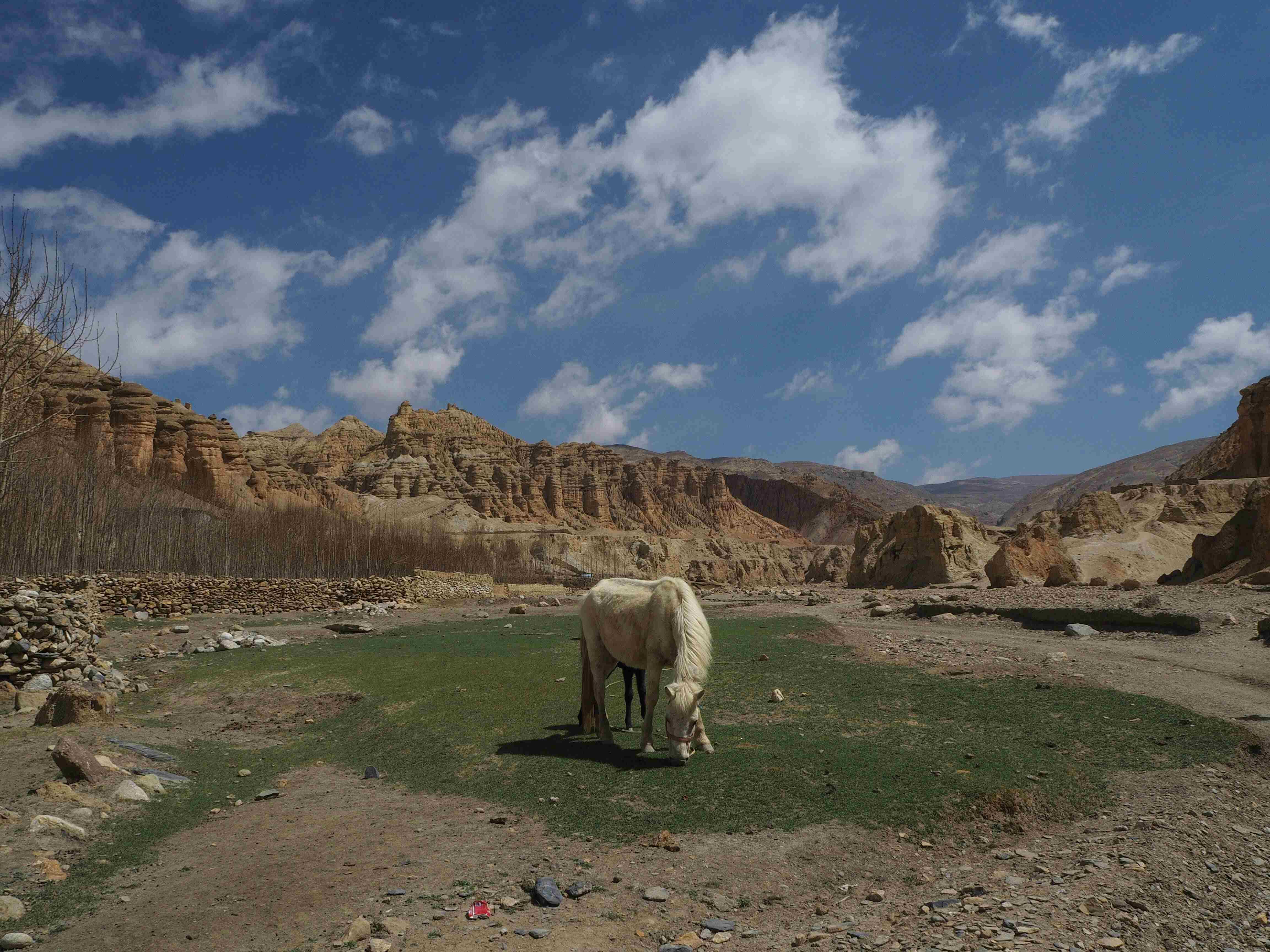
Exploring the Terrain: Mountain Trails, Valleys and High Passes
The terrain of Upper Mustang changes considerably throughout the region, creating different challenges for both walkers and horse riders. Around Kagbeni and Tangbe, trails pass through dry valleys and rocky landscapes shaped by the Kali Gandaki River and surrounding mountains. Further north, sections around Chhusang and Chele include narrow paths, exposed slopes and areas where the trail follows the natural contours of the hills. The landscape becomes particularly dramatic around the red and orange cliffs, eroded rock formations and deep valleys that characterise this part of Mustang. Walking through these areas involves negotiating loose stones, dusty paths and occasional steep sections, while remaining attentive to the changing trail conditions.
Higher sections of the Upper Mustang route involve mountain passes that require additional effort and care. Nyi La, at approximately 4,010 metres, is one of the notable passes on the route towards Ghami, while other crossings include Taklam La and Lo La. These elevated sections can expose trekkers to strong winds, colder temperatures and rapidly changing weather. Walkers need to manage their breathing and pace during ascents, particularly at higher elevations. Horse riders also encounter these conditions, but the challenges are different. Horses are accustomed to navigating mountain terrain, yet loose stones, narrow tracks and steep gradients can make certain sections unsuitable for riding. In such circumstances, riders may need to dismount and walk.
The differences become especially noticeable on descents and uneven sections. Walking allows individuals to choose their footing carefully, move at their own pace and stop whenever a particular section becomes difficult. Horseback riding depends more heavily on the horse's ability to navigate the trail and the horseman's understanding of its condition. Experienced horsemen know how to assess difficult sections and guide the animal accordingly, but not every trail is suitable for riding. River crossings, narrow ledges and steep slopes require particular attention, and conditions can change depending on the season, rainfall and erosion. Understanding these terrain differences is essential when deciding which form of travel is more appropriate for a particular section of Upper Mustang.
Cultural Encounters: Exploring Mustang's Villages, Monasteries and Heritage
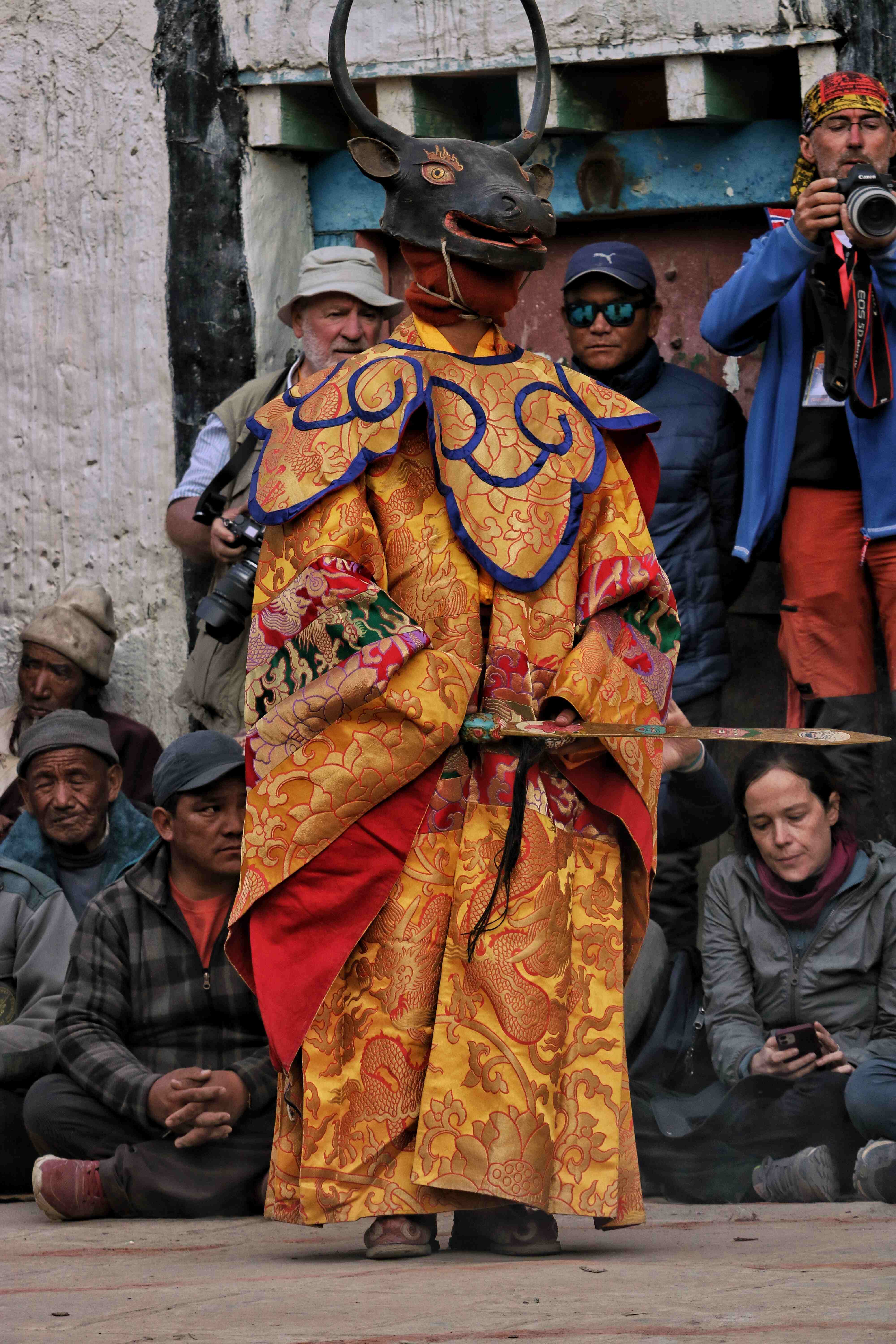
Upper Mustang is not defined by its landscapes alone. Its villages, monasteries, traditional houses and religious monuments reflect a distinctive cultural heritage shaped by centuries of interaction with Tibet and the wider Himalayan region. Settlements such as Kagbeni, Tangbe, Ghami, Tsarang and Lo Manthang preserve traditional architecture, with closely arranged mud-brick houses, flat roofs, narrow lanes and courtyards adapted to the dry mountain environment. Buddhist monasteries, prayer flags, mani walls and chortens form an integral part of village life. Walking through these settlements provides opportunities to observe architectural details, see everyday activities and understand how communities have adapted their lifestyles to the region's geography and climate.
Several important cultural sites offer a deeper understanding of Mustang's religious and historical background. Lo Manthang is particularly significant for its historic walled settlement, traditional monasteries and former royal palace. Ghar Gompa, also known as Lo Gekar Gompa, is an important Buddhist monastery associated with the region's religious traditions. The caves around Chhoser, including the well-known Jhong Cave, demonstrate the long history of human occupation and the use of cliffside caves for habitation and other purposes. These sites are not simply scenic stops; they represent different aspects of the region's settlement history, Buddhist traditions and architectural development. Their significance becomes clearer when time is taken to explore their surroundings and understand their historical context.
Walking and horseback trekking can both provide meaningful cultural encounters, although the way these encounters unfold may differ. Travelling on foot makes it easier to explore narrow village lanes, pause outside monasteries, observe traditional houses and spend time in smaller settlements. Horseback riders generally dismount before entering villages or visiting religious sites, allowing them to explore on foot once they arrive. The experience ultimately depends on the amount of time spent in each location and the opportunity to interact with local communities. Neither method guarantees a deeper cultural understanding on its own; the quality of the experience comes from taking the time to appreciate the traditions, architecture and everyday life of Upper Mustang.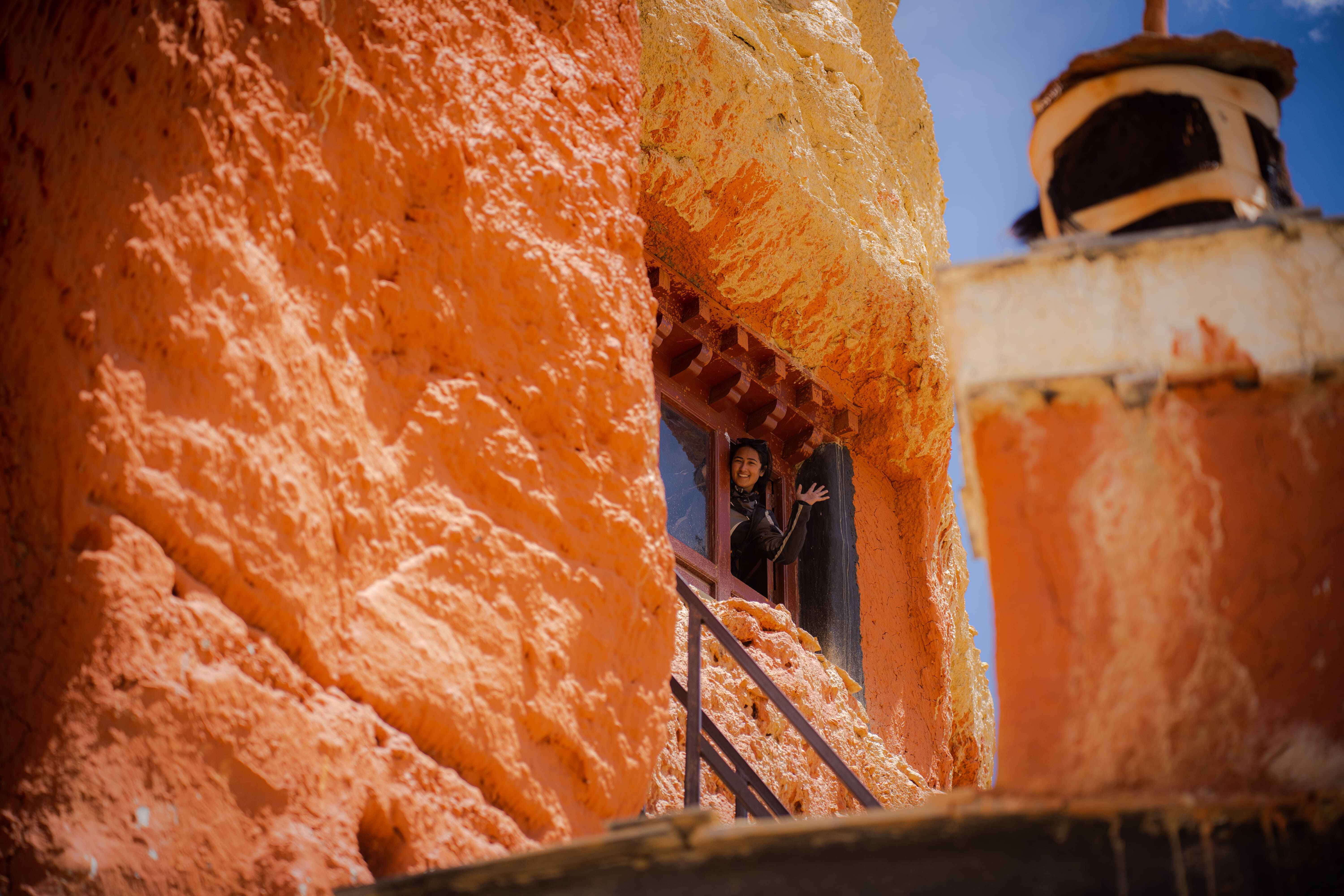
Altitude and Acclimatisation: Does Your Choice of Travel Matter?
Altitude is an important consideration when exploring Upper Mustang, regardless of whether the journey is undertaken on foot or horseback. Kagbeni sits at approximately 2,800 metres, while Lo Manthang is situated at around 3,800–3,840 metres above sea level. Several routes also cross passes exceeding 4,000 metres, including Nyi La. As elevation increases, atmospheric pressure decreases, meaning that less oxygen is available with each breath. This can affect physical performance and cause symptoms such as headaches, fatigue, dizziness, nausea and disturbed sleep. Even people who are physically fit may experience these effects when travelling from lower elevations to the high-altitude settlements of Mustang.
Trekking on foot can make the effects of altitude more noticeable during physical exertion, particularly when walking uphill or crossing high mountain passes. The body needs to work harder to maintain the same level of activity, and trekkers may find themselves walking more slowly than expected. Horseback riding reduces the amount of continuous walking required, but it does not eliminate exposure to high altitude. Riders breathe the same thinner mountain air, and the body still needs time to adjust to increasing elevation. Spending several hours on horseback can also be tiring, particularly when combined with cold weather, strong winds and changes in altitude throughout the day.
Acclimatisation is therefore important for both types of travel. A gradual ascent allows the body time to adapt, while adequate rest, hydration and attention to physical symptoms help reduce the risks associated with high-altitude travel. The appearance of severe symptoms, including difficulty breathing at rest, confusion or loss of coordination, requires immediate medical attention and descent to a lower elevation. Travellers should not assume that riding a horse makes a rapid ascent safe or that good physical fitness protects against altitude sickness. The choice between walking and horseback trekking does not change the basic precautions required when travelling above 3,000 metres.
Comfort and Challenges: What Should You Expect on Each Journey?
Trekking on foot involves spending several hours walking across exposed and often uneven terrain. Rocky trails, loose stones, dry riverbeds and dusty paths can place considerable strain on the feet, ankles and knees, particularly during long descents. The dry climate of Upper Mustang also means that travellers may experience strong sunlight, dust and considerable differences between daytime and nighttime temperatures. Proper trekking footwear, layered clothing, sun protection and adequate water are important for remaining comfortable. Walking also requires carrying or arranging the transportation of personal belongings, although the amount carried depends on the type of trek and available support arrangements.
Horseback trekking presents a different set of comfort-related challenges. Spending several hours in the saddle can cause soreness around the hips, thighs and lower back, especially for riders who are not accustomed to extended periods of riding. Traditional mountain saddles and riding equipment may feel unfamiliar to people who have previously ridden only in modern recreational settings. Maintaining a balanced position becomes particularly important when the horse moves across uneven ground or follows narrow trails. Dust, wind and cold temperatures can also affect comfort, while mounting and dismounting require coordination and care. Suitable riding trousers, comfortable layers and appropriate footwear can help make longer riding days more manageable.
Despite their differences, both activities involve exposure to the practical conditions of remote mountain travel. Accommodation in Upper Mustang is generally simpler than in major trekking centres, particularly in smaller settlements away from Lo Manthang. Facilities, food choices, hot water and electricity availability can vary between villages and individual lodges. Weather can also change quickly, with sunny conditions giving way to strong winds or colder temperatures. Whether travelling on foot or horseback, preparation is essential. Understanding the limitations of mountain facilities, carrying suitable clothing and allowing enough time for rest can make a considerable difference to the overall experience.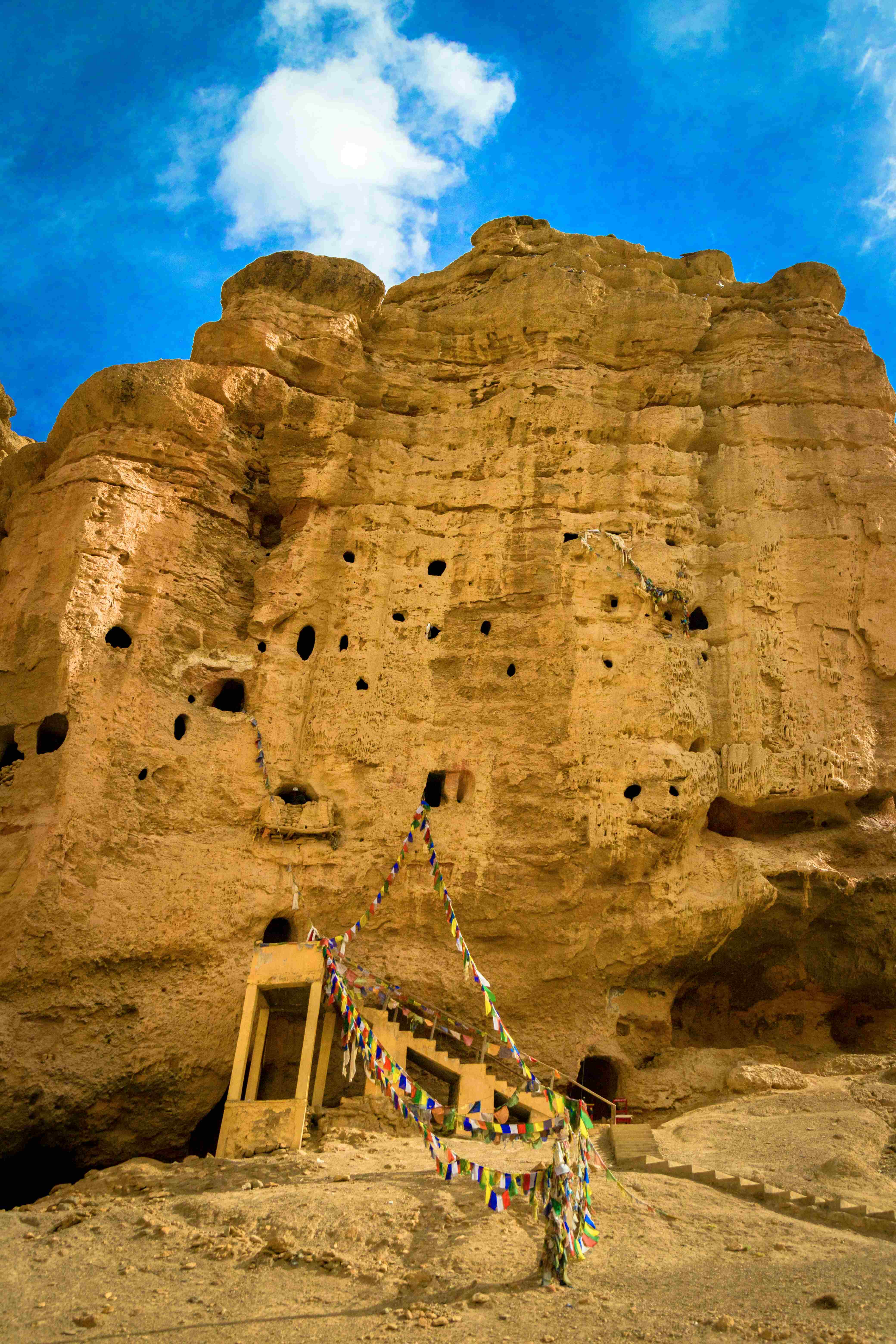
Who Should Choose Horseback Trekking and Who Should Trek on Foot?
Horseback trekking may appeal to people who enjoy riding, are comfortable around animals and want to experience the traditional mountain trails of Upper Mustang from a different perspective. It can be particularly interesting for those who want to travel across the region's broad valleys and rugged landscapes without relying entirely on walking for several hours each day. Previous horse-riding experience is beneficial because it helps riders understand balance, posture and basic communication with the animal. However, beginners may also be able to participate in suitable riding experiences, depending on the availability of appropriately trained horses, experienced horsemen and an assessment of their individual confidence and ability. Being comfortable around horses and following instructions are essential.
Trekking on foot may be more suitable for people who enjoy hiking, have reasonable endurance and prefer to explore mountain landscapes through direct physical activity. Walkers have greater flexibility to adjust their pace, take photographs, explore narrow village paths and spend time observing the details of the surrounding environment. This approach can be particularly rewarding for people interested in photography, landscape observation, village architecture and the gradual changes in vegetation and terrain. However, the ability to walk for several hours at elevations above 3,000 metres should not be underestimated. Previous hiking experience, appropriate preparation and an understanding of altitude-related challenges are important.
The decision should ultimately reflect individual interests, physical capabilities and expectations rather than assumptions about which activity is easier. Someone with limited experience of long-distance walking may find horseback trekking appealing, but prolonged riding can still cause physical discomfort and requires confidence around horses. Similarly, an experienced trekker may prefer walking because of the greater flexibility it offers, even when the route involves considerable elevation changes. Age alone does not determine suitability for either activity. Personal health, balance, stamina, altitude tolerance and riding confidence all need to be considered before choosing how to explore Upper Mustang.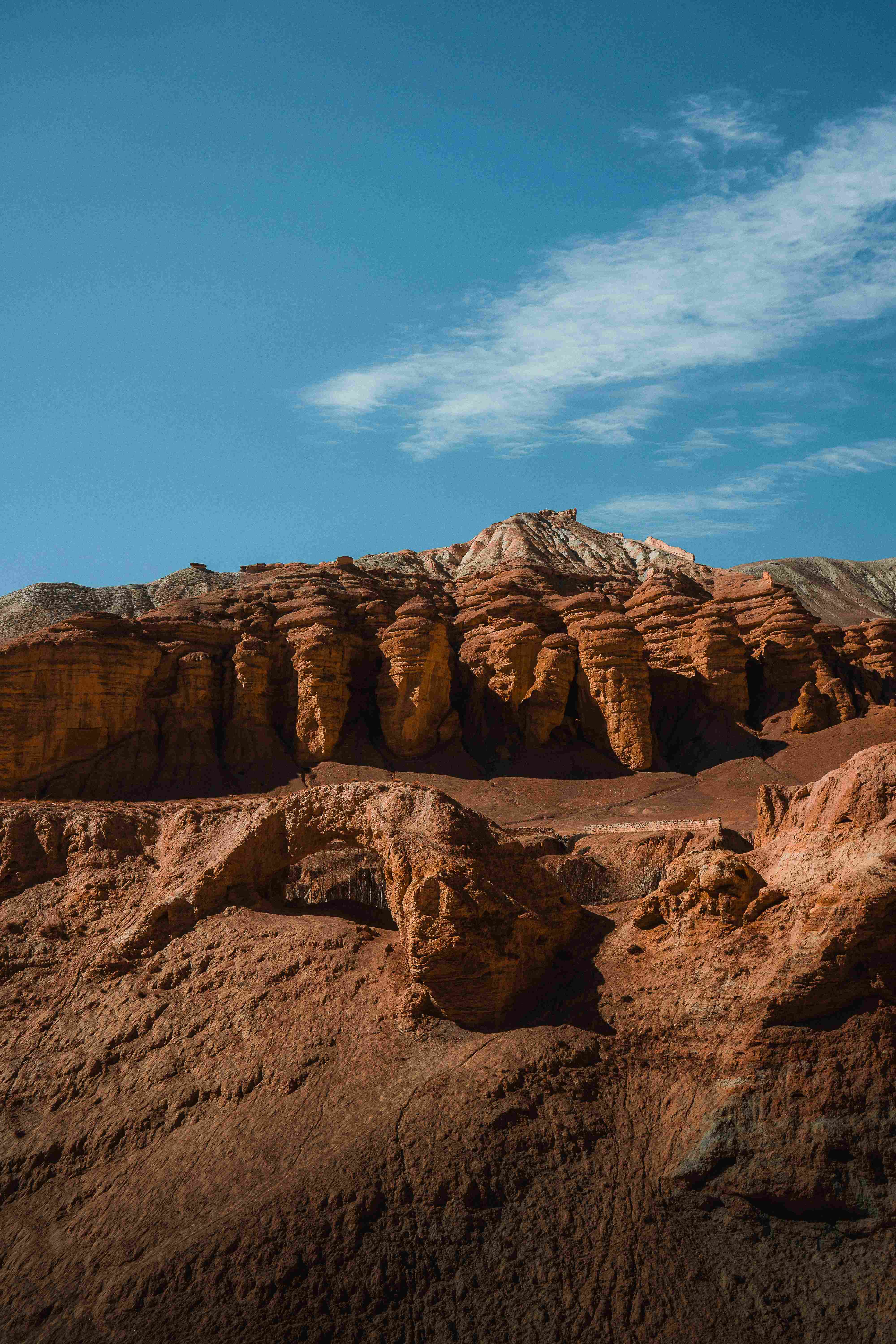
Horseback Trekking or Trekking on Foot: Which Is the Better Way to Explore Upper Mustang?
Choosing between horseback trekking and trekking on foot depends largely on the kind of experience someone wants from Upper Mustang. Walking offers a direct physical connection with the landscape, allowing trekkers to follow the mountain trails at their own pace, explore smaller settlements and experience the gradual changes in elevation. It also provides greater flexibility when navigating narrow village lanes, stopping at viewpoints or spending additional time around monasteries and historical sites. For people who enjoy hiking and have the physical endurance required for high-altitude walking, trekking on foot can be an especially rewarding way to experience the region.
Horseback trekking offers a different perspective, particularly across the wide valleys, open plateaus and traditional mountain routes of Mustang. It provides an opportunity to experience an established form of mountain transportation while travelling alongside experienced horsemen familiar with the terrain. Although it can reduce the need for continuous walking, it introduces its own challenges, including saddle discomfort, maintaining balance and navigating sections where riding is not possible. It also requires an understanding of the horse's needs and the conditions under which the animal can travel comfortably. For people interested in traditional horse culture and a different style of Himalayan adventure, this can make the experience particularly distinctive.
Neither approach is universally better, and both offer meaningful ways to discover Upper Mustang's natural and cultural heritage. The most suitable choice depends on whether someone prefers the physical engagement of walking or the experience of travelling on horseback, alongside their fitness, riding confidence and personal interests. The region's dramatic landscapes, historic settlements, monasteries and Tibetan-influenced traditions remain central to the experience regardless of how the trail is explored. What matters most is choosing a way of travelling that allows enough time to appreciate Upper Mustang beyond simply reaching the next destination.
Ready to Explore Upper Mustang?
Frequently Asked Questions
1. Is horseback trekking better than trekking on foot in Upper Mustang?
Neither is universally better. Horseback trekking offers a different way to experience Mustang's traditional trails and open valleys, while walking provides greater flexibility to explore villages, side paths and the surrounding landscape. The better option depends on personal interests, physical fitness and riding confidence.