Blog Details
18Nov
Horseback Riding to Lo Manthang: Exploring the Walled City of Upper Mustang
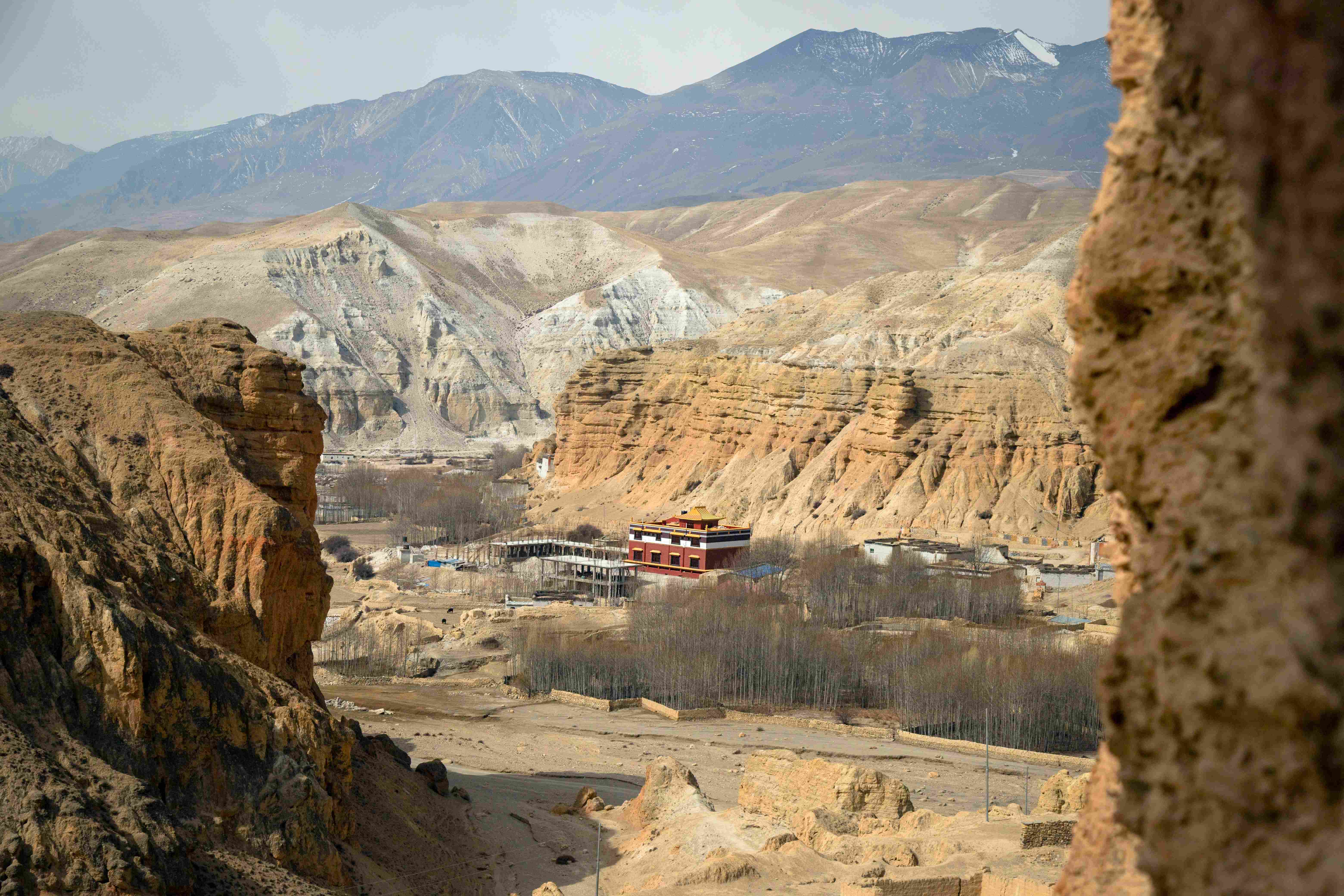
Lo Manthang, the historic walled city of Upper Mustang, is one of the most distinctive settlements in the Nepalese Himalayas. Situated at approximately 3,800 meters above sea level, it lies in the rain-shadow landscape of the Annapurna and Dhaulagiri ranges, where dry valleys, eroded cliffs, rocky mountains and traditional villages create a landscape quite different from Nepal's greener Himalayan foothills. Once the capital of the Kingdom of Lo, the settlement preserves an important part of the region's history, architecture and Tibetan Buddhist heritage.
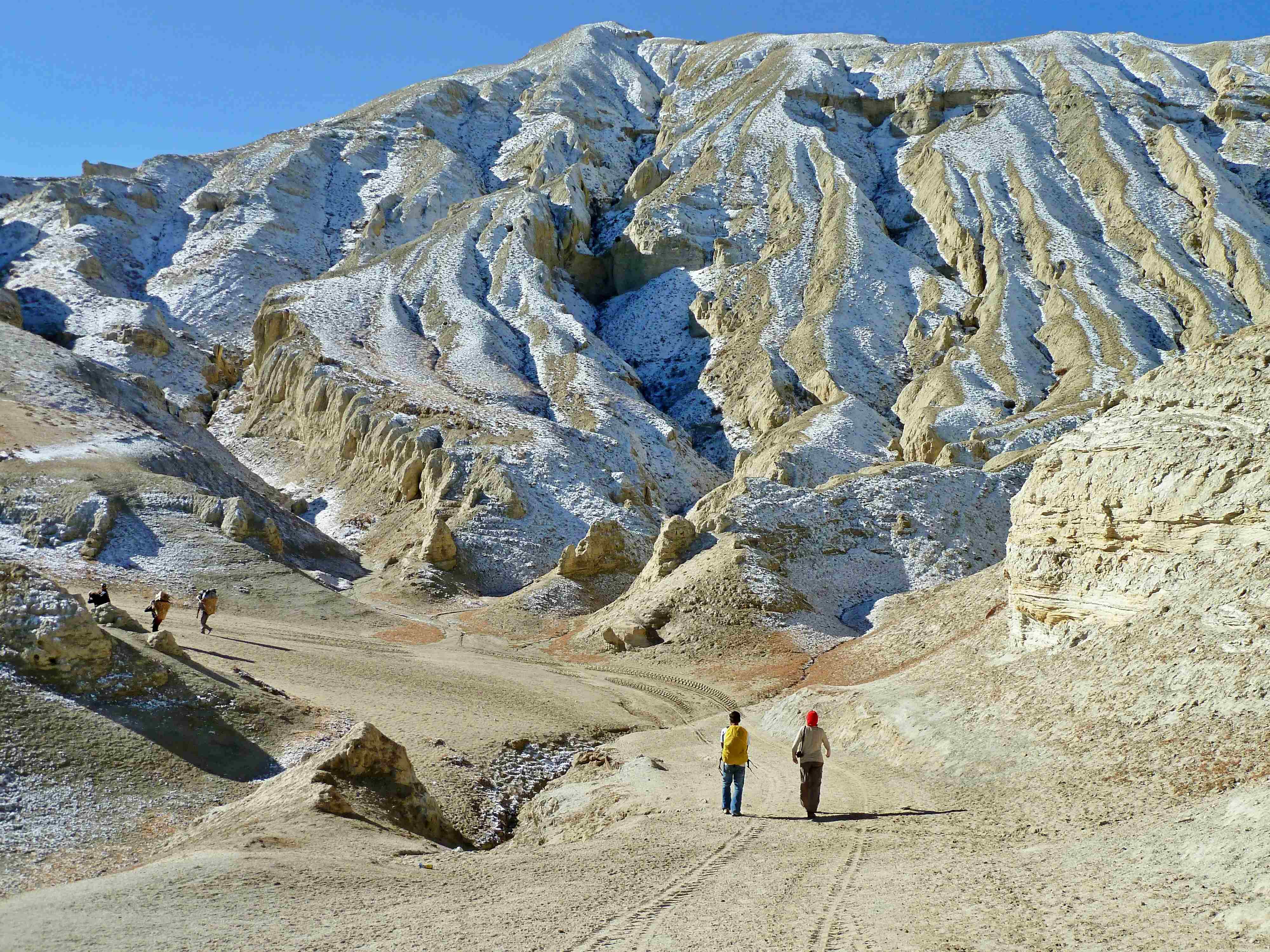
Reaching Lo Manthang on horseback offers a different way to experience this remote part of Nepal. The journey follows traditional mountain corridors through villages such as Kagbeni, Chhusang, Chele, Samar, Syangboche, Ghami and Tsarang. Along the way, the landscape changes from the broad Kali Gandaki Valley to narrow mountain passages, high ridges, dry plateaus and settlements built from locally available stone and earth. The journey is not simply about reaching a destination; it is also an opportunity to understand the relationship between horses, local communities and travel in the Himalayas.
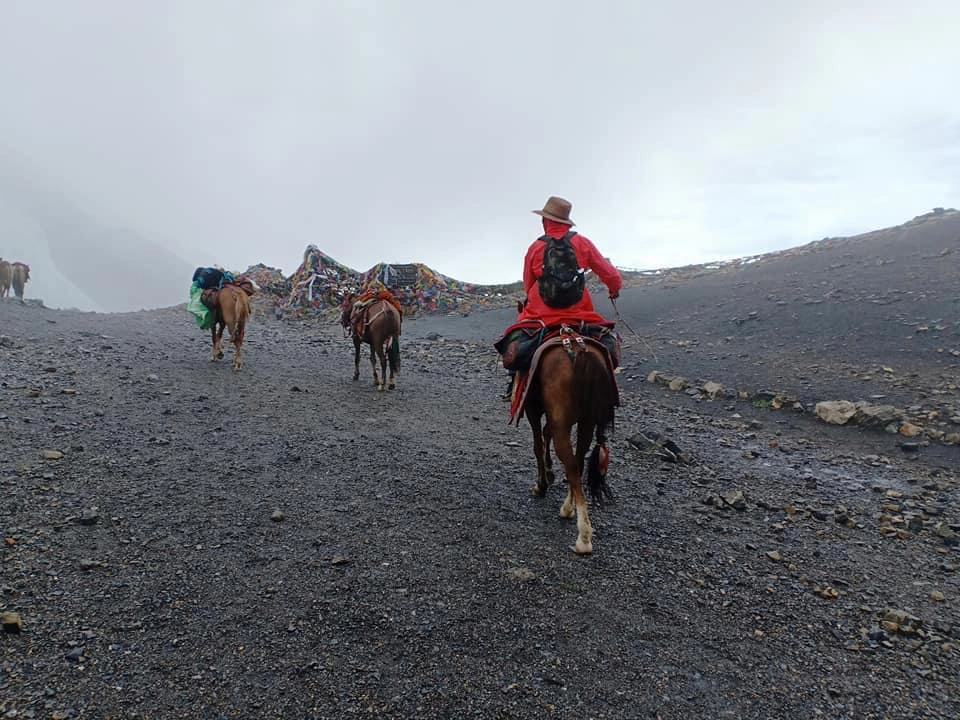
Horseback riding in Upper Mustang is closely connected to the region's traditional way of life. Before modern roads and motor vehicles became more accessible, horses and other pack animals were important for transporting goods, traveling between settlements and maintaining connections across difficult mountain terrain. Today, local horses and horsemen continue to be part of the region's tourism experience. A horseback riding expedition to Lo Manthang brings together this living horse culture, the dramatic landscapes of the Himalayas and the opportunity to explore one of Nepal's most historically significant walled settlements.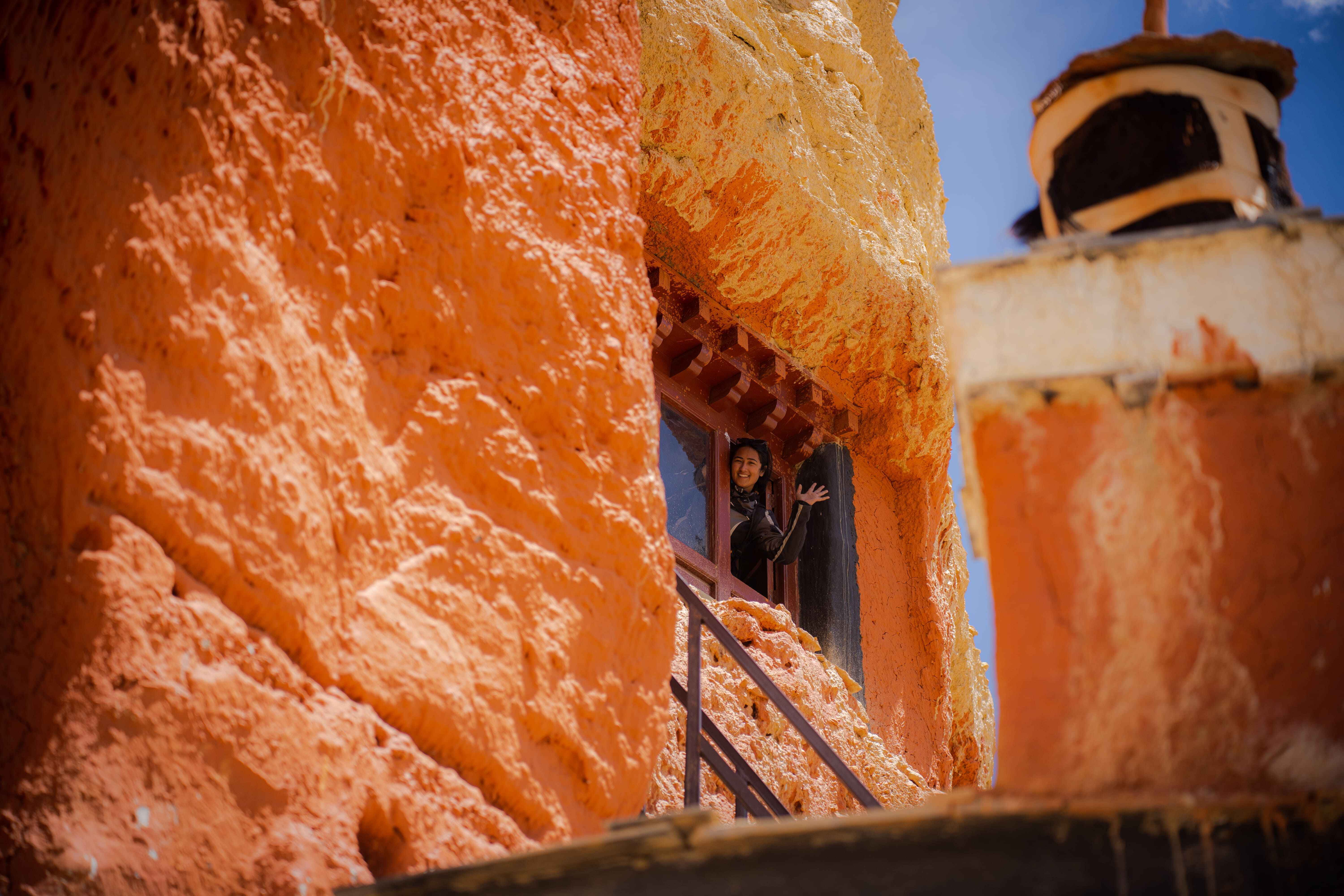
Where Is Lo Manthang? Understanding the Walled City of Upper Mustang
Lo Manthang is located in the northern part of Mustang District in Gandaki Province, Nepal, close to the international border with Tibet, China. The settlement stands on a high plateau at approximately 3,800 meters above sea level, within the trans-Himalayan region north of the Annapurna and Dhaulagiri mountain ranges. Its location along the historic Kali Gandaki corridor placed it within an important network of routes connecting the Himalayan communities of Nepal with those of the Tibetan Plateau. The surrounding landscape is characterized by high-altitude valleys, barren hills, exposed rock formations and limited vegetation.
The settlement is widely known as theWalled City of Lo Manthangbecause of the substantial earthen wall that historically enclosed its compact residential area. The wall, built using traditional rammed-earth construction, has towers at its corners and defined the physical boundary of the former royal settlement. Inside, closely arranged traditional houses, narrow lanes, courtyards, religious structures and the former royal palace create a distinctive urban layout. Unlike many mountain villages that developed along a road or river, Lo Manthang grew as a fortified settlement with a clearly defined center and boundary.
The name Lo refers to the historical kingdom and region, while Lo Manthang became its principal settlement and administrative center. Its inhabitants, commonly known as Lopa, share deep cultural and historical connections with communities in western and central Tibet. Tibetan Buddhist traditions, local languages, architecture, festivals and religious practices have shaped the identity of the settlement over generations. The Medieval Earthern Walled City of Lo Manthang was included on Nepal's UNESCO World Heritage Attempt List in 2008. This is an important distinction: it is on the Tentative List, rather than being an inscribed UNESCO World Heritage Site.
The History of Lo Manthang: The Former Capital of the Kingdom of Lo
The history of Lo Manthang is closely connected to the establishment of the Kingdom of Lo in the fifteenth century. The kingdom is traditionally associated with Ame Pal, also written as Amepal or A ma dpal, who united the smaller territories and fortified settlements of the region and established Lo Manthang as its capital around 1440. Its strategic position along routes connecting the Himalayan region with Tibet contributed to its political and economic importance. The kingdom developed its own royal administration, religious institutions and cultural identity, with Lo Manthang serving as its principal center.
Trade was an important part of the kingdom's historical position. The Kali Gandaki corridor connected communities in the southern Himalayas with settlements further north, allowing the movement of goods, people, religious ideas and cultural influences. Salt was among the important commodities traded across the wider trans-Himalayan region, alongside wool, livestock products, grain and other goods. Control over routes and access to trade helped strengthen the Kingdom of Lo, while its connections with Tibet influenced its religious art, architecture and social traditions. The royal palace, monasteries, chortens and mani walls that remain in and around Lo Manthang reflect the wealth and religious importance the settlement developed during this period.
Lo Manthang remained the seat of the former kingdom until Nepal abolished its monarchy in 2008, although its royal and cultural heritage continues to hold significance for local communities. The former royal palace remains one of the most recognizable structures within the walled city, while the monasteries preserve religious artworks, manuscripts and traditions associated with the history of the region. Understanding this background gives greater meaning to a visit to Lo Manthang: its walls and buildings are not simply old structures, but reminders of a Himalayan kingdom whose history was shaped by trade, local rulers, Buddhism and connections across the mountains.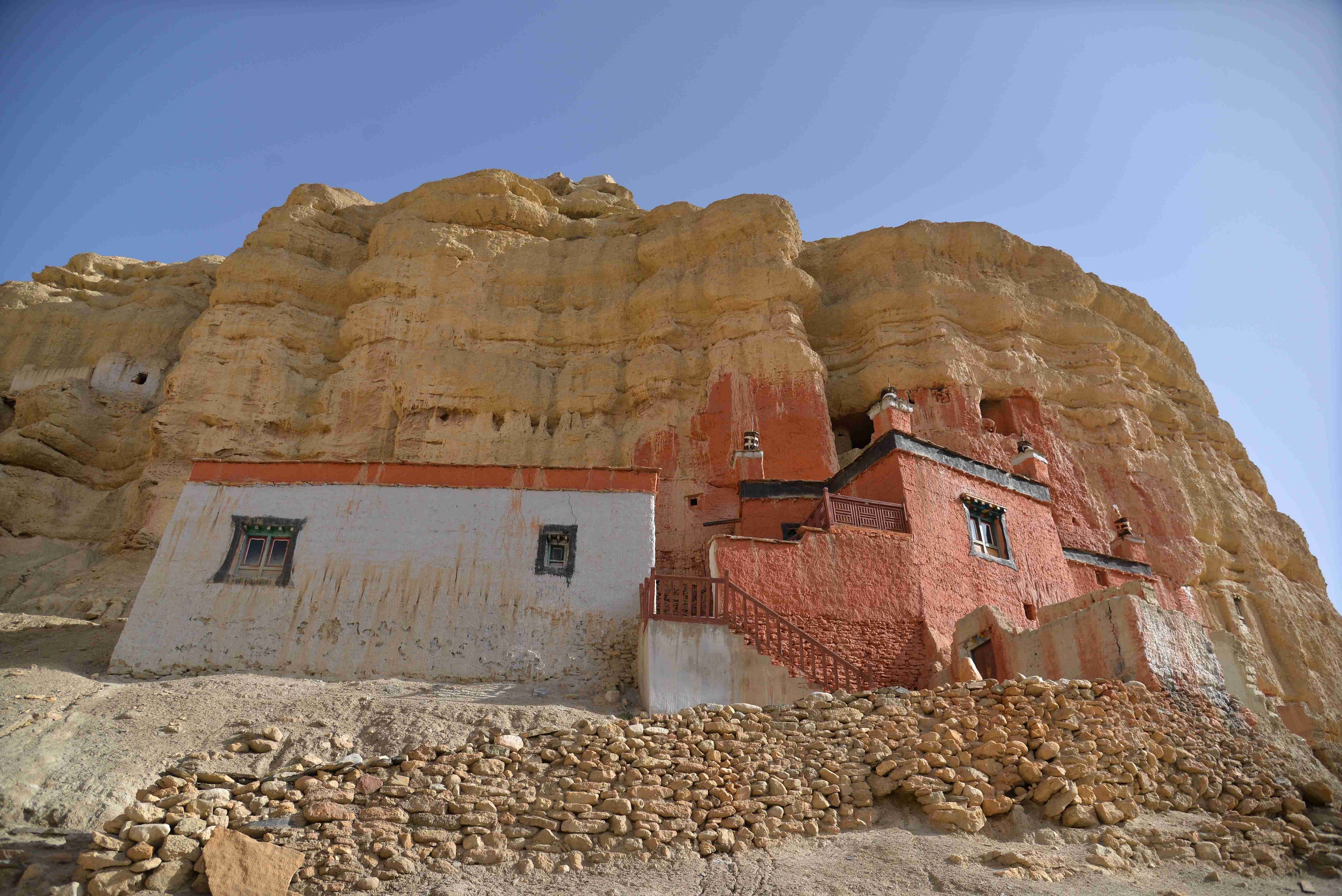
The Horseback Riding Route to Lo Manthang
A horseback riding journey to Lo Manthang generally follows the main Upper Mustang corridor, beginning around Jomsom and continuing north through Kagbeni towards the walled city. Jomsom, the administrative center of Mustang District, lies in the Kali Gandaki Valley and is a common starting point for journeys into Upper Mustang. From there, the route continues to Kagbeni, a traditional settlement situated near the confluence of the Kali Gandaki and the Jhong Khola. Kagbeni is also an important gateway to Upper Mustang, where travelers pass through the restricted-area checkpoint before continuing north. Beyond Kagbeni, the trail passes through Tangbe and Chhusang before reaching Chele, where the landscape begins to feel increasingly remote and distinctly trans-Himalayan.
From Chele, the route climbs through mountain terrain towards Samar and the surrounding high passes before continuing in the direction of Syangboche. This part of the journey involves ascents, descents and exposed trails, with views across dry valleys, red and ocher rock formations and distant Himalayan peaks. The route then continues towards Ghami, passing high points such as Yamda La and Nyi La, depending on the chosen trail. Ghami is one of the important traditional settlements of Upper Mustang and is known for its long mani wall, made up of stone slabs carved with Buddhist prayers and inscriptions. These sections of the route show why horseback riding in Upper Mustang requires suitable horses, experienced horsemen and careful attention to the terrain.
From Ghami, the journey continues towards Tsarang, also known as Charang, another historic settlement with traditional houses, a former palace complex and religious landmarks. The final approach to Lo Manthang crosses the Lo La, a high pass from which the walled city and the surrounding plateau gradually come into view. The sight of the settlement enclosed by its earthen walls is a memorable moment after several days of riding through the mountain landscape. The exact stages, overnight stops and trail choices can vary according to weather, riding conditions and the expedition plan; some routes also include additional villages or alternative passes. The main geographical sequence, however, follows the historic corridor linking Jomsom and Kagbeni with the heart of Upper Mustang.
Horseback Riding in Upper Mustang: Horses, Trails and Local Horsemen
The horses used for horseback riding in Mustang are generally compact, sturdy animals suited to the demands of mountain travel. Their build, strength and sure-footed movement are useful on trails that can include loose stones, uneven ground, narrow paths and steep sections. Horses in the region are often associated with Tibetan mountain ponies and the wider indigenous horse populations of the Himalayan region. However, the term "Mustang horse" should not automatically be understood as the name of one formally recognized breed. Local horses may vary in size, appearance and background, and their suitability for riding depends on their individual condition, training and experience on the trails.
Local horsemen play an important role in horseback riding expeditions in Upper Mustang. Their familiarity with the animals, terrain and changing trail conditions helps them manage the horses throughout the journey. Depending on the route and the difficulty of a particular section, a horseman may walk alongside and lead a horse rather than have the rider remain mounted throughout. This is especially relevant on steep, narrow or unstable ground, where dismounting can be safer for both horse and rider. The horsemen also help with preparing the animals, adjusting riding equipment, managing breaks and responding to changing conditions along the trail. Their practical knowledge comes from working with horses in the mountain environment.
Traditional horse equipment in Mustang differs from the riding equipment commonly seen in modern equestrian sports. Local saddles are designed for practical use on mountain journeys and may include a wooden saddle frame, padding and blankets to provide support for the horse and rider. Bridles, reins, straps and other harness components help control and secure the animal. The exact design and materials can vary between horse owners and local traditions. During a horse trek to Lo Manthang, the experience is therefore not simply about riding through a dramatic landscape; it also provides an opportunity to understand the working relationship between local horsemen, their horses and the traditional equipment that has supported travel in Mustang.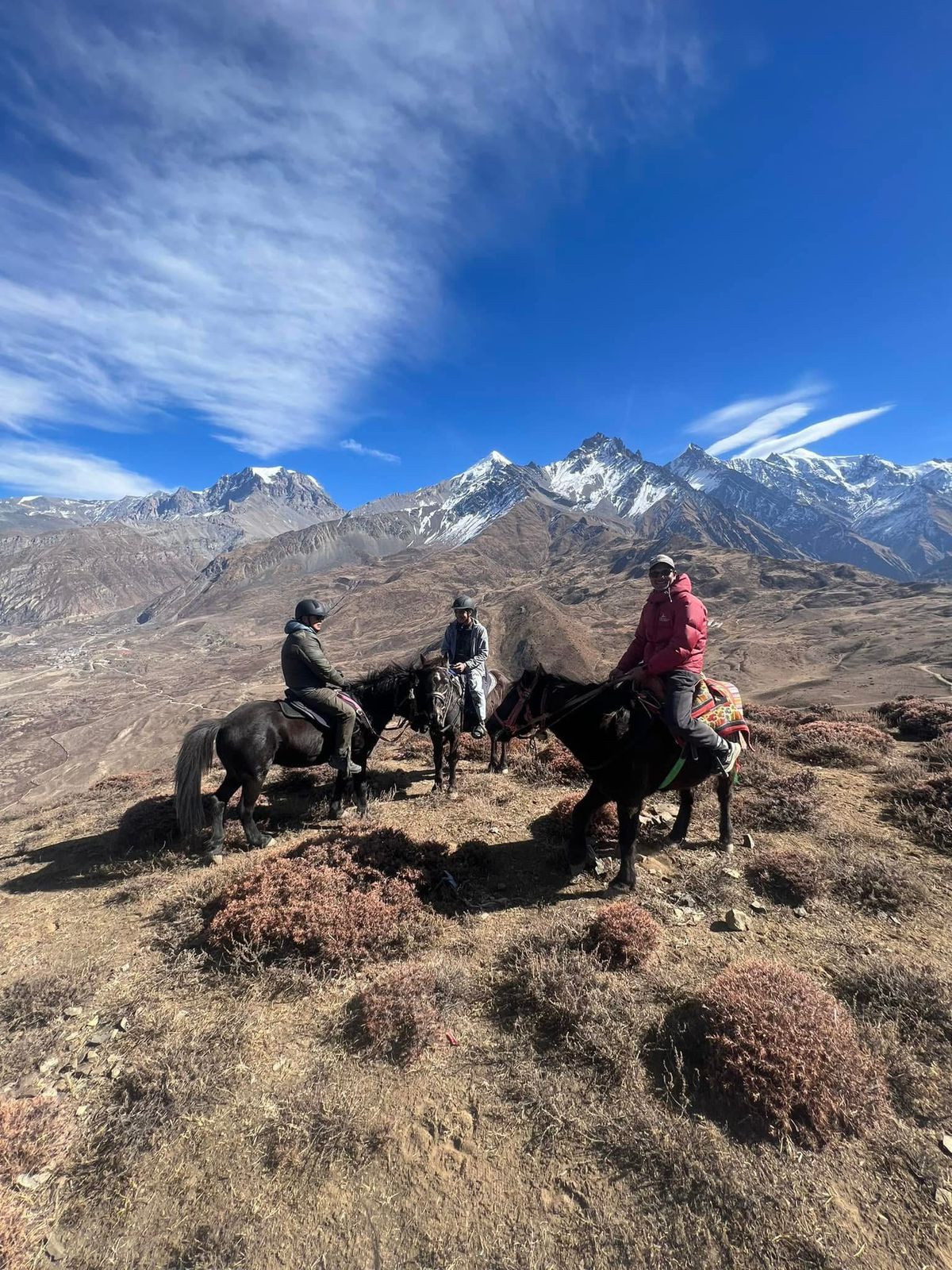
Exploring the Walled City of Lo Manthang: Architecture and Historic Landmarks
Arriving at Lo Manthang brings the journey to one of the most recognizable historic settlements in the Nepalese Himalayas. The old city is enclosed by a substantial earthen wall, traditionally constructed from compacted layers of earth. UNESCO's Attempt List description records the wall as approximately six meters high, with square towers ordzongat its corners. The wall once served as a protective boundary around the royal settlement and helped define its identity as a fortified capital. Within it, closely grouped houses and religious buildings form a compact settlement, while the traditional architecture reflects the materials, climate and building knowledge of the high-altitude environment.
One of the most important landmarks inside the walled city is the former Royal Palace of Lo Manthang. Associated with the early rulers of the Kingdom of Lo, the palace represents the political and administrative history of the settlement. Its traditional architecture, multi-storey structure and position within the old city reflect the importance of the royal institution in shaping Lo Manthang. Around the palace, narrow lanes connect residential buildings, courtyards, small shrines and monasteries. Many traditional houses are constructed using earth, stone and timber, with flat roofs that follow the dry climate and local building practices. The arrangement of these buildings gives the old city a distinctive character that differs from more recently developed settlements outside the walls.
Religious structures are another defining feature of Lo Manthang's historic architecture. Chortens, mani walls and monasteries are found within the settlement and along the paths around its perimeter. These structures are part of the city's religious landscape and reflect the importance of Tibetan Buddhism in local life. The combination of the earthen city wall, royal palace, traditional houses and historic monasteries makes Lo Manthang an important example of Himalayan settlement architecture. Walking through its narrow lanes after a horseback journey offers a closer look at the details that may be missed when viewing the walled city from a distance.
The Monasteries and Buddhist Heritage of Lo Manthang
Lo Manthang is an important center of Tibetan Buddhist heritage in Upper Mustang, and its monasteries preserve some of the region's most significant religious and artistic traditions. Three major monasteries associated with the historic walled city are Jampa Lhakhang, Thubchen Lhakhang and Chode Monastery. Jampa Lhakhang, also known as the Maitreya Temple, is dedicated to Jampa, the future Buddha. Thubchen Lhakhang is recognized for its large assembly hall and historic religious artwork. These monasteries are not merely architectural landmarks; they have served as places of worship, learning, ritual practice and community gatherings for generations.
The interiors of the historic monasteries are particularly important for their religious paintings, sculptures and traditional decorative work. Murals depicting Buddhist figures, mandalas, deities and religious narratives provide insight into the artistic traditions that developed in the former Kingdom of Lo. Their styles reflect connections with Tibetan Buddhist schools and artistic influences that traveled through the trans-Himalayan region. The preservation of these works is especially important because many were created using traditional pigments and techniques within buildings made from earth and other natural materials. Restoration and conservation work has been carried out at important monasteries, including Jampa Lhakhang and Thubchen Lhakhang, to protect their historic structures and artworks.
Chode Monastery, also written as Choede or Choede Lakhang, is another important religious institution in Lo Manthang. It remains connected with the living monastic traditions of the settlement and is associated with the annual Tiji Festival. The monasteries collectively reflect the influence of Tibetan Buddhism, particularly the Sakya tradition, in the religious history of Lo. Visitors exploring the Buddhist heritage of Lo Manthang should take time to understand the function of each monastery, rather than viewing them only as historic buildings. They continue to hold religious significance for the local community, and visitors should respect restrictions on photography, access to sacred spaces and ongoing religious activities.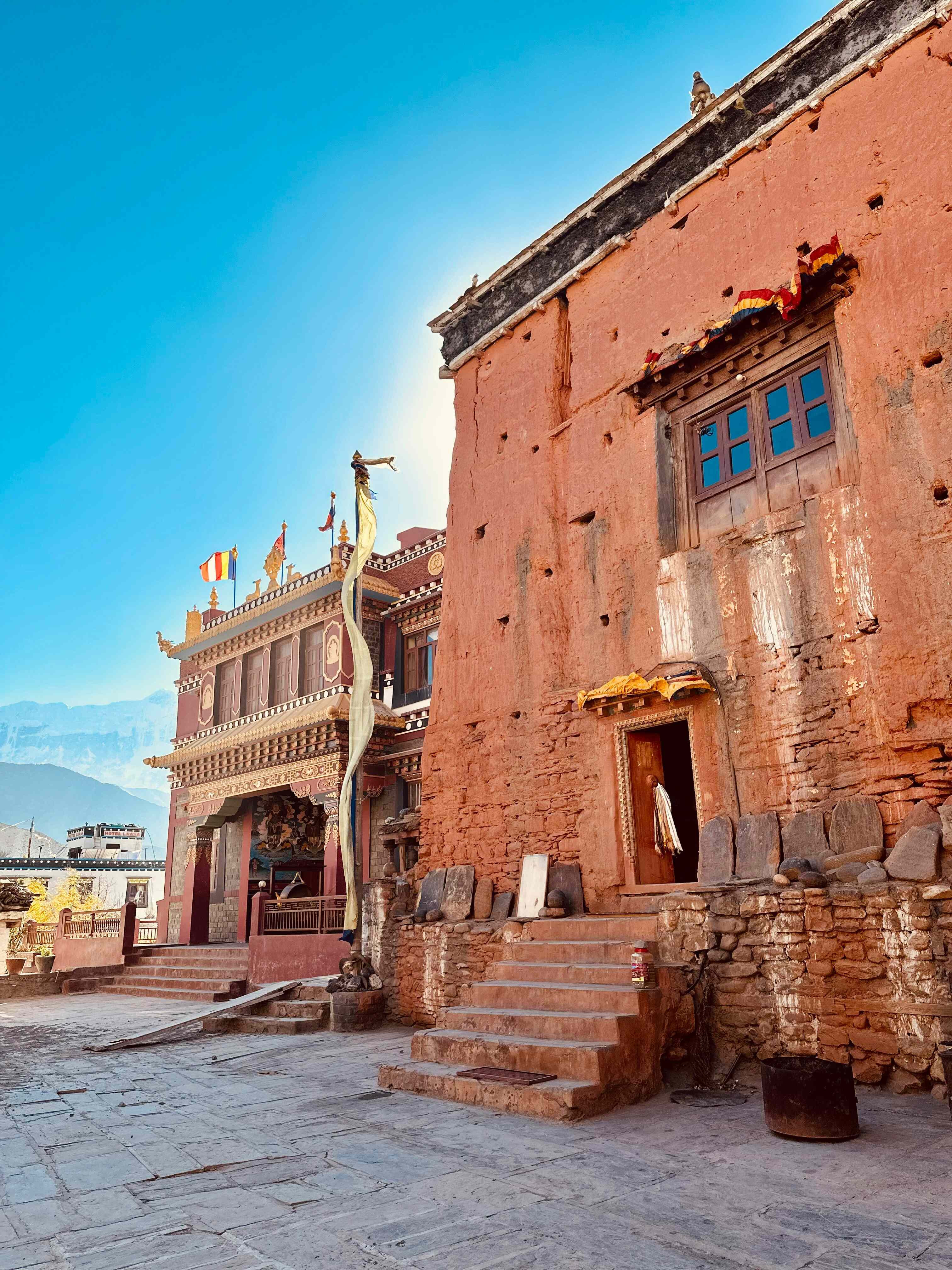
Beyond the Walled City: Horseback Exploration Around Lo Manthang
The area surrounding Lo Manthang offers further opportunities to explore the landscapes and settlements of Upper Mustang. One of the best-known destinations is Chhoser, a settlement north of Lo Manthang famous for its ancient cave complexes. The caves are cut into steep cliffs and contain multiple chambers and passageways, reflecting centuries of human use in the region. Jhong Cave, often called the Sky Cave, is among the most recognized examples. The caves have attracted archaeological interest because of their complex structures and the questions they raise about earlier settlement, shelter, burial and religious practices in Upper Mustang. A visit to Chhoser adds an archaeological dimension to a journey centered on the history of Lo Manthang.
Other settlements in the wider area include Garphu and Nyphu, which are known for their traditional architecture and religious sites. The landscape around these villages consists of open valleys, dry mountain slopes, eroded cliffs and high plateaus. Traveling through this area gives visitors a broader understanding of how communities adapted to the region's geography and limited growing conditions. Depending on the route and local arrangements, exploration around Lo Manthang may also include visits to monasteries, village settlements and viewpoints overlooking the surrounding mountains. These places help show that the cultural landscape of Upper Mustang extends well beyond the walls of its historic capital.
Horseback riding can be a practical and culturally meaningful way to explore some of the trails around Lo Manthang, particularly where traditional paths connect villages and valleys. However, not every cave, monastery or narrow trail is suitable for riding directly to its entrance. Some sections may need to be covered on foot, with horses and horsemen waiting at an appropriate location. The choice of route depends on trail conditions, the horses' capabilities, local guidance and the time available. Exploring the wider Lo Manthang area on horseback therefore requires flexibility, allowing time to dismount and visit places that are best approached on foot.
The Living Culture of Lo Manthang: Traditions, Festivals and Daily Life
The cultural identity of Lo Manthang is closely connected to the Lopa people and their historical relationship with the Tibetan cultural world. The local language, traditional clothing, food, architecture and religious practices reflect generations of cultural exchange across the Himalayas. Daily life in the high-altitude environment has traditionally depended on agriculture, livestock and seasonal activities. Barley, buckwheat and other crops suited to the short growing season have played an important role in local farming, while livestock has provided food, wool, transport and other essential resources. Although modern roads, tourism and changing livelihoods have influenced the settlement, many traditional customs and community practices remain important.
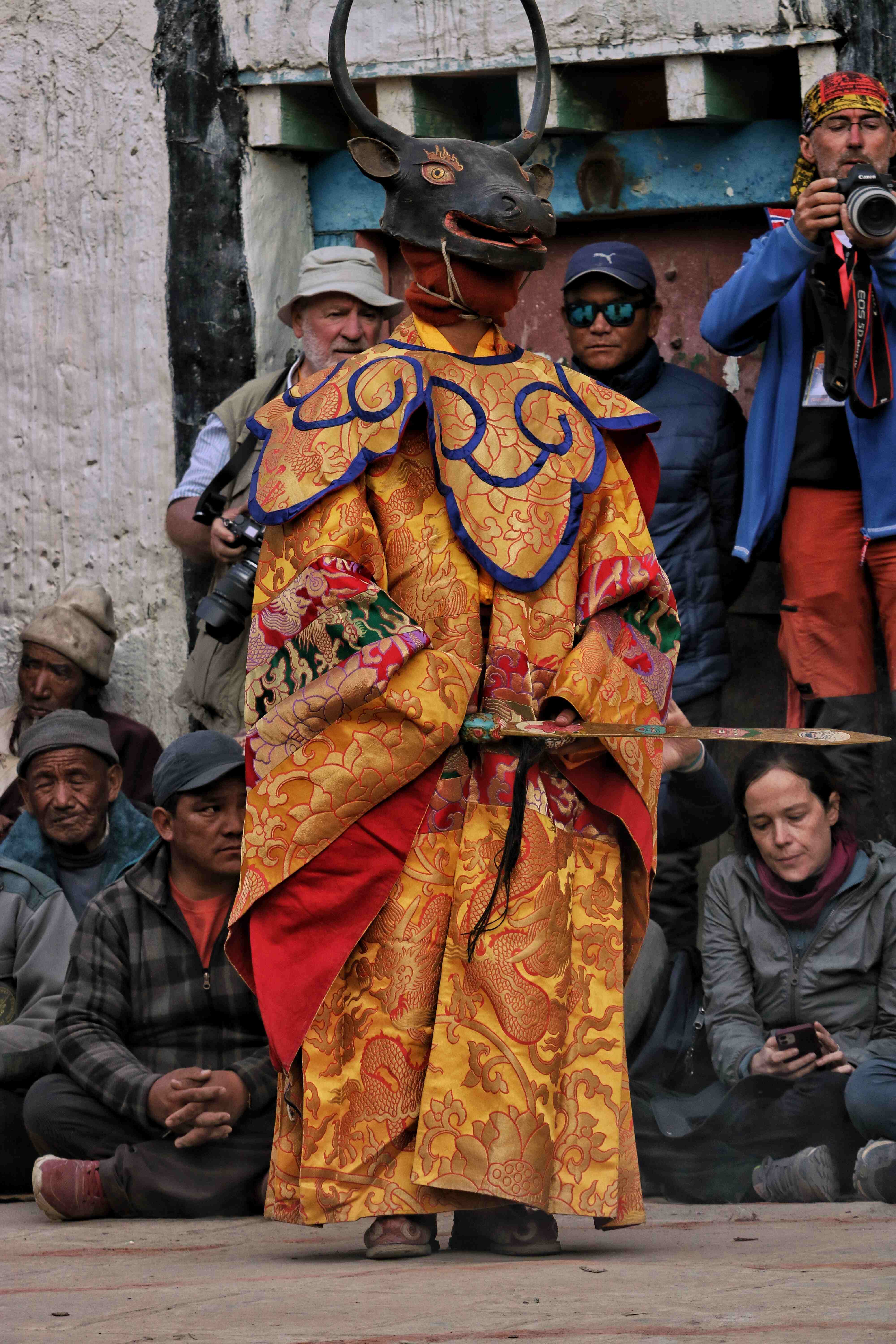
One of the most significant cultural events in Lo Manthang is the Tiji Festival, also known as Tenchi. This annual Buddhist festival is associated with the Vajrakila tradition and features ritual dances performed by monks, representing the defeat of negative forces and the restoration of peace and harmony. The festival is held according to the Tibetan calendar and usually takes place over several days in the courtyard and public spaces of Lo Manthang. Its religious performances, ceremonial costumes, masks and community participation make it one of the most distinctive cultural events in Upper Mustang. The festival has a long history in the region and remains an important expression of its Buddhist heritage.
Horses also form part of the cultural and historical identity of Mustang. For generations, they helped people travel between settlements, carry goods and cross difficult mountain terrain, connecting communities in a region where journeys could be long and physically demanding. Although roads and motor vehicles have changed transportation across much of Mustang, horses continue to be associated with local traditions, horsemen and cultural events. Their presence in the region reflects more than their practical value: it represents an enduring relationship between people, animals and the mountain environment. Exploring Lo Manthang on horseback brings these connections into focus, allowing visitors to experience both the historic walled city and the wider traditions of Upper Mustang.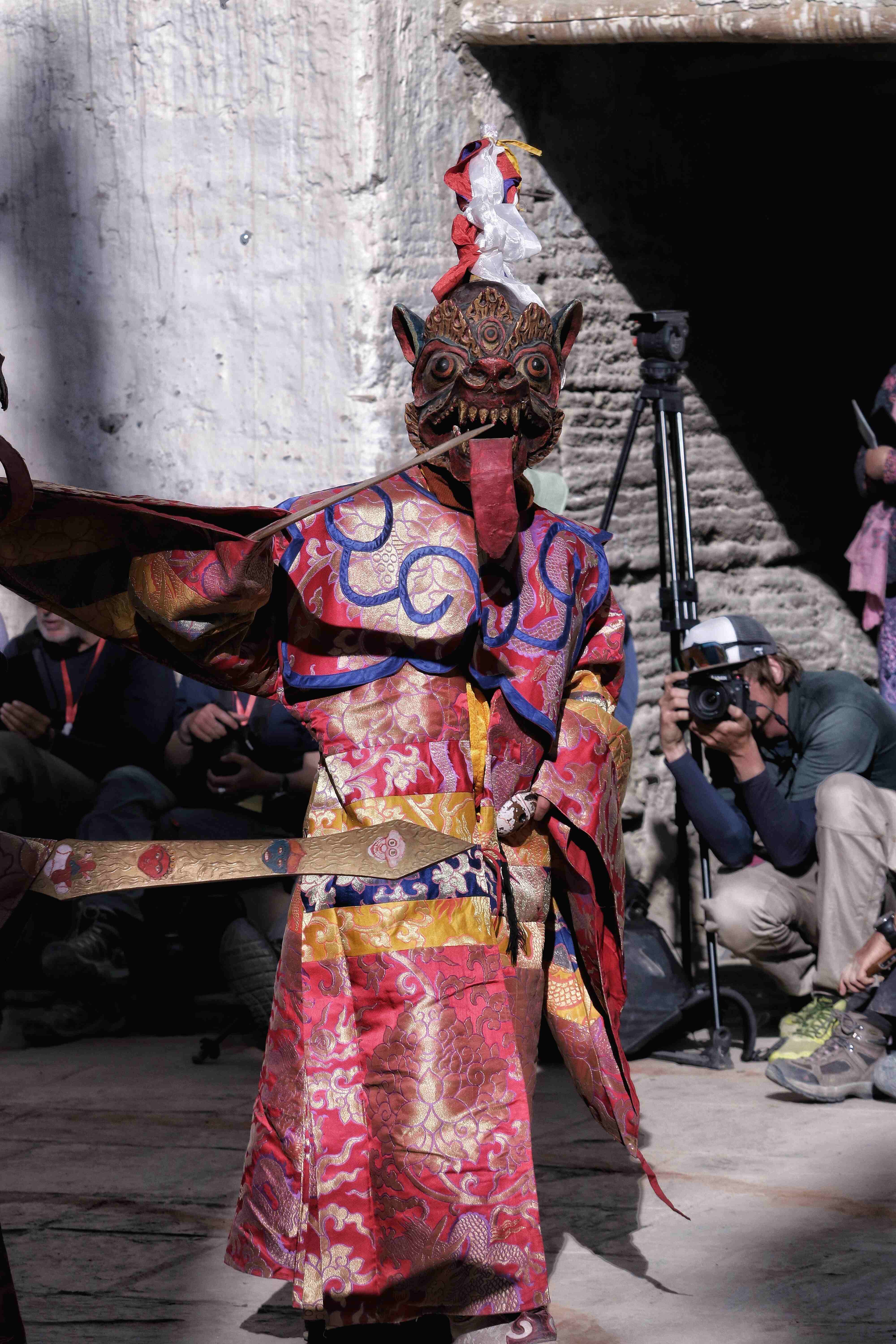
Discover Mustang's trails on horseback.
Frequently Asked Questions
1. Where is Lo Manthang located in Nepal?
Lo Manthang is located in the northern part of Mustang District in Gandaki Province, Nepal, near the border with Tibet, China. It sits at approximately 3,800 metres above sea level and is known as the historic walled city of the former Kingdom of Lo.